Samsung Debuts Gemini AI Smart Glasses at Galaxy Unpacked
This issue covers Samsung's Gemini-powered smart glasses, Apple Vision Pro in surgery, immersive music, Xbox Game Pass in Horizon+, and more VR industry news.
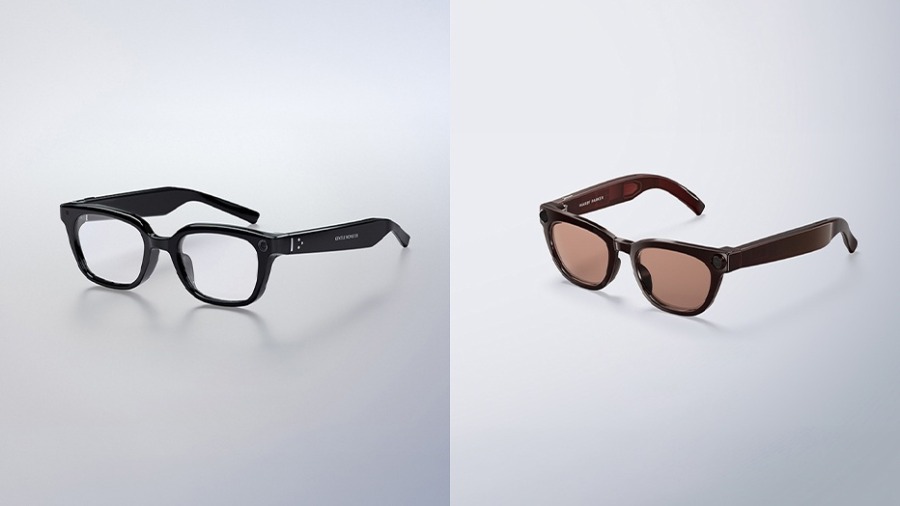
Samsung Unveils Gemini-Powered Smart Glasses at Galaxy Unpacked
Samsung Electronics has officially entered the smart glasses market, unveiling its new Gemini-powered intelligent eyewear at the Galaxy Unpacked event in London. Developed in collaboration with Google and running on the Android XR platform, these smart glasses integrate Gemini AI and Qualcomm hardware, with design partnerships from established eyewear brands Gentle Monster and Warby Parker. While Samsung has not disclosed pricing or availability, the announcement marks a significant move into hands-free, AI-assisted wearables, positioning Samsung alongside other major players in the XR space.
The new smart glasses are designed to bring AI-driven assistance directly into the user's field of view, enabling features such as live translation, message summarization, and contextual support throughout the day. Users can interact with the device using voice commands or gestures, though gesture controls are only available when paired with a Galaxy Watch9. The eyewear is intended for all-day wear, combining a lightweight frame and slim profile with a battery life rated at up to nine hours per charge, plus up to seven additional full charges provided by the included charging case, according to Samsung.
Under the hood, the glasses are powered by Qualcomm’s Snapdragon AR1 Gen1 Platform, which Samsung claims is optimized for real-time AI assistance, touch interaction, connectivity, and efficient power and thermal management. A built-in camera provides visual context for the AI, allowing the device to capture and organize information—such as whiteboard notes or meeting discussions—directly into Samsung Notes. Users can also request location-based guidance, share their point of view during calls, or record what they see. Samsung emphasized that the device supports follow-up interactions by understanding the user's context and linking relevant information across tasks.
Design has been a clear focus, with Samsung working closely with Gentle Monster and Warby Parker to refine fit and comfort, offering a variety of frame styles, colors, and lens options. However, the company has been relatively quiet about the camera feature, mentioning it only once in the official announcement. This discretion may be a response to ongoing privacy concerns and upcoming European regulatory guidance, with Samsung stating that the eyewear includes "clear controls and safeguards" to ensure responsible and secure use.
With its entry into the smart glasses arena, Samsung is signaling a new era of context-aware, AI-powered wearables that blend technology seamlessly into daily life. For industry professionals, this move underscores the growing importance of partnerships between tech firms and traditional eyewear brands, as well as the need to address privacy and regulatory challenges as intelligent eyewear becomes more mainstream.
Source: Auganix
Meta Horizon+ Adds Xbox Game Pass and Gamepad Emulation

Meta has significantly upgraded its Horizon+ VR subscription by bundling in a starter edition of Xbox Game Pass at no extra cost, offering a notable value boost for Meta Quest users. The move comes after Meta Quest+ was rebranded as Horizon+ in 2025, consolidating more of Meta’s VR ecosystem under the Horizon name. The new inclusion gives Horizon+ subscribers access to a curated selection of over 50 Xbox titles, such as Fallout 4, Fallout 76, Grounded, and Overcooked 2, which can be streamed to a virtual screen within Meta Quest headsets or downloaded for local play on PC or Xbox consoles.
For existing Horizon+ members, the addition of Xbox Game Pass does not affect the subscription price, making it a compelling bonus for current and prospective users alike. Horizon+ is priced at $7.99 per month or $59.99 annually, and already features a library of more than 100 native Quest games. In comparison, Microsoft’s standard Xbox Game Pass Essential subscription is $9.99 per month in the US, highlighting the competitiveness of Meta’s bundled offering for VR enthusiasts and those interested in exploring Xbox’s game library.
However, there are some limitations to the new benefit. The included starter edition of Xbox Game Pass with Horizon+ restricts Xbox Cloud Gaming to 10 hours per month. This cap is likely sufficient for casual players or those wanting to sample a variety of games, but frequent cloud gamers may find the allowance limiting. Notably, games that are downloaded to a PC or Xbox are not subject to this time restriction, allowing for unlimited local play outside the cloud streaming cap.
Meta is also working to further lower the entry barrier for Xbox gaming on Quest. Previously, users needed a Game Pass Ultimate subscription and a separate Bluetooth controller to stream Xbox games to their headset. Soon, an upcoming gamepad emulator will allow Quest Touch controllers to mimic a traditional Xbox controller, streamlining the experience for users who don’t own an Xbox gamepad. Additionally, Microsoft has expanded support for Xbox Remote Play on Meta Quest, enabling users to stream games directly from their own Xbox console to a virtual display inside the headset.
Beyond Xbox integration, Quest owners have other options for playing flatscreen games in VR, such as GeForce Now, which provides cloud gaming for those who prefer Nvidia’s service or already own compatible PC titles. With these enhancements, Meta continues to strengthen the Horizon+ subscription, making it a more attractive proposition for both VR newcomers and seasoned gamers looking for diverse content and flexible play options.
Source: MIXED
Ohio County Deputies Train with VR for Critical Scenarios
Deputies in Ohio County are utilizing virtual reality technology to train for 'Shoot, Don’t Shoot' scenarios. This approach aims to better prepare law enforcement officers for critical decision-making situations in the field.
Source: 14 News
How to Check If Your PC Supports Quest Link and Air Link
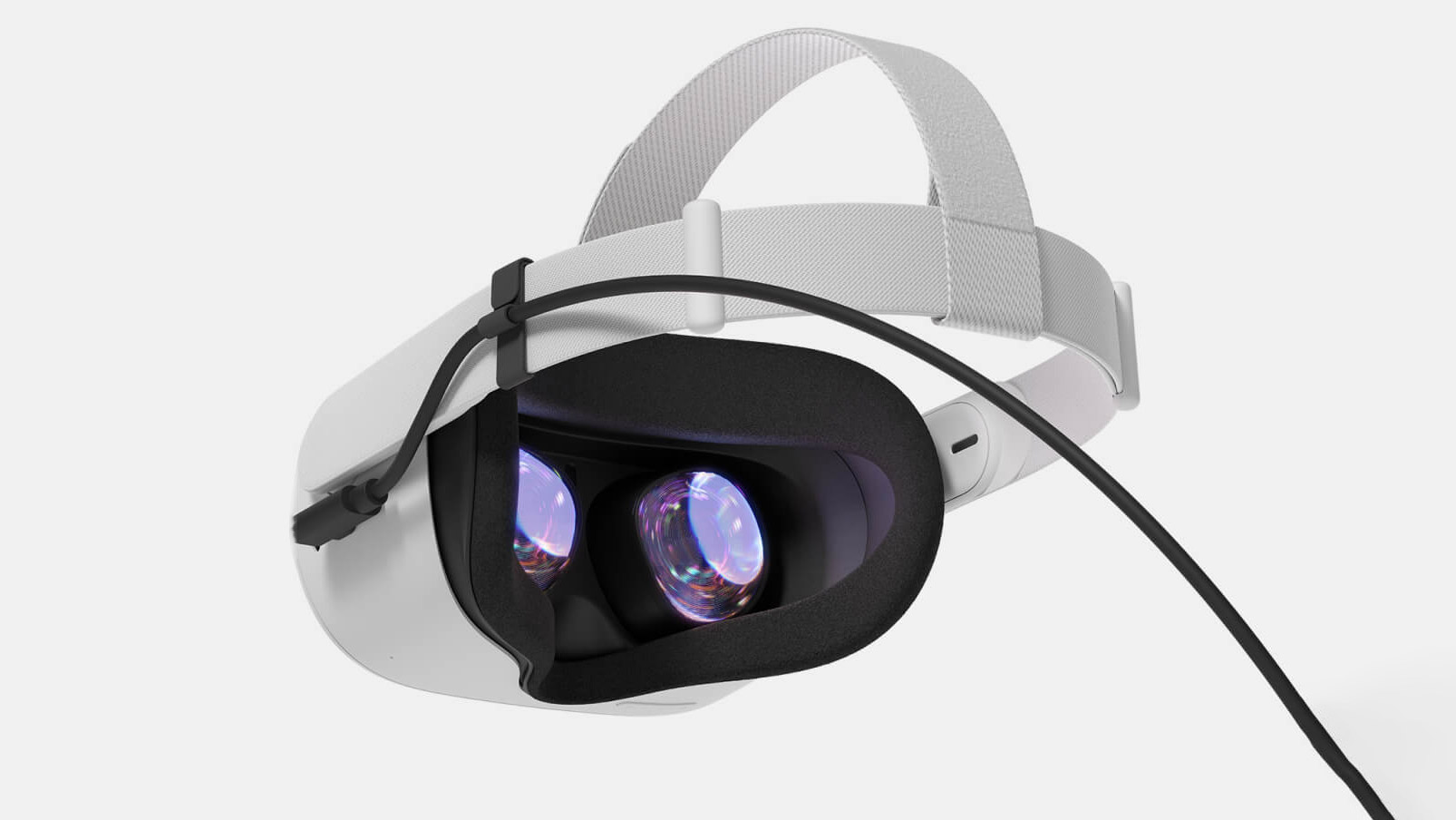
Meta's Horizon Link and Air Link features enable Quest headset owners to access and play PC VR games, including titles available on Rift and SteamVR, greatly expanding the content library beyond what is found on the Quest Store. However, to take advantage of these features, users need a compatible and sufficiently powerful PC. Understanding the minimum and recommended requirements is essential for anyone looking to use Quest, Quest 2, Quest Pro, Quest 3, or Quest 3S for PC VR gaming.
Most modern gaming PCs equipped with NVIDIA or AMD graphics cards are suitable for Quest Link and Air Link. However, there are some notable exceptions: Intel Arc GPUs and workstation GPUs are not supported, and certain consumer GPUs like the NVIDIA 3050 (laptop), 3050ti, and Radeon RX 6500 are not recommended for use with Link. This means that while many gaming rigs will work, users should double-check their specific hardware before setting up.
Horizon Link and Air Link differ primarily in how they connect the Quest headset to the PC. Horizon Link is a wired solution, using a USB cable to connect directly to the computer. This setup typically offers the best visual performance and helps extend the headset’s battery life compared to wireless alternatives. While any USB cable can technically be used—including the one that comes with the Quest—a longer cable is recommended for room-scale experiences. For those on a budget, combining a 10ft Anker USB 3.0 cable with a 16ft CableCreation USB 3.0 extender gives a total of 26 feet of reach for under $40. Alternatively, Meta offers a lighter, dedicated 16ft USB 3.0 Horizon Link cable, though at a higher price point.
Air Link, on the other hand, provides a wireless connection, allowing for untethered movement when playing PC VR games. However, the wireless experience is highly dependent on having an optimal network configuration. Without a robust and properly set up network, users may encounter lag or reduced visual quality, which can detract from the immersive VR experience. For best results, users should ensure their network is up to the task before relying on Air Link for wireless PC VR gaming.
For VR industry professionals, understanding these requirements is crucial when recommending hardware or troubleshooting customer setups. Ensuring clients have the right PC specs and accessories can make the difference between a seamless VR experience and one plagued by technical issues. As Meta continues to evolve its VR ecosystem, keeping up-to-date with compatibility guidelines remains essential for both end users and those supporting them.
Source: Road to VR
Meta Teases New VR Hardware for Connect, Eyes on Phoenix

Meta has signaled that it will unveil new VR hardware at its upcoming Connect event, according to hints dropped by CTO Andrew Bosworth during a recent AMA on Instagram. In response to speculation about Meta's commitment to VR, Bosworth reaffirmed that the company is actively developing multiple headsets, with a renewed focus on economic sustainability. He indicated that more details would be shared at Connect, sparking anticipation within the XR community for potential hardware announcements.
Industry observers and leaks suggest that Meta is likely to showcase its next-generation mixed reality headset, codenamed Phoenix (with prototype names including Puffin and Loma). This device is rumored to be a lightweight MR headset connected to a computational unit, positioning itself as a competitor to high-end offerings like Apple's Vision Pro. Leaked renders point to a design that is notably more compact and goggle-like than previous Quest models, aiming for comfort and portability. Alongside Phoenix, a Quest 4 headset focused on gaming is also reportedly in development, but the consensus is that Phoenix will be the first to be teased or announced at Connect.
Despite the excitement around a new device, industry insiders caution that this announcement is unlikely to end the current "VR Winter"—a period marked by slower growth and cautious investment in the sector. The anticipated Phoenix headset is expected to feature advanced components such as MicroOLED displays, eye tracking, and the latest Qualcomm Snapdragon Elite chipset. However, these features come at a cost: estimates suggest Phoenix will be priced between $1,000 and $2,000, making it less accessible to mainstream consumers. This price range is in line with other recent high-end XR devices, such as the XREAL Aura and Snap Specs, both of which target prosumers and enterprise rather than mass-market adoption.
For professionals in the VR industry, the upcoming Meta announcement is a sign that the company remains committed to the space, countering narratives that "VR is dead." However, without a breakthrough use case or a dramatic price reduction, Phoenix and similar devices are expected to find their primary audience among developers, enthusiasts, and enterprise users. The broader market is likely to remain cautious, with real ecosystem growth not expected until at least 2028 unless a new paradigm emerges. In the meantime, XR professionals are advised to explore opportunities in smartglasses, robotics, or AI, while gamers can look forward to new content and PCVR mods.
Source: skarredghost.com
Meta Teases New VR Devices for Connect as Steam Preps Frame Launch

This week in XR saw significant developments from major players, with Meta hinting at new VR hardware announcements for its upcoming Connect event and Valve quietly preparing the market for its much-anticipated Steam Frame headset. Both moves signal renewed momentum in the immersive tech sector, which has been grappling with concerns about stagnation and privacy.
During an Instagram AMA, Meta CTO Andrew Bosworth responded to speculation about the company’s commitment to VR, stating that Meta continues to invest heavily in the space. Bosworth highlighted recent user interface updates and ongoing work on multiple next-generation headsets. He urged the community to “stay tuned for Connect,” suggesting that Meta will reveal more about these devices at its annual developer event. Industry watchers believe Meta will likely announce its spatial computing headset, codenamed Phoenix, possibly opening preorders ahead of a full launch expected in early 2027. However, expectations are tempered by reports that Phoenix could be priced above $1,000, positioning it for prosumers and enterprise rather than mass-market adoption like the Quest 2. While this could help invigorate the ecosystem, it may not be enough to end the so-called "VR Winter" that has dampened industry growth in recent years.
Meanwhile, Valve has taken a concrete step toward launching its own headset, the Steam Frame. The company introduced a “Great On Frame” section on Steam, showcasing VR games certified to run well on the upcoming device. Although the list is currently small, its public debut indicates that the Steam Frame’s launch is imminent, with some speculating a July release once logistics are finalized. This move is likely to excite developers and enthusiasts alike, as Valve’s hardware typically sets new standards for PC-based VR experiences.
Meta also addressed privacy concerns around its Ray-Ban Meta smartglasses by releasing a forced update that disables the camera if the privacy LED is tampered with. This aims to prevent covert recording, a growing issue as users found ways to disable the LED indicator. However, Meta is reportedly still debating whether the LED should remain active during “super-sensing” features, which would enable the glasses to continuously record audio and video for AI-powered personal assistance. Critics argue that always-on recording without clear notification could raise significant privacy risks, both for users and those around them. The outcome of this decision will be closely watched by industry professionals concerned with ethical data collection and user trust.
Finally, the sector is abuzz with news that Apple has sued OpenAI over alleged trade secret theft, following high-profile employee moves and hardware development efforts. The lawsuit underscores the competitive—and sometimes contentious—nature of the race to build the next generation of AI-powered devices, including smartglasses.
Source: The Ghost Howls
Even Realities Achieves Unicorn Status with $150M Investment
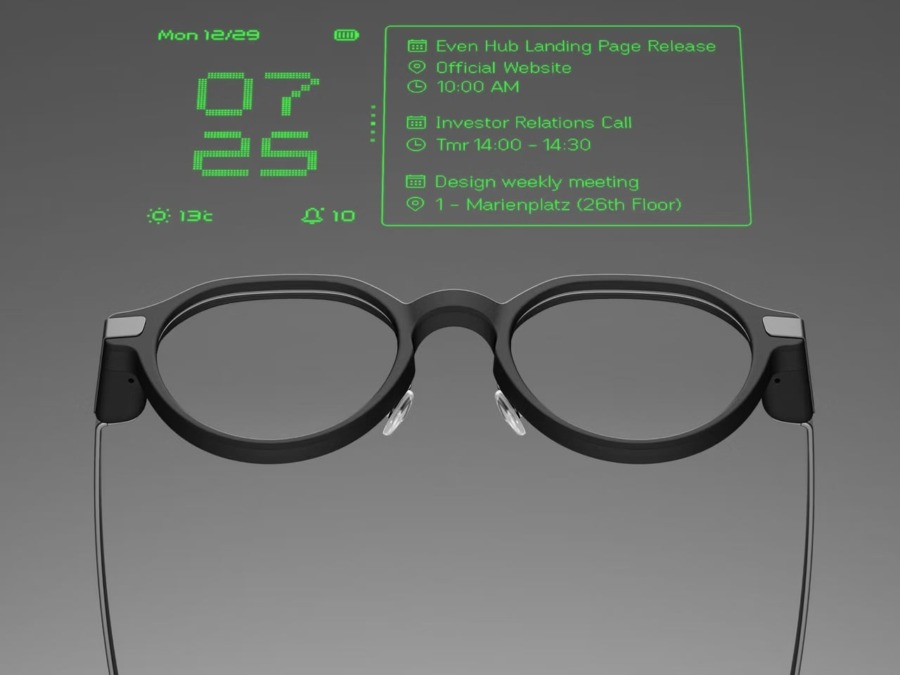
Even Realities, a startup specializing in smart eyewear and AI-powered wearables, has reached unicorn status following a $150 million pre-Series B funding round. The investment, led by Meituan and previous backer Tencent, brings the company’s valuation to $1 billion, marking a significant milestone for both Even Realities and the broader smart glasses sector. This funding round highlights the increasing interest from major investors in companies pushing the boundaries of lightweight, privacy-focused smart glasses designed for everyday use.
Even Realities distinguishes itself with a design philosophy centered on privacy and user comfort. Its flagship product, the Even G2, is a camera-free pair of display smart glasses that overlays information directly into the wearer’s field of view. Rather than relying on cameras, the device is operated via a companion smart ring, the Even R1, which allows users to tap and scroll through content. According to the company, its users typically wear the device for 8 to 10 hours daily, underscoring the product’s suitability for long-term, ambient use.
Priced at $599, the Even G2 offers a suite of features tailored for productivity and real-time assistance. Its Conversate feature enables users to keep notes in view during conversations, provides context for unfamiliar references, and generates conversation summaries within the Even Realities App. The glasses support real-time translation across 35 languages and include a voice-controlled teleprompter, all while maintaining a strong privacy stance: user data is encrypted, and voice features transcribe audio into text without storing recordings. The company’s proprietary Even HAO (Holistic Adaptive Optics) display system integrates microchip, projectors, waveguides, and lenses, delivering what Even Realities describes as a “perfect optical orchestra.”
The team behind Even Realities includes veterans from Apple, Samsung, Philips, Mykita, and Lindberg, bringing expertise in AR, optometry, design, and manufacturing. Founder and CEO Will Wang emphasized that the decision to exclude cameras is central to their privacy-first approach. Wang noted that developing optical display smart glasses requires a distinct technology stack, with the company investing heavily in the integration of microchips, optics, and waveguides. With the latest funding, Even Realities plans to expand its technology platform with continued support from Meituan and Tencent, aiming to further define the emerging category of ambient information wearables.
Source: Auganix
HTC Bets on AI Smart Glasses and Enterprise for Revival

HTC, once a leading name in smartphones and early virtual reality, has seen its revenue decline slow, but the company’s future now hinges on new bets in AI smart glasses, enterprise XR, and its VIVERSE platform. The company reported consolidated revenue of NT$292 million (about $10 million) for June 2026, reflecting an 8.5% year-over-year decrease. For the first half of 2026, revenue dropped by 9.7%. While these figures remain modest for a company of HTC’s legacy, the pace of decline has eased compared to previous years, signaling a potential stabilization after a prolonged downturn.
HTC’s transformation has been dramatic. After selling much of its smartphone engineering and intellectual property to Google in 2018, and a portion of its XR engineering team in 2025, HTC is now a much leaner operation. Chairwoman Cher Wang told shareholders that artificial intelligence is central to the company’s strategy moving forward. The upcoming VIVE Eagle, HTC’s first AI-powered smart glasses, is slated for release in the U.S. and Europe in Q3 2026. This device is positioned as a cornerstone of HTC’s consumer hardware reset, aiming to differentiate itself in a crowded market.
According to Reuters, the VIVE Eagle will support multiple AI platforms, including Google Gemini and OpenAI, offering users a choice rather than locking them into a single ecosystem. HTC is also emphasizing privacy, stating that user data will not be used to train its AI models. This approach sets HTC apart from competitors like Meta’s Ray-Ban glasses, Xiaomi’s AI glasses, and Alibaba’s Quark glasses, all of which tend to tie users into proprietary AI assistants. By marketing the VIVE Eagle as open AI eyewear, HTC hopes to attract consumers wary of closed platforms and data privacy concerns.
On the XR front, HTC’s most recent major headset, the VIVE Focus Vision, launched in September 2024 at $1,150. Targeted primarily at enterprise customers and enthusiasts, hands-on impressions found it more compelling as a business device rather than a consumer breakthrough. The device continues to use Fresnel lenses, with no announced upgrades, suggesting that HTC’s immediate focus is not on consumer VR hardware innovation.
HTC did not reveal new plans for XR headsets in its latest shareholder update, placing greater weight on the success of VIVE Eagle, VIVERSE, and enterprise services. VIVERSE, HTC’s virtual platform, reported over 1.7 million monthly active users in May, with more than 32,000 pieces of content and at least 14,000 creators. However, the company’s main challenge remains converting this activity into substantial revenue. HTC has managed to survive the smartphone era and maintain a presence in XR despite Meta’s dominance. The coming years will be critical as it seeks not just stability, but renewed growth through smart glasses, AI services, VIVERSE, and enterprise deployments.
Source: MIXED
visionOS 26.6 Prepares Apple Vision Pro for Siri AI
Apple is preparing the Vision Pro headset for enhanced Siri AI capabilities with the upcoming visionOS 26.6 update. This update is expected to lay the groundwork for deeper integration of Siri's artificial intelligence features on the device.
Users and developers interested in leveraging advanced voice assistant functions on Apple Vision Pro should keep an eye out for visionOS 26.6, as it will enable new possibilities for interaction and productivity within spatial computing environments.
Source: AppleInsider
Spotted something wrong in this issue? Report it.