Valve Reveals Steam Frame Pricing and Passthrough Module
This issue covers Valve's Steam Frame pricing and passthrough add-on, Meta's lightweight VR glasses, new compact LLMs for smart glasses, and key XR market updates.

Valve Steam Frame Pricing and Passthrough Add-on Revealed
Valve has officially announced the pricing for its highly anticipated Steam Frame headset, setting the stage for a new premium offering in the VR hardware market. The Steam Frame will be available in two storage configurations: a 256GB version priced at $1,059/€1,049 and a 1TB version at $1,299/€1,279. Both models are identical aside from storage capacity, and each purchase includes a copy of Half-Life: Alyx. Notably, Valve has developed a native 64-bit ARM build of Half-Life: Alyx, optimized to run standalone on the Steam Frame, marking a significant technical achievement for standalone VR gaming.
In addition to the headset itself, Valve is offering a range of accessories, with the most notable being a passthrough camera module developed by Arcturus Vision. This add-on, priced at €157, brings high-quality color passthrough capabilities to the Steam Frame, enabling users to engage with mixed reality content. The camera's performance is described as impressive, and it is already supported by titles such as Cubism, Puzzling Places, and Table Space. For professionals and enthusiasts interested in mixed reality experiences, this accessory is positioned as a valuable upgrade. More details about the passthrough module can be found on the official Arcturus Vision website.
The Steam Frame's pricing positions it firmly in the prosumer and enthusiast segment of the market, rather than as a mass-market device. At over $1,000, it is expected to appeal primarily to dedicated VR users, hard-core gamers, and fans of Valve's ecosystem. While the price point suggests it may not achieve the widespread adoption seen by more affordable headsets like the Quest 2, the Steam Frame is expected to generate excitement within the VR community and potentially drive innovation in both hardware and content. Its inclusion of a standalone version of Half-Life: Alyx could set a new benchmark for high-fidelity standalone VR experiences.
For developers and industry professionals, the Steam Frame represents both an opportunity and a challenge: the device’s advanced capabilities and accessory ecosystem could inspire new types of VR and mixed reality applications, but its premium pricing may limit its initial user base. Nonetheless, the launch is seen as a positive step for the industry, injecting fresh enthusiasm and technical ambition into the VR landscape.
Source: skarredghost.com
Meta Unveils Lightweight VR Glasses with IMAX Features

Meta has announced its latest push into virtual reality hardware with the unveiling of Meta VR Glasses at its Connect event. Set to launch next spring with a starting price of $1,299.99, these glasses mark a significant shift in Meta’s approach to immersive technology, focusing on a lighter, more wearable form factor and a suite of entertainment-oriented features. This move comes after Meta’s earlier decision to scale back on the number of VR devices it produces, waiting for what CEO Mark Zuckerberg called a “breakthrough.” During the event, Zuckerberg emphasized that while augmented reality glasses are widely seen as the future, many users are hesitant to adopt bulky headsets, prompting Meta to develop a device that looks and feels like ordinary eyewear.
The Meta VR Glasses are described as five times lighter than the Meta Quest 3 and feature a magnesium alloy frame, giving them a more traditional glasses-like appearance. They are powered by Qualcomm’s Snapdragon Reality Elite processor and connect to a portable computing puck, which also serves as the battery and can be carried in a pocket for on-the-go use. This design aims to address long-standing industry challenges around comfort and wearability, potentially broadening the appeal of VR beyond dedicated enthusiasts.
Entertainment is at the core of the new device’s pitch. The glasses incorporate micro-OLED panels that Meta brands as a 5K Infinite Display, delivering 37 pixels per degree, with support for Dolby Vision and Dolby Atmos audio. Users will be able to download and watch movies directly through the glasses. Notably, Meta is positioning the device as the “first IMAX-enhanced certified VR device ever,” allowing viewers to experience the expanded aspect ratio and high-resolution visuals characteristic of IMAX films. This could set the glasses apart from previous VR headsets by offering a unique cinematic experience, and Meta claims it will be one of the few ways to access IMAX’s distinctive format at home.
Further expanding its content ecosystem, Meta has partnered with Disney to bring 3D movies to the platform. Starting in November, Disney+ subscribers will be able to stream select titles, including Marvel movies, in 3D. The glasses will use immersive environments, dynamic effects, and spatial audio to transform the viewing experience, blending users’ physical surroundings with digital content in new ways. Meta AI, the company’s virtual assistant, is also integrated, enabling voice commands and hand gestures for controlling the device, such as starting a movie by simply asking the glasses. For professionals in the VR industry, Meta’s latest announcement signals a renewed commitment to mainstreaming immersive entertainment, with a focus on comfort, content partnerships, and next-generation display technology.
Source: TechCrunch
PrismML Unveils Compact LLMs for Qualcomm Smart Glasses

PrismML, an AI lab founded by Caltech researchers and advised by UC Berkeley's Ion Stoica, has introduced a compact version of its language models designed specifically for smart glasses powered by Qualcomm's Snapdragon chips. The announcement was made during Qualcomm's Snapdragon Summit, where the chipmaker demonstrated PrismML's 1-bit Bonsai LLM running locally on smart glasses built on the Snapdragon AR1 Gen 1 Platform.
What sets PrismML apart is its ability to significantly reduce the size of large language models—by a factor of four—while maintaining nearly all of their performance on standard benchmarks. The new smart glasses version is a 2-billion-parameter model optimized for both vision and language tasks. This enables users to interact with their environment in real time, such as asking the glasses to identify objects they are looking at or to provide contextual information based on visual input.
PrismML's broader mission is to promote open-weight AI that operates directly on devices, leveraging existing computing power rather than relying on cloud-based proprietary models. The startup positions this approach as a privacy-friendly alternative to the current trend of depending on large AI labs and their extensive compute requirements. By enabling local processing, PrismML aims to give users more control over their data and reduce the need for constant connectivity or trust in external privacy guarantees.
While the demonstration at the Snapdragon Summit marks a significant milestone, no commercial smart glasses featuring PrismML's models have been announced yet. For industry professionals, this development signals a potential shift toward more efficient, privacy-conscious AI applications in wearable devices. If adopted widely, such technology could open new possibilities for real-time, on-device intelligence in AR and smart glasses, reducing latency and enhancing user experience without the overhead of cloud processing.
Source: TechCrunch.
Inmo Air3 Smart Glasses Recalled Over Overheating Risk

Inmo, a manufacturer known for its range of smart glasses, has recalled its Air3 model after reports emerged that the device's left temple can overheat during extended use, posing a significant burn hazard. The recall, announced in cooperation with the US Consumer Product Safety Commission (CPSC), urges users to stop using the Air3 immediately and contact the company for a free software update intended to resolve the issue.
The recall affects over 1,600 units of the Air3 glasses that were sold in the United States and Canada between December 2025 and August 2026. These glasses were distributed via Inmo’s official website, Amazon, and a Kickstarter crowdfunding campaign, with prices ranging from $900 to $1,300. The affected devices can be identified by their black frames and a label reading "Air3" and "Inmo" on the right temple. According to the CPSC, there have been at least 10 reports from users who experienced a burning sensation on their face and the left side of their ear while wearing the glasses.
Inmo has set up a recall page on its website, instructing customers to discontinue use of the Air3 immediately and to reach out to the company’s support team by phone or email. The company is offering a free online software update as a remedy for the overheating issue. Notably, concerns about the left temple overheating have been present in consumer reviews for at least seven months prior to the official recall, with users specifically mentioning discomfort and burning sensations linked to prolonged use. In response to early feedback, Inmo included a protective sleeve with the glasses, intended to shield users from the excessive heat generated by the device.
This recall highlights the critical importance of rigorous thermal management in the design and testing of wearable technology, especially devices that are in direct contact with sensitive areas of the body for extended periods. For professionals in the VR, AR, and smart glasses industry, the Inmo Air3 case serves as a cautionary example of how hardware and software issues can intersect to create safety risks, and the necessity of swift, transparent recall procedures to maintain consumer trust. It also underscores the value of ongoing post-launch monitoring and the need for companies to respond proactively to early user feedback, even before regulatory intervention becomes necessary.
Source: The Verge
Paris Prosecutors Investigate Use of Smart Glasses for Harassment

Prosecutors in Paris have launched a criminal investigation into the use of smart glasses to film women without their consent, following a rise in complaints linked to a social media trend. The Paris prosecutor’s office confirmed to Reuters that at least one probe is underway, although no charges have been filed and no specific brand of glasses has been named. The investigation stems from reports of individuals using camera-equipped glasses to record women in public and sharing the footage online, raising significant concerns about privacy and consent.
The legal framework in France stipulates that filming someone in a private place without their consent can result in up to a year in prison or a €45,000 fine. However, enforcement is complicated by the rapid sharing and reposting of videos before authorities are notified. The cybercrime unit tested a pair of smart glasses to determine the potential offenses that could be committed with such devices, but declined to provide further details. Rights groups argue that the small indicator light on the glasses, which signals when recording is taking place, does not equate to informed consent. Ines Legendre of the internet safety group e-Enfance emphasized that simply seeing a light does not mean a person agrees to be filmed or to have their image distributed widely.
Identifying when someone is being recorded remains a challenge. While a free Android app called ZuckOff can detect certain brands like Ray-Ban Meta and Snap Spectacles over Bluetooth, it cannot determine if the camera is actively recording. France’s data protection authority has received fewer than ten workplace complaints about smart glasses, but noted an uptick in businesses seeking guidance on whether they can ban such devices at work. Nacera Bekhat of CNIL highlighted the “real challenges” these glasses present in terms of notifying people and obtaining consent, noting that AI-enabled wearables in the EU are subject to both the AI Act and the GDPR.
Meta, which partners with EssilorLuxottica to produce some of the most popular smart glasses, stated it has prioritized privacy in its designs and will continue to enhance protections as the technology evolves. The companies dominate the market, with their devices accounting for approximately 76% of global smart glasses sales and 7 million units sold last year. The Paris inquiry focuses on the misuse of these devices by individuals, not the manufacturers themselves. Similar concerns are emerging elsewhere: UK cinemas have banned smart glasses, a German advocacy group has filed a criminal complaint against Meta and others, and Australia is considering restrictions in government workplaces.
Advocates such as Ines Girard from the Hubertine Auclert feminist organization argue that the burden of avoiding surveillance should not fall on potential victims, particularly women and gender minorities, but rather on the industry to implement stronger safeguards. As the adoption of smart glasses accelerates, the industry and regulators face mounting pressure to address privacy, consent, and the prevention of technology-facilitated harassment.
Source: MIXED.
No Brakes Games Launches First Native VR Title Tiny Flock

No Brakes Games, the Lithuanian studio behind the popular physics platformer Human Fall Flat, is set to release its first original VR title, Tiny Flock, on September 29. Unlike their previous foray into VR, which was a VR-only adaptation of Human Fall Flat, Tiny Flock has been built from the ground up for virtual reality. The game will be available on the Meta Quest platform, with pre-orders open at $14.99 in the US, and on Steam, where the price has not yet been announced. The Meta Horizon Store listing confirms support for Quest 2, Quest Pro, Quest 3, and Quest 3S, making it accessible to a wide range of standalone VR users.
This release marks a significant milestone for No Brakes Games, as Tiny Flock is the first title the studio is publishing independently. Previously, Human Fall Flat and its VR version were published by Curve Games, and the upcoming Human Fall Flat 2 is set to be released by Devolver Digital. No Brakes Games, established in 2012 and operating out of Vilnius, has seen considerable success with Human Fall Flat, which has garnered over 174,000 user reviews on Steam and maintains a "Very Positive" rating.
Tiny Flock offers a single-player experience set across 21 hand-crafted 3D diorama levels. Players are tasked with guiding a flock of sheep to safety, using creative problem-solving to build bridges, manipulate objects, and interact with the environment in a sandbox-puzzle format. There is no predetermined solution to each level, encouraging experimentation and replayability. The game features Steam achievements, collectibles, an original cello score, and supports 18 languages. Minimum PC requirements include Windows 10 64-bit, a Core i7-4790 or Ryzen 5 1500X, 8GB RAM, a GTX 1060 or RX 570, and 3GB of storage.
Hand tracking is supported on both Quest and PC VR versions. On PC, users can access the menu with a pinky-pinch gesture via Steam Link, and the game includes passthrough support. While the Quest version is available for pre-order at $14.99, Steam currently lists the release date but does not provide a purchase option or price. Both versions launch on the same day, with Tiny Flock joining a busy VR release window that also includes titles like Skeleton Crew VR. For industry professionals, Tiny Flock represents a noteworthy example of a successful flat game studio making the leap to original VR content and self-publishing, potentially signaling more independent VR projects from established developers in the future.
Source: MIXED
WA Bans Smart Glasses in All Public Schools, Parents Included

Western Australia is set to implement a sweeping ban on smart glasses across all public schools starting October 12, a move that will apply not only to students and staff but also to parents, carers, visitors, and contractors. The Department of Education's Director General issued the directive to all public school principals on September 22, making it clear that the wearing, use, or storage of smart glasses is prohibited on school premises. The ban is comprehensive, extending to school-related activities offsite, such as excursions and sporting events, and does not single out any particular brand or model, instead covering the entire category of smart glasses.
This policy is notable for its breadth, as most school device bans typically focus on students. Here, anyone entering the school environment, including parents attending assemblies or contractors working onsite, must comply. The government justifies the decision as a preventative measure, citing emerging community concerns about the potential for careless, criminal, or malicious use of smart glasses. Education Minister Sabine Winton emphasized the priority of student and staff safety, stating that the ban is a common-sense approach to mitigate risks before any incidents occur. To date, no misuse of smart glasses has been recorded in Western Australian schools, but the government points to the rapid advancement of technology and the decreasing cost of devices—Meta’s entry-level models, for example, start at $299—as reasons for proactive action.
Concerns about privacy and the potential for misuse are central to the ban. Curtin University professor Tama Leaver highlighted the ease with which short video clips can now be used to create deepfakes using basic AI tools. The difficulty in determining whether smart glasses are actively recording—despite features like capture lights—further complicates enforcement. While third-party apps can detect devices like Ray-Ban Meta and Snap Spectacles over Bluetooth, they cannot reliably indicate if recording is taking place. By keeping smart glasses out of schools entirely, Western Australia sidesteps these detection challenges.
The new rule fits within the state’s existing digital device management framework, which since 2020 has mandated an "off and away all day" policy for mobile phones and required smartwatches to be set to aeroplane mode. Schools will use their established policies and procedures to enforce the smart glasses ban, and principals retain the authority to grant exemptions for students with special circumstances, such as medical needs. Communication materials have been prepared for schools to inform families and staff about the change. No fines or penalties are attached; enforcement relies on standard school disciplinary processes.
Victoria is set to introduce similar restrictions in January 2027, but Western Australia claims its policy is the most comprehensive in the country. The move reflects a growing caution within the education sector regarding emerging wearable technologies and their implications for privacy and safety. For those working in the VR and spatial computing industry, this development underscores the importance of addressing privacy concerns and building trust with institutions as adoption of wearable tech becomes more widespread.
Source: MIXED
Skyworth XR to Demo Ego-Centric Data Capture at IROS 2026

Skyworth XR, a manufacturer specializing in virtual and extended reality hardware, has announced plans to showcase its latest ego-centric data capture solutions at the 2026 IEEE/RSJ International Conference on Intelligent Robots and Systems (IROS). The event, scheduled for September 27 to October 1 in Pittsburgh, Pennsylvania, will see Skyworth XR presenting both head-mounted and wrist-mounted systems designed for embodied artificial intelligence (AI) applications.
The company’s focus on ego-centric data capture reflects a growing industry trend, as first-person human data becomes vital for training robot foundation models and embodied AI. Skyworth XR highlighted the increasing scale of this data pipeline, referencing Dyna Robotics’ recent disclosure that its Dyna-2 world-action model was pretrained on one million hours of human video. This underscores the convergence between XR hardware and robotics data collection, where wearable devices are not only capturing what a user sees but also integrating device motion, spatial position, and other sensor data. Projects like Meta’s Ego4D and Project Aria were cited as examples of how such data is being leveraged for imitation learning and embodied AI research.
Skyworth XR’s engineering approach addresses key technical challenges necessary for producing high-quality ego-centric datasets. These include multi-camera synchronization, simultaneous localization and mapping (SLAM), visual-inertial odometry (VIO), six degrees of freedom (6DoF) tracking, sensor calibration, embedded processing, thermal management, and ensuring long-duration wearable operation. The company emphasized that, at scale, these systems must deliver consistent, synchronized, and spatially structured data suitable for AI training pipelines.
Rather than treating ego-centric capture as a one-off project, Skyworth XR is establishing it as a dedicated product line. The company’s portfolio features binocular, six-camera, and nine-camera wearable systems, with deliveries commencing in April 2026 and exceeding 10,000 units by August. These devices have already supported data collection spanning hundreds of thousands of hours, according to customer deployments. Complementary wrist-mounted cameras and positioning modules have also been developed, enabling the capture of additional hand and 6DoF information. Notably, the head-mounted and wrist-mounted systems can communicate wirelessly while maintaining synchronization within 50 microseconds.
Looking ahead, Skyworth XR envisions expanding beyond individual capture devices toward a modular hardware ecosystem designed for large-scale data collection. The company anticipates that as embodied AI datasets continue to grow, industry focus will shift toward maximizing the amount of usable information captured per hour, rather than simply increasing the volume of data. For XR manufacturers and industry professionals, this signals new opportunities for technologies originally developed for spatial computing, including wearable sensing, spatial tracking, multimodal synchronization, and scalable hardware manufacturing.
Source: Auganix
Albertus Magnus launches VR learning hub with ribbon cutting
Albertus Magnus has introduced a new virtual reality learning hub, marking the occasion with a ribbon cutting ceremony. This initiative aims to enhance educational experiences through immersive technology.
Source: FOX61.
VR shows promise for cancer pain and anxiety relief
A new meta-analysis suggests that virtual reality could become a valuable tool for treating pain and anxiety in cancer patients. The findings indicate that immersive VR experiences may help manage the psychological and physical challenges associated with cancer treatment.
Source: Managed Healthcare Executive.
Meta Debuts 'Open Season' as First Original Immersive Series
Meta has introduced 'Open Season,' the first original immersive series from Meta Presents. The experience invites viewers to step into the mind of a champion, offering a new level of engagement through virtual reality storytelling.
This marks a significant move for Meta as it expands its original content offerings in immersive media. The series aims to leverage the unique capabilities of VR to provide audiences with deeper, more personal perspectives.
Source: Meta.
Android XR Bridge Enables Quest Exclusives on PC VR
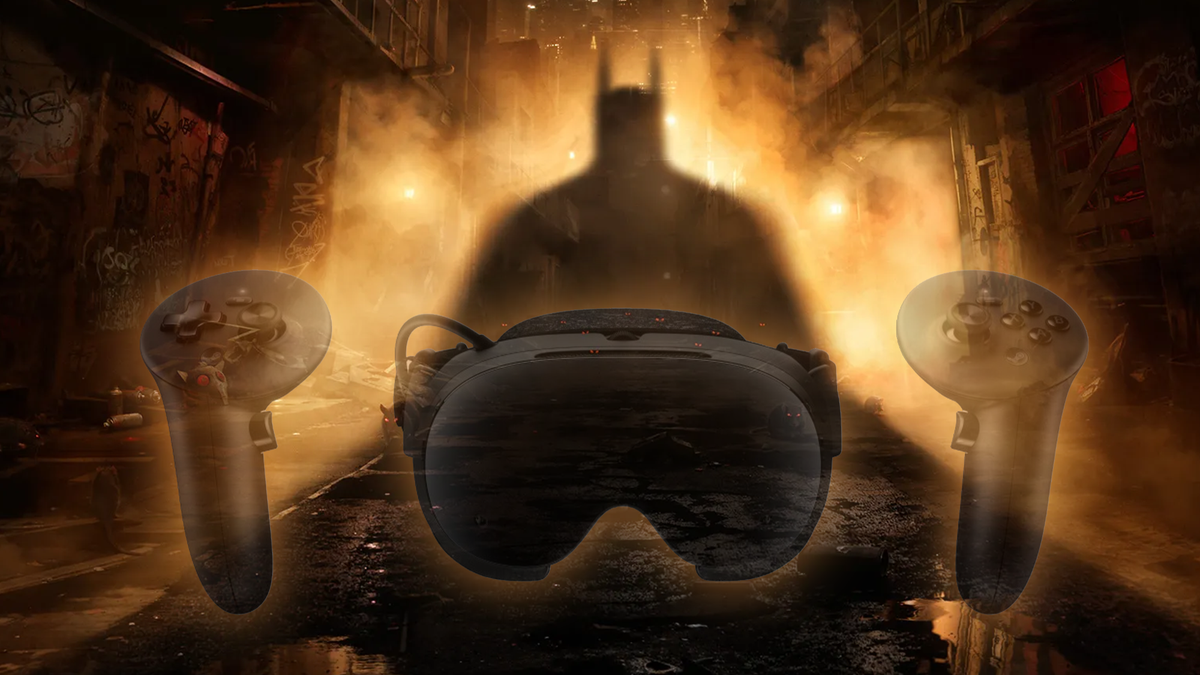
A new experimental tool called Android XR Bridge (AXRB) is making waves in the VR community by allowing Meta Quest exclusives—such as Batman: Arkham Shadow, Deadpool VR, and Asgard's Wrath 2—to run on PC VR platforms. Developed by Feli Reintgen, AXRB is a software runtime for Windows that enables Android-based VR applications originally built for Meta Quest hardware to be played on a PC, taking advantage of the superior graphics and processing power available on desktop systems.
What sets AXRB apart is its ability to unlock performance levels far beyond what is possible on the Quest headset itself. Recent updates to the tool have enabled 4K per eye rendering at 120 frames per second, as demonstrated by the developer in a social media post featuring Pinball FX VR. This leap in visual fidelity and smoothness is significant for VR enthusiasts and developers alike, as it showcases the potential for Quest titles to reach new technical heights when freed from the hardware constraints of standalone headsets. The developer notes that the only latency present during gameplay comes from the user's network, further emphasizing the efficiency of the bridge.
AXRB functions similarly to a traditional emulator by removing hardware restrictions from Quest games, after which the titles run via OpenXR on the PC. Importantly, the tool is designed to work only with legally owned Quest game files, reinforcing a focus on legitimate use. For developers and industry professionals, this approach opens up interesting discussions around software portability, platform exclusivity, and the potential for broader access to VR content across different hardware ecosystems.
Despite its promise, AXRB is not without challenges. The Early Access launch, initially planned for September 21, has been delayed due to technical issues such as installer failures, emulator launch problems, and limited game compatibility. The developer shared on Discord that many untested games fail to run successfully, highlighting the experimental nature of the project at this stage. Nevertheless, the existence of AXRB signals a possible future where PC VR users could access a wider range of content with minimal modification, potentially reshaping how VR titles are distributed and experienced.
For VR industry professionals, AXRB's progress is worth monitoring. It not only demonstrates the demand for cross-platform access to VR content but also raises questions about the future of exclusivity and the technical barriers between standalone and PC-based VR experiences. As the tool matures, it could influence both development strategies and user expectations in the evolving VR landscape.
Source: UploadVR
Spotted something wrong in this issue? Report it.