How AI Is Transforming XR: Insights From the Front Lines
This issue explores how AI is reshaping XR development, new VR game launches, mixed reality venues, enterprise XR training, and hardware innovations.

How AI is Changing XR Development: A Firsthand Perspective
As artificial intelligence tools become increasingly capable, their impact on the XR development workflow is undeniable. In the first part of a new series, an experienced XR developer, entrepreneur, and blogger shares an in-depth look at how AI is transforming day-to-day coding tasks, separating hype from practical reality.
The author recounts how AI-powered tools have evolved from basic code autocompletion to writing entire classes with remarkable fluency. GitHub Copilot, a plugin for popular development environments like Visual Studio and Rider, is highlighted as a game-changer. When first reviewed in 2023, Copilot was credited with boosting productivity by 10-15% for the modest price of $10 per month. With added experience and advice from colleagues, the author now estimates a 30% increase in development speed, enabling the handling of more projects than previously possible. Other AI tools, such as ChatGPT and Claude, are also used for generating multiple code stubs or for open-ended technical brainstorming.
Despite these improvements, the author stresses that AI is not a silver bullet. While AI can accelerate coding and even introduce developers to new techniques, it can also produce code that is suboptimal, unreadable, or even insecure. The author cites an example where AI-generated backend code contained a significant security flaw, unnoticed by its non-technical creator. This highlights a crucial point: while AI can help non-developers prototype ideas quickly, it cannot replace the expertise required for production-ready, secure, and maintainable code. AI sometimes generates convoluted or poorly refactored code, especially in complex environments like Unity with C#, underscoring the need for human oversight.
The piece draws a parallel between using AI and managing a junior developer: AI can handle repetitive or less engaging tasks, freeing up professionals to focus on more creative or complex work. However, this also means developers must adapt, becoming more like team leads who review, guide, and integrate AI-generated output. The author always reviews AI-generated code to ensure it meets functional and stylistic standards, emphasizing that responsible use of AI is essential.
For XR professionals, the takeaway is clear: AI can significantly boost productivity and support learning, but it is not a replacement for domain expertise. It excels at prototyping, learning new languages, and porting applications, but falls short in delivering production-quality code without expert review. As AI continues to improve, developers are encouraged to adapt their roles and workflows to harness these tools effectively, while remaining vigilant about quality and security.
Source: Skarredghost
DreamPark Opens Large-Scale Mixed Reality Venue in Seattle
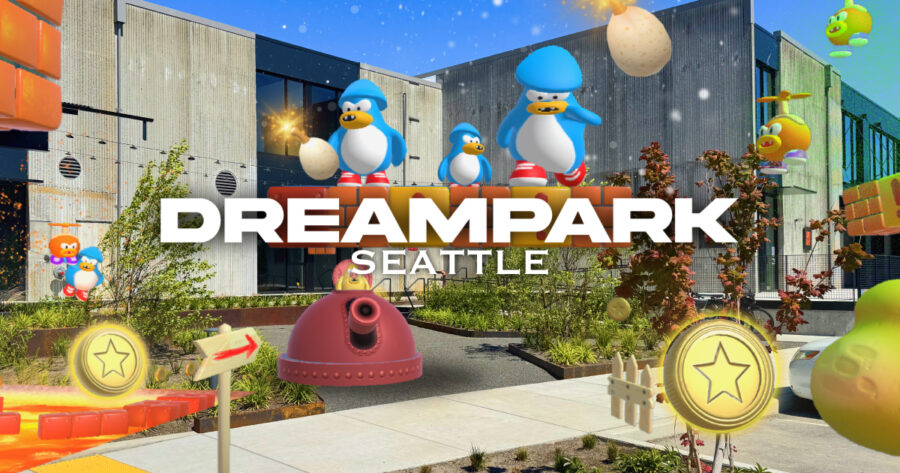
DreamPark, a company specializing in location-based XR entertainment, has launched a substantial new mixed reality venue at West Canal Yards in Seattle’s Ballard neighborhood. The 25,000-square-foot installation, which the company describes as “the world’s largest mixed reality theme park,” is now open to the public and aims to transform the waterfront redevelopment into a destination for immersive, interactive fun. This permanent venue caters to both adults and children aged four and up, offering free-roam augmented reality experiences that blend digital content with the physical world—without the need for permanent infrastructure or extensive construction.
The DreamPark experience is designed to be accessible and social, supporting multiplayer adventures that encourage group participation. The company’s technology, which was featured on ABC’s Shark Tank earlier this year, enables underutilized real-world spaces to be quickly converted into interactive, revenue-generating entertainment hubs. In addition to family visitors, DreamPark is targeting corporate teams in search of innovative team-building activities, leveraging Seattle’s strong gaming audience and its proximity to major technology companies.
Aidan Wolf, Co-Founder and CEO of DreamPark, emphasized the efficiency and profitability of their approach, stating that the West Canal Yards installation demonstrates the company’s ability to rapidly deploy immersive entertainment units. The project was developed in collaboration with Ned Carner, founder and president of Wing Point Partners, who noted that DreamPark is central to the vision of revitalizing the waterfront and creating a vibrant destination for the community.
The venue is currently open on Saturdays and Sundays from noon to 6 p.m. Among its attractions is a mixed reality drift trike racing game, alongside options for team-building events and birthday parties. General admission is priced at $20, with the DreamPark Raceway experience available for an additional $10. For those in the industry, DreamPark’s model demonstrates the growing viability of large-scale, flexible MR installations that can quickly adapt to new spaces and audiences, potentially setting a new standard for location-based AR and VR entertainment.
Source: Auganix.org
This Week in XR: HMS Enterprise AR, Meta Celeste Leaks, and More

This week’s XR news roundup brings a flurry of developments across hardware, software, and industry trends, with notable updates from Bytedance, Meta, HTC Vive, and others. Among the highlights, Bytedance—parent company of Pico—is reportedly working on a new mixed reality headset codenamed “Swan.” According to The Information, this lightweight device, weighing around 100 grams, will connect to a computational puck and utilize hand and eye tracking for input. Bytedance is said to be developing specialized chips for the headset, similar to Apple’s R1 chip, aiming to compete with Meta’s rumored lightweight mixed reality device (codenamed Puffin/Loma/Phoenix). This move underlines the ongoing rivalry between Pico and Meta, as both companies race to make mixed reality more mainstream, though the practicality of tethered pucks remains a debated point among testers.
Meta, meanwhile, continues to showcase its research prowess ahead of SIGGRAPH. This year, Meta is presenting prototypes for standalone VR and MR headsets boasting a 180° horizontal field of view. The VR prototype achieves this wide FOV using high-curvature reflective polarizers, while the MR version features front cameras delivering an 80MP passthrough at 60Hz, matching the headset’s FOV. These innovations could significantly enhance immersion and context for mixed reality applications, though it remains uncertain when, or if, these technologies will reach commercial products.
HTC Vive is also generating buzz by teasing a new product on social media, referencing Taipei’s iconic Taipei 101 tower—hinting at a possible major announcement from its headquarters. Details are scarce, and speculation ranges from a new headset to software or accessories, but the industry is watching closely for further updates.
In software and content, the VR multiplayer brawler Brazen Blaze has shifted to a free-to-play model on both the Horizon Store and Steam, following a broader trend as Meta encourages F2P titles to attract younger audiences. However, concerns remain about the sustainability of this model in a relatively small VR market. Mixed reality game developers are also adapting: "Alex And The Jets" added a VR mode to cater to the large Quest 2 user base, highlighting the slower-than-expected adoption of MR due to modest Quest 3/3S sales. Meanwhile, Coray introduced the Air2 AR glasses, notable for their 49-gram weight and use of silicon carbide waveguides with full-color Micro LED technology—an ironic twist given US export restrictions on silicon carbide to China. The Air2 is priced at CNY 4,999 (about $700), though hands-on reviews are not yet available.
Other notable updates include the launch of the Oakley Meta HSTN smartglasses (with positive early hands-on impressions), a VRChat Edition of the Bigscreen Beyond 2e headset, and a community-driven tool for importing Gaussian Splats into VRChat. Meta has also released a new Runtime Optimizer for Unity developers, compatible with all OpenXR apps, to help identify and resolve performance bottlenecks. Finally, the Venice Immersive festival announced its official selection, featuring 69 XR projects from 27 countries, reflecting the diversity and creativity in the immersive media space.
Source: Skarredghost
ByteDance plans Swan XR glasses to rival Meta
ByteDance is preparing to launch a new XR glasses product called "Swan," positioning itself as a challenger to Meta in the extended reality space. Details about the device and its capabilities have not been disclosed, but the move signals ByteDance's intent to compete more directly in the XR hardware market. Source: IDNFinancials and Tubefilter.Lockheed Martin, Librestream and Microsoft Unveil Secure XR Tool for Defense

Lockheed Martin and Librestream have joined forces with Microsoft to launch Onsight NOW, a secure video collaboration platform tailored for defense sustainment operations. Announced on July 31, 2025, Onsight NOW is Librestream’s flagship service intelligence platform, designed to facilitate secure, real-time collaboration for field service, sustainment, and inspection tasks. The tool integrates with enterprise systems and offers a suite of features, including remote assistance, augmented reality (AR)-enhanced diagnostics, AI-guided workflows, hands-free support through wearables, and contextual data access for frontline personnel.
The deployment of Onsight NOW within Lockheed Martin’s secure Azure Government Cloud environment marks a significant step forward in ensuring the protection of sensitive defense data. This implementation allows Lockheed Martin and its external partners to collaborate remotely while maintaining compliance with U.S. federal security standards, such as FedRAMP. The secure environment is crucial for defense operations, where data integrity and confidentiality are paramount.
According to Dan Flynn, Managing Director, Global Defense at Librestream, the integration of Onsight NOW on Azure Government demonstrates Lockheed Martin’s commitment to pioneering secure, advanced solutions in the defense sector. Flynn emphasized that this deployment not only boosts operational efficiency but also establishes a new standard for secure and interoperable video collaboration in defense. Lockheed Martin highlighted that Onsight NOW supports its broader 1LMX digital transformation initiative, aiming to accelerate maintenance cycles, enhance coordination, reduce operational costs, and improve mission readiness. Drew Robbins, Vice President of Sustainment Operations at Lockheed Martin, noted that Onsight NOW is expected to deliver the speed, agility, and insights required to address evolving global security threats.
Microsoft’s involvement through Azure Government Cloud further underscores the focus on security and compliance. Bob Serr, Vice President of Engineering at Azure Communication Services, stated that the collaboration exemplifies Microsoft’s commitment to empowering defense agencies with secure, innovative solutions for maintaining mission-critical assets. The partnership leverages Microsoft’s cloud infrastructure to ensure that sensitive defense operations can benefit from advanced digital collaboration tools without compromising on security.
Librestream brings a wealth of experience to this partnership, having delivered remote collaboration and field support solutions to clients across industries such as defense, aerospace, retail, and manufacturing. Their client list includes notable names like Volvo Trucks, Raytheon Technologies, Tesco, Rolls-Royce, and Colgate-Palmolive, demonstrating the platform’s versatility and reliability in high-stakes environments. For professionals in the XR and defense industries, the launch of Onsight NOW within a secure government cloud environment signals a move towards more robust, compliant, and technologically advanced collaboration tools, setting a new benchmark for digital transformation in defense sustainment.
Source: Auganix.org
How AI and XR Are Shaping Each Other’s Future

The intersection of artificial intelligence (AI) and extended reality (XR) is often described as a perfect match, but what does this really mean for XR professionals? In a recent analysis, an XR developer and entrepreneur shared insights on how these two technologies can empower each other, while also highlighting the nuances and challenges of their convergence.
Contrary to the belief held by some investors that AI and XR are competing technologies, the article argues that they are, in fact, highly complementary. XR devices, especially smartglasses and AR glasses, are uniquely positioned to provide AI with rich, implicit context through their cameras and microphones. For example, when troubleshooting a car problem, a user could simply look at the engine and ask an AI for help, without needing to provide detailed descriptions. This seamless context delivery is difficult to achieve with smartphones, which are often pocketed or require awkward hand usage, making smartglasses a more natural interface for AI-driven assistance.
However, this synergy also raises significant privacy concerns. Constantly recording glasses could give AI assistants—and by extension, device manufacturers—unprecedented access to users’ lives. The article notes Pico’s approach to privacy: on enterprise headsets, raw camera images are accessible, but on consumer devices, developers only receive AI-processed results, not the raw data. This model aims to balance privacy with the benefits of AI-enhanced XR experiences.
From a developer’s perspective, the growing popularity of smartglasses is creating new opportunities to build AI-powered applications. SDKs for devices like Mentra glasses and Brilliant Labs Frames are already enabling innovative projects, and major players such as Meta and Google are preparing their own SDKs for glasses, with Google planning a preview release within the year. The author anticipates a surge in demand for AI agents tailored for glasses, especially as sales continue to rise.
The article also contrasts the potential of smartglasses with mixed reality (MR) headsets like the Quest. While MR headsets can leverage AI for tasks like object recognition and guided training, their bulkiness and short session design limit their utility compared to the always-on, hands-free nature of smartglasses. As a result, the most promising AI-XR applications are likely to emerge in the AR glasses space, which is still ripe for innovation.
AI’s role in XR extends beyond context awareness. It is increasingly valuable for brainstorming and ideation, helping developers and clients generate new use cases and experiences. Additionally, generative AI is being used to address XR’s “content problem.” For instance, Meta’s Horizon Worlds desktop editor enables users to create environments, 3D models, and sounds using AI prompts, democratizing content creation and potentially ushering in a new era of XR experiences.
Source: Skarredghost
Envisics AR HUD Debuts in 2026 Cadillac VISTIQ and LYRIQ-V
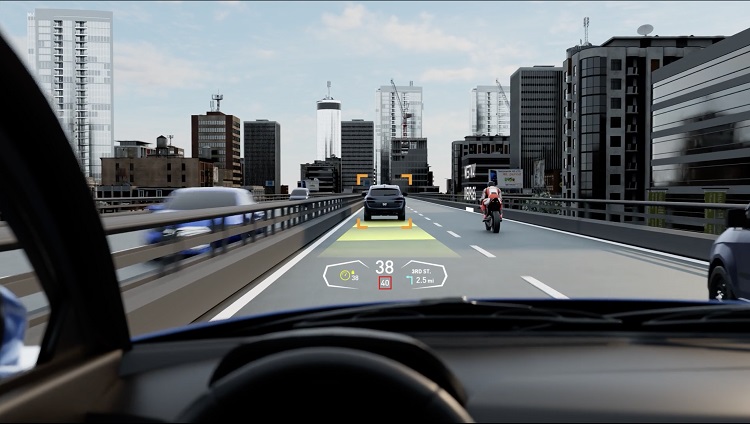
Envisics, a UK-based developer specializing in holographic display technology, has announced its exclusive partnership with General Motors (GM) to supply augmented reality head-up displays (AR-HUDs) for the 2026 Cadillac VISTIQ. This marks the first time that Envisics’ GEN-2 AR-HUD technology will be integrated into GM vehicles, specifically the Cadillac VISTIQ and LYRIQ-V models. Production of these vehicles is currently underway at GM’s Spring Hill Manufacturing facility in Tennessee, signaling a significant step forward in the adoption of advanced AR technologies within the automotive sector.
The GEN-2 AR-HUD system from Envisics was developed specifically for the VISTIQ and LYRIQ-V, reflecting a tailored approach to integrating holographic displays in luxury electric vehicles. The Cadillac VISTIQ, a new three-row electric SUV, is set to be sold globally, including in major markets such as the U.S. and Canada. With this launch, Cadillac aims to provide electric vehicles across all luxury SUV segments, underscoring the brand’s commitment to electrification and technological innovation.
This deployment is the latest milestone in a longstanding collaboration between Envisics and General Motors. GM Ventures, the automaker’s investment division, played a key role in supporting Envisics’ growth by participating in the company’s Series B and C funding rounds in 2018 and 2023. In its most recent round, Envisics raised over USD $100 million, a testament to the confidence placed in its technology and vision. Dr. Jamieson Christmas, founder and CEO of Envisics, highlighted the importance of GM Ventures’ early backing in transitioning the company’s research into production-ready solutions. He described the integration of Envisics’ AR-HUD in the Cadillac VISTIQ as both gratifying for the team and a strong endorsement of their technology.
From GM’s perspective, the collaboration with Envisics exemplifies its strategy of investing in and partnering with emerging technology companies at an early stage. Anirvan Coomer, managing director of GM Ventures, emphasized that the partnership is enabling GM to deliver innovative AR technology directly to Cadillac EV customers. The integration of holographic AR-HUDs is expected to enhance the in-car experience by providing drivers with real-time, contextually relevant information projected onto the windshield, improving both safety and convenience.
Envisics operates its center of excellence for holographic technologies in Milton Keynes, UK, focusing on automotive and mobility applications. The company’s work with GM positions it as a significant player in the evolution of AR displays for vehicles, a trend that is likely to influence future developments in the automotive and XR industries. For professionals in the field, this collaboration highlights the growing convergence of automotive design and spatial computing, as well as the importance of strategic partnerships and investment in bringing advanced AR solutions to market at scale.
Source: Auganix
FORM Adds Gorilla Glass 3 to Smart Swim 2 PRO AR Goggles
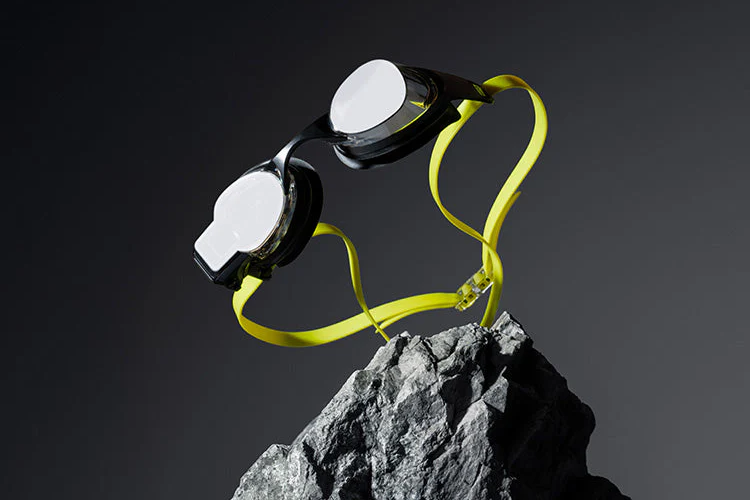
FORM, the Vancouver-based fitness technology company, has announced the launch of its Smart Swim 2 PRO, the latest evolution of its augmented reality (AR) swim goggles. Building on the foundation of the Smart Swim 2, which debuted in April 2024, this new model is designed for swimmers and triathletes seeking enhanced durability and clarity in their training tools. The standout upgrade in the Smart Swim 2 PRO is the integration of Corning Gorilla Glass 3 into both the internal and external lenses of the goggles—a material widely recognized in mobile and wearable technology for its scratch resistance and resilience.
The adoption of Gorilla Glass 3 marks a significant shift from the conventional plastic lenses found in most swim goggles. According to FORM, this upgrade delivers improved durability and visual clarity, while the custom optical stack provides UPF 50+ protection, blocking 98% of harmful UV rays. This is particularly relevant for athletes training in outdoor environments, where sun exposure is a major concern. Instead of relying on factory-applied anti-fog coatings, the Smart Swim 2 PRO uses a user-applied anti-fog solution. Each kit includes a 10 mL spray and a 10 mL concentrate, which FORM states is sufficient for over 175 applications, offering users a longer-lasting and potentially more effective anti-fog experience compared to traditional coatings.
In terms of features, the Smart Swim 2 PRO retains all the real-time tracking and coaching capabilities of its predecessor. These include real-time metrics, heart rate tracking, in-goggle guided workouts, FORM’s HeadCoach virtual coaching system, and open-water navigation through SwimStraight. This continuity ensures that swimmers upgrading to the PRO model do not lose access to the robust suite of training tools that have made FORM’s goggles popular among serious athletes.
The Smart Swim 2 PRO is priced at USD $329, CAD $449, GBP £279, EUR €329, and AUD $529. It is currently available for purchase in the US and Canada through FORM’s website and select retailers, with global availability expected in early August. In addition to the hardware update, FORM has announced enhancements to its Premium subscription platform, which is compatible with all generations of its goggles. Premium subscribers, at USD $9.99 per month after a one-month free trial, gain access to over 1,500 workouts, 45 training plans, and a suite of coaching tools. A new non-Premium feature, Streaks, has also been introduced to help swimmers track their consistency and encourage regular training habits.
For professionals in the spatial computing and AR industry, FORM’s integration of Gorilla Glass 3 into a sports wearable highlights the ongoing convergence of advanced materials and immersive technology in consumer fitness products. The move not only addresses durability and usability but also sets a new benchmark for AR eyewear designed for demanding environments. As FORM continues to iterate on both hardware and software, the Smart Swim 2 PRO positions itself as a leading example of how augmented reality can deliver tangible value to athletes in real-world scenarios.
Source: Auganix.org
Quest Feature Leaks, Brilliant Labs Smartglasses, and XR Highlights

This week in XR brought a wave of intriguing developments, with new features reportedly coming to Meta Quest, a major smartglasses launch from Brilliant Labs, and a host of product updates and industry events. According to datamining by Luna, as summarized on Upload VR, several potential new features could be headed to Meta Quest. These findings, while not official, hint at significant updates that may be confirmed at Meta Connect. Luna's research is based on datamining, so some features may never materialize, but the anticipation is building within the developer and enthusiast communities.
Brilliant Labs is set to announce its latest smartglasses on July 31st at 10 am PT. The company, known for its Monocle and Frames products—praised for openness, lightweight design, and AI integration—is expected to continue its tradition of developer-friendly hardware. This is notable in a market where open ecosystems are still rare. Bobak Tavangar, Brilliant Labs' cofounder, will also participate in an AMA on the /r/augmentedreality subreddit during the launch, offering the community a chance to engage directly and ask questions about the new device and its capabilities.
In hardware news, Sharp has unveiled a prototype VR controller that blends glove and traditional controller elements. Rather than tracking sensors, the device uses multi-segmented tactile elements to deliver haptic feedback, aiming to make VR experiences more immersive. Pre-registrations for the controller have closed on Sharp's Japan-facing site, with a listed price of ¥100,000 (approximately $680). If delivered, early user feedback will be closely watched by the industry, as haptic innovation remains a key area of interest.
Meta also published a research paper in Nature detailing ideal interactions for its upcoming EMG wristband, designed for future smartglasses. Demonstrated gestures are natural and adaptable, with the wristband reportedly able to learn users' unique movements. Meanwhile, display expert Karl Guttag suggested that Google’s recent smartglasses demos may use Raxium microdisplays, which are currently limited by extremely low manufacturing yields—raising questions about their commercial viability. However, this information has not been confirmed by Google.
Other notable updates include the return of the VR Games Showcase on August 12th, promising major reveals from studios like Triangle Factory and nDreams Elevation, and Pico’s Summer Sale offering up to 50% discounts on selected titles until August 10th. On the software front, "Putt Window" for Quest 3 introduces a mixed reality golf experience using real equipment, and XR Games’ rhythm game BEATABLE has exited Early Access with new features, available for around $10 on the Horizon Store. Sadly, TxK Gaming Studios, makers of Dungeon Full Dive, are shutting down and making their $50 GM Edition toolkit free next week—a reminder of the financial challenges facing ambitious VR projects.
Additional highlights include hands-on reviews of Xiaomi AI glasses, Viture’s new high-brightness smartglasses, a VR Android File Manager for sideloading APKs, and Pimax’s Crystal Light headset discounts for users migrating from other platforms. The FM DUO VR camera, capable of up to 12K@30fps and 8K@60fps with RTMP streaming and 5G, also made headlines for its immersive capture capabilities. For those implementing VR training, a recommended guide is available, and Google’s new AI feature now lets users virtually try on clothes from a photo.
Source: Skarredghost
Gixel Unveils Micromirror-Based AR Optics and Raises €5M

German startup Gixel has emerged from stealth, introducing a novel optical engine for augmented reality (AR) and smartglasses that leverages micromirror technology. The company also announced a €5 million funding round led by prominent industry figures, including Oculus co-founder Brendan Iribe, as well as Ted Schilowitz, Jochen Engert, Daniel Kraus, André Schwämmlein, Germany's Federal Agency for Disruptive Innovation (SPRIND), and LEA Partners. This influx of capital is intended to advance the technology, address engineering challenges, and prepare for industrial-scale manufacturing.
Unlike conventional AR optical engines such as waveguides, birdbath, or pinhole systems, Gixel’s approach centers on lenses embedded with micromirrors. These micromirrors, suspended in a liquid with a matching refractive index, can dynamically alter their orientation to reflect light from a microOLED projector directly into the user's eyes. Eye-tracking sensors detect the user’s gaze, enabling the control system to adjust the micromirrors in real time, ensuring the projected virtual image is always correctly aligned with the user’s line of sight. The result is a transparent lens that delivers AR overlays while maintaining high clarity and minimal tint when the display is off.
According to Gixel, their technology promises several advantages: optical see-through displays with smartphone-level image quality, excellent transparency when inactive, and highly efficient, low-weight, low-heat operation. The design supports curved lenses for sleek form factors, variable focal planes for accurate depth, and a scalable field of view (FOV) that can be tailored by adjusting the number of micromirrors. This flexibility allows manufacturers to create a range of products with different FOVs and display placements, potentially overcoming limitations seen in earlier AR devices, such as the darkened lenses of the first Magic Leap or the restricted FOV of waveguide-based systems.
However, the technology faces significant engineering hurdles. The micromirrors must be nearly invisible to the user and capable of rapid, low-latency movement to keep up with fast eye motions. Durability and repairability are also concerns, as the electromechanical components will be subject to continuous use. Gixel acknowledges these challenges and is actively working to address them, with plans for further testing and refinement. If successful, the company aims to secure a larger Series A round next year to scale up production and meet industry demand.
For professionals in the AR industry, Gixel’s micromirror-based optical engine represents a potentially transformative step, offering new possibilities for product design, user experience, and energy efficiency. The involvement of seasoned investors underscores the industry’s interest in novel optical solutions that could break through current limitations.
Source: Skarredghost
The Sandbox and Cirque du Soleil Partner on Metaverse Shows

The Sandbox, a web3-enabled metaverse gaming platform, has announced a new partnership with Cirque du Soleil Entertainment Group to bring the world-famous theatrical company’s productions into immersive digital formats. The collaboration will see two of Cirque du Soleil’s live shows reimagined as interactive experiences within The Sandbox, with the aim of capturing the visual spectacle and emotional resonance that have become hallmarks of Cirque’s global touring performances.
Cirque du Soleil will headline The Sandbox’s upcoming Alpha Season 6, providing users with interactive gameplay inspired by the company’s unique blend of artistry and theatrical flair. The first of these digital experiences will be based on Cirque’s production Luzia, while the second is yet to be revealed. Both will allow players to explore environments and storylines modeled after the live shows, integrating narrative elements and gameplay mechanics that leverage The Sandbox’s capabilities for user interaction and creativity.
To further engage the community, The Sandbox will launch limited-edition digital collectibles and avatars themed around Cirque du Soleil, which can be used within the platform. In addition, Cirque-branded assets will be released for The Sandbox’s creator community, enabling users to incorporate Cirque-inspired elements into their own user-generated content. This move is designed to foster a more participatory and creative ecosystem, allowing fans and creators to reinterpret Cirque’s signature style in new ways.
The partnership was officially unveiled during a keynote at NFT.NYC, where attendees were treated to a preview of the Cirque experience and a live performance, along with announcements of additional content to be rolled out in the future. Noah Lemieux Bernier, Vice President of Digital and Customer Experience at Cirque du Soleil, highlighted the significance of this collaboration, noting that while the company has previously explored digital storytelling, The Sandbox offers new possibilities for interactive, social, and playful engagement. Arthur Madrid, CEO and Co-Founder of The Sandbox, echoed this sentiment, emphasizing the opportunity to deliver the thrill of live spectacle in an interactive metaverse format.
For professionals in the XR and spatial computing industry, this partnership signals a growing trend of established entertainment brands leveraging metaverse platforms to expand their reach and experiment with new forms of audience engagement. The integration of Cirque du Soleil’s theatrical artistry with The Sandbox’s creator-driven ecosystem could serve as a model for future collaborations between live entertainment and immersive digital worlds.
Source: Auganix
Spexi Boosts Drone Mapping with 1M+ Acres of Orthomosaic Data
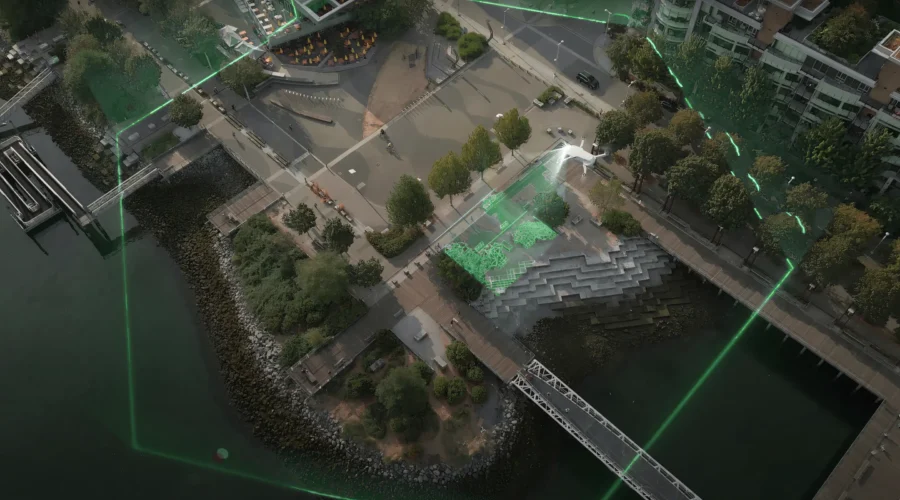
Spexi has announced a significant expansion of its drone-based aerial mapping platform, adding over 1 million acres of new orthomosaic coverage. The company now offers high-resolution orthomosaic imagery that can be delivered within 24 hours of a request, marking a notable shift in the speed and scale of aerial mapping services available to industries reliant on up-to-date geospatial data.
Orthomosaic imagery, created by stitching together thousands of drone-captured photos, provides a geometrically accurate, distortion-free map that allows users to measure distances, identify objects, and track changes over time. The high level of detail in these images supports a wide range of professional applications, from infrastructure planning and insurance assessments to digital twin creation and spatial computing. Unlike traditional aerial mapping that often requires manned flyovers or in-house drone operations, Spexi’s distributed network of drone operators enables rapid, on-demand data collection with reduced overhead and turnaround times.
According to Spexi, this upgrade extends its fast-capture capabilities—previously utilized for oblique imagery, which offers angled views for enhanced depth and context—into the orthomosaic domain. This enhancement allows for the generation of 3D point clouds and gaussian splat models while maintaining high resolution and broad coverage. The company highlights that its platform has already amassed over 3.5 million acres of oblique imagery across more than 200 cities worldwide, demonstrating its ability to scale and serve a global client base.
The expanded orthomosaic service is positioned to benefit a range of sectors, including government, construction, insurance, spatial technology, and AI. Organizations can initiate a mapping request by submitting a KML file, after which a Spexi operator manages the capture process, often completing it within a day. To encourage adoption of the new service, Spexi is offering to cover 50% of capture costs, up to USD $10,000, for the first five customers.
For professionals in spatial computing and XR, the availability of fast, high-resolution orthomosaic data opens new possibilities for real-time digital twin updates, urban modeling, and AI-driven analysis, all without the logistical complexity of traditional mapping approaches. As demand for accurate, timely geospatial data grows, Spexi’s expanded platform could help reshape workflows across multiple industries.
Source: Auganix
Xiaomi AI Smart Glasses: A First Look at Their Debut Model

Xiaomi has entered the smartglasses market with the launch of its AI Smart Glasses, now available for purchase online in China. Priced at ¥1999 (about $280 USD), the device is positioned as an affordable entry into the world of wearable AI, targeting users who are already invested in Xiaomi’s extensive ecosystem of devices. This first-generation product is not revolutionary, but it is notable for how it integrates with Xiaomi’s broader suite of technology, including smartphones, smart home devices, wearables, and even electric vehicles.
The Xiaomi AI Smart Glasses weigh 40g (without lenses) and are available in three colorways, featuring a D-style frame and optional electrochromic lenses. The glasses support official prescription lens customization, though Xiaomi recommends trying them on in-store due to fit variability. A key design advantage is their fit for Asian facial structures, addressing a common issue with competing products like the Meta Ray-Ban smartglasses, which tend to slide down on those with lower nose bridges. While the oversized frame appeals to some, others feel the plastic build and thick arms look a bit cheap, but overall, they score a functional 7 out of 10 for comfort and style.
Under the hood, the glasses are powered by Qualcomm’s Snapdragon AR1 Gen 1 platform and a low-power coprocessor for AI, voice, and media functions, with 4GB RAM and 32GB storage. Audio is delivered through two open-ear directional speakers, which suffice for podcasts and casual videos but lack the bass and richness of the Meta Ray-Ban glasses. Connectivity is handled via Bluetooth 5.4 with AAC for stable performance, though audio fidelity is not a highlight.
Photo and video capture is enabled by a 12MP camera capable of 2K 30fps video, activated by a physical button. While photos are pleasing in good light with Xiaomi’s signature color tuning, video stabilization feels artificial compared to Meta’s offering, and low-light performance is poor with significant noise and motion blur. The built-in Xiao Ai voice assistant supports continuous dialogue and can be used for tasks like translations, weather updates, and smart home control. However, its AI capabilities are inconsistent and limited compared to Western competitors, and it cannot be used while recording video, limiting hands-free workflows. The glasses shine most when used as a voice remote for Mi Home smart devices or as a first-person camera during video calls on supported Xiaomi phones, leveraging the company’s ecosystem integration.
Compared to the Meta Ray-Ban smartglasses, which are priced slightly higher and offer superior build, audio, and AI features (though Meta AI is not available in China), Xiaomi’s glasses are a solid but not standout offering. If priced lower, they would be an easy recommendation, but at their current price, they are best suited for users already embedded in Xiaomi’s product universe. As a first-generation product, they are functional and quietly smart, hinting at greater potential if Xiaomi continues to refine audio, AI, and camera performance in future versions.
Source: Skarredghost.
Kinneta Unveils XR Fitness Workouts for Cardio Machines
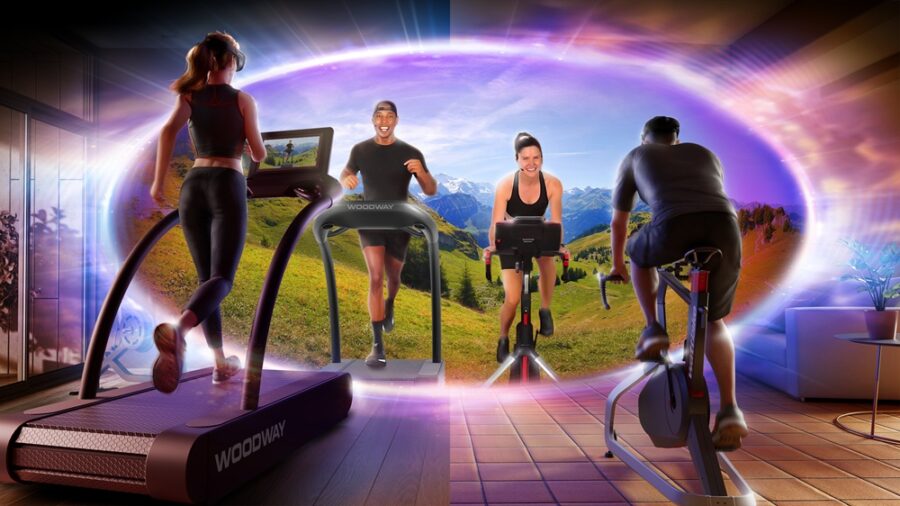
Kinneta, a New York City-based developer specializing in XR fitness applications, has launched two new immersive workout experiences designed to enhance cardio exercise on fitness machines. These demos, introduced at AWE USA last month, mark a significant step in integrating augmented and virtual reality into mainstream fitness routines. The first experience leverages XREAL's augmented reality glasses, transforming exercise bike sessions into rhythm-based, gamified challenges. Users on a Wattbike must synchronize their pedaling cadence with the beat of a song to earn in-game powerups, adding a competitive and engaging layer to traditional cardio workouts.
The second demo focuses on a virtual reality experience for Meta Quest headsets, offering a photorealistic, trainer-led run through New York's Central Park. This VR workout stands out by automatically adjusting treadmill speed and incline to match the trainer's instructions, with the user's real-world treadmill movements mirrored precisely in the virtual environment. The seamless integration between the fitness machine and the VR headset is enabled by Kinneta's patented Motion Engine, which supports connectivity with Bluetooth-enabled treadmills and bikes to project real-time fitness stats in VR. Notably, the app is also compatible with 99% of treadmills and stationary bikes in non-connected mode, making it accessible to users with non-Bluetooth equipment.
Alongside these product announcements, Kinneta revealed a new partnership with TrueForm, a manufacturer known for its curved, non-motorized treadmills. The companies are collaborating to tailor Kinneta’s app for TrueForm’s machines, expanding the app’s reach within the fitness industry. Kinneta also maintains established partnerships with brands like Woodway and Wattbike, further cementing its position in the connected fitness space. The technology underpinning Kinneta’s platform is built on the foundation of Octonic, an earlier XR fitness app developed by the same team, which allowed users to virtually run or bike through realistic environments.
Kinneta’s app aims to make cardio workouts more engaging by offering users the option to exercise alongside top trainers at iconic locations worldwide, or to bring photorealistic holographic trainers into their own space using the Quest’s VR passthrough feature. The company has announced that this holographic trainer capability will soon be available for XREAL AR glasses as well. For users interested in trying the app, it is available on the Meta Store with a one-week free trial, after which a subscription is priced at USD $9.99 per month or USD $99.99 per year for full access.
For professionals in the XR and fitness industries, Kinneta’s latest offerings illustrate the growing potential for immersive technologies to transform traditional exercise routines, enhance user engagement, and expand the market for connected fitness solutions. The company’s focus on compatibility and partnerships signals a broad approach to industry collaboration and accessibility.
Source: Auganix.org
Spotted something wrong in this issue? Report it.