Meta Unveils VR Headset Tech Pushing Toward Real-Life Visuals
This issue explores Meta's next-gen VR headset technology, SIGGRAPH 2025 XR highlights, new VR hardware, enterprise adoption, and the latest in immersive games.
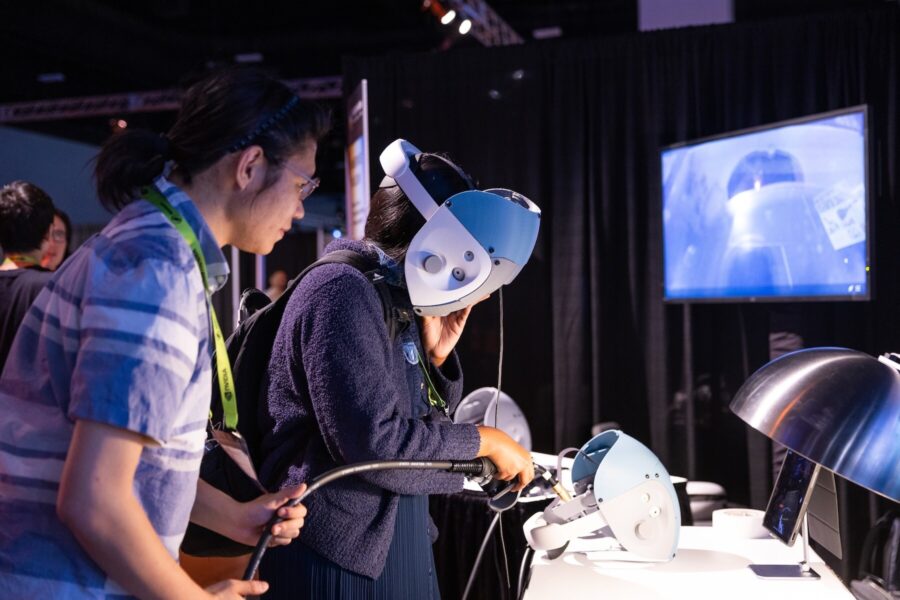
SIGGRAPH 2025 Showcases New Frontiers in XR and Spatial Computing
SIGGRAPH 2025 is preparing to shine a spotlight on the latest advancements in extended reality (XR), motion capture (mocap), and spatial storytelling, with a comprehensive program set for August 11–14 at the Vancouver Convention Centre. The annual event, recognized as a major gathering for computer graphics and interactive techniques, is introducing a new Spatial Storytelling program, which marks an evolution from the event’s previous VR Theater. This new initiative is designed to give creators a platform to demonstrate how XR, mixed reality (MR), and mocap technologies are being used to craft immersive and interactive narratives in real time.
The Spatial Storytelling program is structured as a creator-first experience, offering attendees behind-the-scenes access to workflows that blend performance and technology. The focus is on how emotion, imperfection, and interactivity contribute to the richness of spatial experiences. According to Marco Cermusoni, Chair of the program, the format is both a spectacle and a masterclass, allowing audiences to witness the creative magic and then learn the techniques behind it. This approach aims to deepen understanding of the creative process while highlighting the unique capabilities of spatial computing for storytelling.
Alongside Spatial Storytelling, the Immersive Pavilion will feature a variety of interactive XR and AI-driven experiences. The Pavilion is set to emphasize emotional presence, cultural exploration, and embodied interaction, inviting attendees to engage with sensory simulations, historical reenactments, and experimental game worlds that merge digital and physical realities. The experiences showcased are not limited to entertainment; they also explore applications in empathy-building, heritage preservation, and hybrid social connection. Saskia Groenewegen, Chair of the Immersive Pavilion, notes that these works allow participants to step into the perspectives of others, such as newborns, parents under stress, or historical figures, transforming simulations into deeply emotional experiences.
SIGGRAPH 2025’s Emerging Technologies program will also include XR-adjacent highlights, such as a “Wide Field-of-View Mixed Reality” system that features compact headset designs, and “DreamPrinting,” a volumetric 3D printing technology that captures ephemeral visuals with high fidelity. For developers and technologists, the Labs program will offer 28 technical sessions focused on experimentation, education, and access. Notable among these is a session on optimizing real-time Gaussian Splat Rendering for mobile and standalone VR, along with a range of other workshops aimed at pushing the boundaries of immersive technology.
For industry professionals, SIGGRAPH 2025 presents a valuable opportunity to experience the latest in spatial computing, learn from leading creators, and explore emerging tools and techniques that are shaping the future of immersive technology. More details about the event and its programs can be found at s2025.siggraph.org.
Source: Auganix.org
Luxsonic VR Imaging Tools Join CAN Health Network for Rural Care
The Government of Canada has announced a significant expansion of the Coordinated Accessible National (CAN) Health Network with the addition of the Virtual Health Hub (VHH), aiming to improve healthcare access in Saskatchewan’s remote, rural, Indigenous, and northern communities. The VHH’s inclusion is part of a broader effort to deploy advanced digital tools and support equitable care across the province. Since 2019, the federal government has invested CAD $42 million in the CAN Health Network, which connects Canadian health technology companies with healthcare providers nationwide.
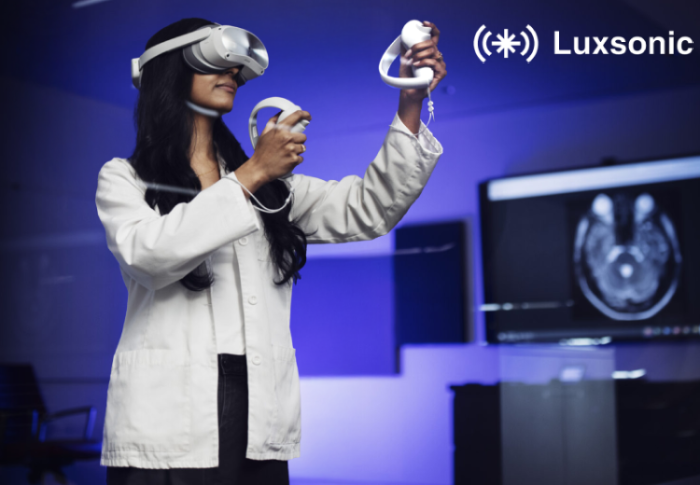
Among the new technologies being introduced is Luxsonic Technologies’ virtual reality (VR) platform for medical imaging. Based in Saskatchewan, Luxsonic specializes in VR tools that enable immersive radiology workflows using standalone VR headsets. This system replaces traditional radiology workstations and monitors with high-definition virtual imaging displays, allowing healthcare professionals in remote areas to access diagnostic images, manage workflows, communicate in real time, and utilize AI-enhanced tools and teaching resources—all within a single integrated platform. The platform is authorized in Canada as a Class II medical device for remote radiology, supporting secure integration with existing medical imaging infrastructure and enabling real-time collaboration and diagnostic image review.
In addition to Luxsonic’s VR solution, Nova Scotia–based Virtual Hallway will provide a digital consultation platform designed to connect family physicians with specialists more efficiently. This is expected to further improve access to expert care across the network, particularly in regions where specialist availability is limited. The CAN Health Network itself has grown to encompass 50 participating healthcare organizations and authorities, known as “Edges,” that are actively involved in technology trials and adoption.
According to the Honourable Buckley Belanger, Secretary of State (Rural Development), the government’s investment in the CAN Health Network supports Canadian businesses developing innovative healthcare solutions while also helping patients receive better care closer to home. The initiative has already supported 99 Canadian health technology companies through 127 commercialization projects, generating more than CAD $698 million in revenue and creating 2,331 jobs as of April 2025.
For professionals working in the VR and digital health sectors, this development demonstrates the increasing role of immersive technologies in addressing longstanding challenges in rural and remote healthcare delivery. The integration of VR-based medical imaging and digital consultation platforms into the CAN Health Network not only highlights the maturation of these technologies but also sets a precedent for their adoption in other regions facing similar barriers to care.
Source: Auganix.org
Hong Kong adopts VR for infant care training
Hong Kong has introduced virtual reality-based training for infant care. This initiative aims to enhance the skills of caregivers and healthcare professionals by leveraging immersive VR technology.
Source: MobiHealthNews, McKnight's Senior Living.
UCLA Study: VR May Reduce Stress and Aid Heart Health
A new study from UCLA Health suggests that virtual reality experiences can help reduce stress and may support heart health. The research highlights the potential for VR technology to play a role in promoting relaxation and well-being.
Source: UCLA Health
VR Experience Recreates Hiroshima Before and After Bombing
A new virtual reality tour offers users a unique perspective on Hiroshima by showing the city both before and after the atomic bomb was dropped. This immersive experience allows viewers to witness the dramatic transformation of Hiroshima, providing a powerful educational tool about the impact of the bombing.
Source: JAPAN Forward, Japan Wire by Kyodo News.
Qualcomm and VoxelSensors Team Up to Advance 3D Sensing for XR
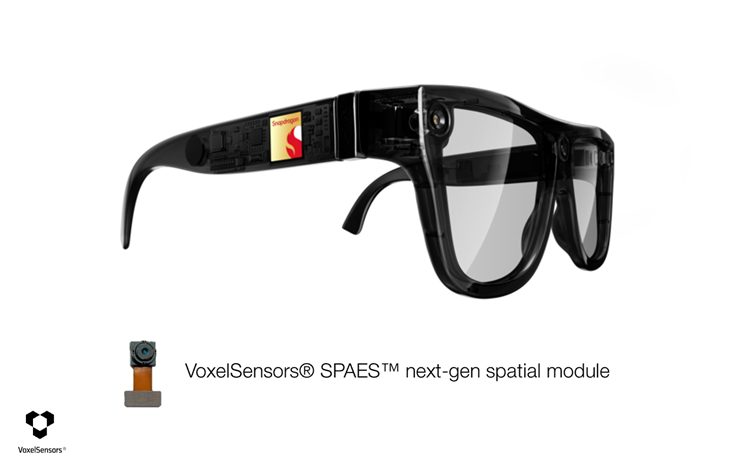
Qualcomm Technologies and VoxelSensors have announced a strategic collaboration aimed at optimizing 3D sensing technology for the next generation of extended reality (XR) devices. The partnership will focus on integrating VoxelSensors’ Single Photon Active Event Sensor (SPAES) technology with Qualcomm’s Snapdragon AR2 Gen 1 Platform, with the goal of delivering more efficient, smaller, and faster AI/AR glasses. This initiative is positioned to address key industry challenges, including reducing power consumption and latency, which are critical for enabling comfortable, all-day wearable XR devices.
VoxelSensors, based in Brussels, specializes in intelligent sensing and data insights for physical AI. The company claims SPAES offers up to 10x power savings and significantly reduced latency compared to current depth sensing solutions, all while maintaining robust performance across a range of lighting conditions. These improvements are particularly relevant for XR and robotics applications, where reliable depth perception and efficient data processing are essential for both user experience and device longevity. By advancing depth sensing capabilities, the collaboration aims to expand the operational boundaries of current sensors and enhance the quality of egocentric data used to train physical AI models—data that captures the world from the user’s perspective, enabling more intuitive machine understanding of environments and behaviors.
The integration of SPAES with the Snapdragon AR2 Gen 1 Platform is expected to provide a low-latency, flexible 3D active event data stream, which is vital for applications such as eye-tracking and real-time environmental mapping. According to VoxelSensors, the optimized solution will be made available to select customers and partners by December 2025. Johannes Peeters, CEO of VoxelSensors, highlighted that this collaboration is the result of five years of technology development and sees it as a step toward enabling truly personal AI agent interactions on XR devices. Ziad Asghar, SVP & GM of XR at Qualcomm Technologies, echoed this sentiment, emphasizing that VoxelSensors’ technology could help realize the vision of lightweight, all-day wearable AR glasses by delivering higher performance with lower power requirements.
For XR industry professionals, this partnership signals a meaningful push toward mainstream adoption of advanced AR wearables. The focus on miniaturization and efficiency directly addresses longstanding barriers to widespread use, such as device bulkiness and limited battery life. As VoxelSensors continues to refine its technology for commercial integration, the collaboration with Qualcomm underscores both companies’ commitment to accelerating the performance and adoption of spatial computing devices. The industry can expect to see the first results of this partnership as early as the end of 2025, potentially setting new benchmarks for XR device capabilities and user experience.
Source: Auganix
FLAIM and FRSA Expand MR Firefighter Training in ANZ
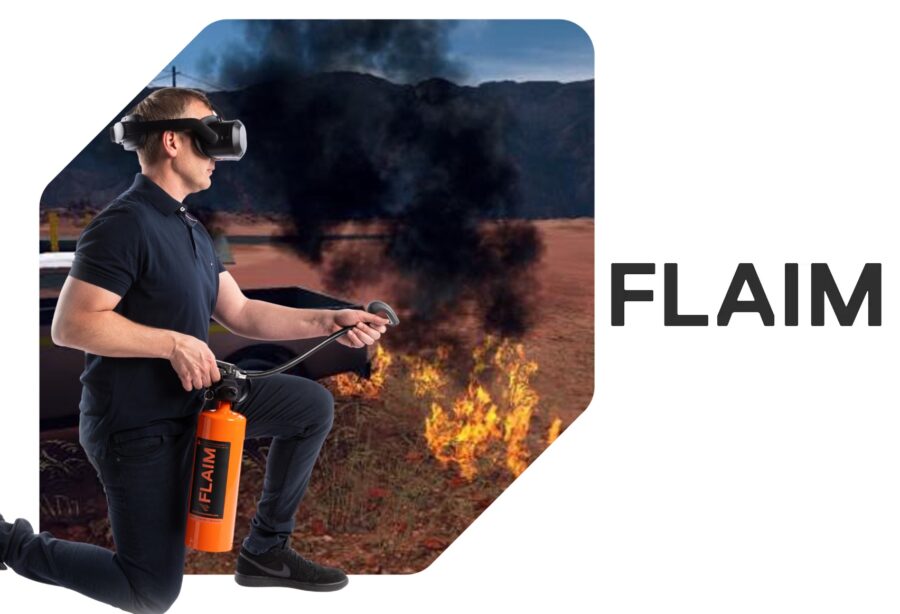
FLAIM Systems, a provider of mixed reality (MR) immersive learning solutions for high-risk fire and hazardous materials (HAZMAT) incident training, has announced a new partnership with Fire Rescue Safety Australia (FRSA). The agreement, revealed on August 27, 2025, will see FRSA take on the role of promoting, selling, and supporting FLAIM’s MR training technology throughout Australia and New Zealand. This collaboration is set to broaden the reach of advanced, immersive training environments for firefighters and safety professionals in the region.
The partnership is designed to address the growing need for realistic and safe-to-fail training scenarios in emergency response and high-risk industries. By leveraging MR, FLAIM’s solutions enable trainees to build critical skills in virtual simulations without exposure to real-world hazards. FRSA’s established presence and expertise in emergency response solutions across the Asia Pacific region make it a strategic partner for FLAIM’s expansion efforts. Simon Miller, Managing Director of FLAIM Systems, highlighted FRSA’s reputation and customer-first culture as key factors in the decision, stating that the partnership will help FLAIM reach more customers in the ANZ region.
According to Mick Richards, Managing Director at FRSA, FLAIM’s technology is well-suited to complement traditional training methods. He noted that FLAIM offers a portfolio of 180 training scenarios, which significantly boosts the capacity for high-risk incident training among FRSA’s network of over 500 regional customers. Richards also pointed out the increasing interest in FLAIM’s solutions since the company’s inception in 2020, expressing enthusiasm for the partnership as FLAIM continues to develop and expand its offerings.
To showcase the capabilities of FLAIM’s MR training systems, FRSA will present the technology at AFAC 2025 in Perth, Australia, from August 26 to 29. Attendees at the event will have the opportunity to experience immersive training applications for both firefighting and workplace fire safety firsthand. This move underscores the growing adoption of XR technologies in emergency response and workforce readiness, providing industry professionals with tools to safely practice and refine essential skills.
For those working in the VR, MR, and spatial computing industries, this partnership exemplifies the increasing integration of immersive technologies into critical training sectors. As demand for safe, effective, and scalable training solutions rises, collaborations like this one between FLAIM and FRSA are likely to play a pivotal role in shaping the future of workforce development and emergency preparedness in the region.
Source: Auganix.org
Haylo Labs Acquires Plessey, Pledges £100M for UK MicroLED Expansion
Haylo Labs has announced the acquisition of Plessey Semiconductors, a UK-based manufacturer specializing in microLED display technology, as part of a major investment commitment exceeding £100 million over the next five years. This strategic move aims to expand Plessey’s manufacturing capacity and grow its workforce, which currently stands at 270 employees. The investment is set to bolster the UK's advanced manufacturing sector and accelerate the commercialization of microLED and optical computing technologies for next-generation devices.
Plessey Semiconductors operates a fully integrated platform that handles the design, engineering, and manufacturing of microLED technologies in-house. According to Plessey's Chief Executive, Keith Strickland, the acquisition by Haylo Labs will enable the company to scale its operations and bring transformative microLED and optical computing solutions to the global market. The company is particularly focused on expanding its manufacturing footprint in Plymouth and strengthening its engineering talent pool.
MicroLEDs are extremely small light-emitting diodes—about 50 can fit across a human hair—enabling displays that are brighter, sharper, smaller, and more energy-efficient than current display technologies. The same fabrication techniques used for microLEDs are being leveraged for optical computing, where light-based chips, or optical processing units (OPUs), offer the potential for faster, cooler, and more efficient performance in AI workloads compared to traditional silicon-based devices. Plessey has been developing these technologies with an eye on scalable, real-world solutions, addressing the growing international demand for advanced displays and optical computing across AR and VR headsets, smart glasses, automotive displays, and consumer electronics.
Haylo Labs, created by Haylo Ventures to focus on microLED, optical computing, and interconnect technologies, sees this acquisition as a turning point for British technology. David Hayes, Chief Executive and Co-Founder of Haylo Labs, highlighted Plessey’s leadership in microLED efficiency and its unique position as one of the few facilities globally offering end-to-end design and manufacturing. Co-Founder Claire Valoti emphasized that the deal is about enabling the future of AI-powered devices that are lightweight, energy-efficient, and wearable, positioning the UK to lead the next wave of global computing innovation. The investment has also been welcomed by local MPs as a significant boost for advanced manufacturing and skilled jobs in Plymouth and the South West of England.
Source: Auganix
Suva and BearingPoint Launch Swiss Safety VR Platform
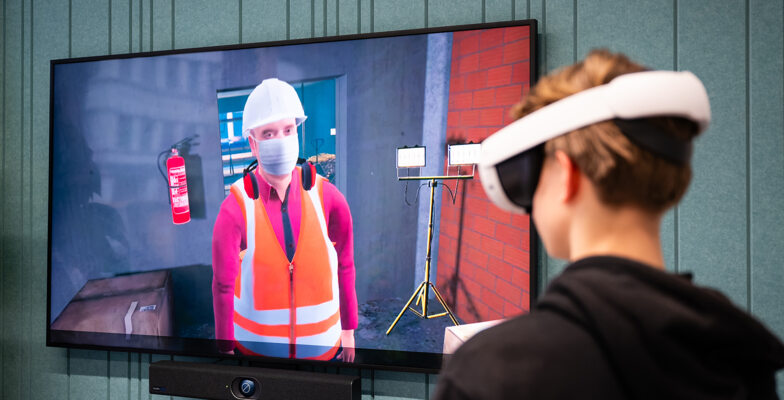
Suva, Switzerland’s national accident insurance provider, has teamed up with technology consultancy BearingPoint to introduce Swiss Safety VR, a virtual reality training platform designed to enhance workplace safety. This initiative aims to address Switzerland’s persistent challenge of workplace accidents, which number between 260,000 and 300,000 annually, with a significant portion occurring in high-risk sectors like construction. The platform is targeted at the more than two million people insured with Suva, reflecting a broad commitment to reducing accident rates through innovative training methods.
Swiss Safety VR leverages a blend of virtual, augmented, and mixed reality (XR) technologies to create immersive safety training experiences. The platform’s interactive VR scenarios focus on high-risk tasks, such as securing heavy loads and preventing falls from unprotected areas—common sources of workplace injuries. By simulating real-life risk situations, the platform aims to make safety training more engaging and impactful compared to traditional methods. Each training module lasts around 20 minutes, offering concise yet effective sessions that illustrate the consequences of unsafe practices.
To facilitate widespread adoption, the platform is designed to be scalable and user-friendly, with a growing library of training scenarios. Suva and BearingPoint have also implemented a "train-the-trainer" program and ongoing process improvement support, helping organizations integrate Swiss Safety VR into their existing workflows. Collaboration with industry stakeholders, including trade associations and construction firms, has enabled co-investment in developing relevant VR safety content, ensuring the platform addresses real-world industry needs.
One notable aspect of the initiative is its accessibility: Suva is offering Swiss Safety VR free of charge to organizations across Switzerland, including educational institutions. The platform is available on the Meta Quest 3 headset and supports four languages—German, French, Italian, and English—to maximize its reach. According to Suva’s Programme Manager for New Technologies, Nathanaël Bonvin, the platform not only motivates participants but also significantly improves safety outcomes. BearingPoint’s Matthias Roeser emphasized the scalability and practical impact of combining immersive technology with real-life risk scenarios. For professionals in the VR and safety training industries, Swiss Safety VR represents a significant step toward mainstream adoption of immersive training tools, setting a precedent for how XR technologies can be applied to address critical workplace challenges.
Source: Auganix
Spotted something wrong in this issue? Report it.