Meta and Oakley Debut XR Smartglasses as Market Growth Returns
This issue covers Meta and Oakley's new smartglasses, Apple Vision Pro M5 rumors, enterprise acquisitions, AR/VR studios, and advances in XR hardware.

Meta and Oakley Unveil New Smartglasses, XR Market Rebounds
This week in XR has seen several notable developments, led by Meta and Oakley launching their collaborative smartglasses, the Oakley Meta HSTN. This new device is positioned as an evolution of the Ray-Ban Meta glasses, targeting athletes and high performers, though the improvements are largely incremental rather than revolutionary. The Oakley Meta HSTN features the ability to record 3K video, a battery life that doubles previous models with up to eight hours of typical use and 19 hours on standby, and a carrying case that can provide up to 48 additional hours of charge. Other features include five microphones, off-ear speakers for calls and music, and an IPX4 water resistance rating, which is suitable for rain and splashes but not full submersion. The glasses are powered by the Qualcomm Snapdragon AR1 chipset, the same as their predecessor.
Despite the marketing push, the Oakley Meta HSTN is largely seen as a modest upgrade over the Ray-Ban Meta, with the camera remaining on the side rather than moving to the center as some leaks had suggested. Pre-orders for a special debut version will open on July 11th at $499, with additional models starting at $399 to follow. The initial rollout will be in Europe and North America, with expansion to Mexico, India, and the UAE planned later in the year. While the technical enhancements are welcome, industry observers have noted a lack of significant buzz around the launch. There are also rumors of Meta working with Prada on future smartglasses, which could allow for more advanced hardware due to Prada’s typically larger frame designs.
In other hardware news, Meta is reportedly preparing to launch the Meta Quest 3S XBOX Edition on June 24th. This bundle, created in partnership with Microsoft, is not a dedicated VR headset for Xbox but rather a black Quest 3S with green accents, bundled with an Xbox wireless gamepad and three months of Xbox Game Pass Ultimate. The package is priced at $399, offering a slight discount compared to purchasing the items separately. The bundle is designed to facilitate Xbox Cloud gaming via the Quest 3S, positioning the device as a virtual big-screen experience rather than a traditional VR gaming headset. The industry will be watching closely to see if this approach resonates with console gamers, especially given the success of virtual display glasses like the XREAL One Pro and Viture in similar use cases.
Meanwhile, the XR market is showing signs of recovery. According to IDC, the global AR/VR headset market grew 18.1% year-over-year in the latest quarter, a positive shift after a period of decline. While total shipments are expected to dip by 12% for 2025, a strong rebound is forecast for 2026 with 87% growth, potentially surpassing the pandemic-era peak of 11.2 million units. IDC projects a compound annual growth rate of 38.6% for XR devices from 2025 to 2029. However, the report aggregates a wide range of devices, from VR/MR headsets to virtual display glasses, making category-specific insights less clear. The data suggests that while traditional headsets may be stagnating, AI-powered smartglasses and virtual display devices are gaining traction, signaling a shift in consumer interest and industry focus.
Source: Skarredghost
CBS Launches AR/VR Studio in Texas
CBS has introduced a new studio in Texas that features augmented and virtual reality capabilities. The move marks a significant investment in immersive media production by the broadcaster.
This development is likely to impact how CBS produces and presents its news and entertainment content, utilizing advanced AR and VR technologies to enhance viewer experiences.
Source: TheDesk.net
Sphere’s Spatial Platform Comes to Vuzix M-Series Smart Glasses

Vuzix Corporation has announced a new partnership with Sphere Technology Holdings that brings Sphere’s spatial computing platform to the Vuzix M400 and M4000 AR smart glasses. This collaboration aims to enhance frontline workflows with advanced mixed reality (MR) and artificial intelligence (AI) capabilities, offering new tools for hands-free work, contextual overlays, and real-time collaboration in demanding enterprise environments.
Sphere’s platform is designed to support workers by enabling interaction with virtual content overlaid on the physical world. Key features include voice and gesture recognition, real-world occlusion, and seamless integration with enterprise systems such as PLM, ERP, CAD, and IoT platforms. These capabilities are particularly valuable in industries that require precision, context-aware computing, and high levels of collaboration, such as manufacturing, healthcare, automotive, and defense.
The integration specifically focuses on deploying Sphere’s quality assurance and inspection solution on Vuzix’s rugged M-Series smart glasses. These devices are engineered for enterprise use, offering durability and portability for challenging work environments. According to both companies, the combination of Sphere’s AI-driven MR technology with Vuzix’s hardware is intended to address operational efficiency, reduce downtime, and enhance worker safety. Sven Brunner, Co-founder and CEO of Sphere, highlighted that businesses can now leverage tools such as Microsoft Teams integration, workflow automation, and content management directly through the smart glasses, further streamlining on-site operations.
Paul Travers, President and CEO of Vuzix, emphasized that the M-Series continues to strengthen its position across multiple enterprise sectors, and the addition of Sphere’s platform further expands its value proposition. For professionals in the spatial computing and AR industry, this partnership signals a growing demand for integrated, hands-free solutions that bridge the gap between digital intelligence and physical tasks. The move also underscores the trend toward more context-aware, AI-enabled tools that can be deployed in real-world settings to improve productivity and safety.
Source: Auganix
HTC and NTT Partner to Expand XR Venues Across Japan
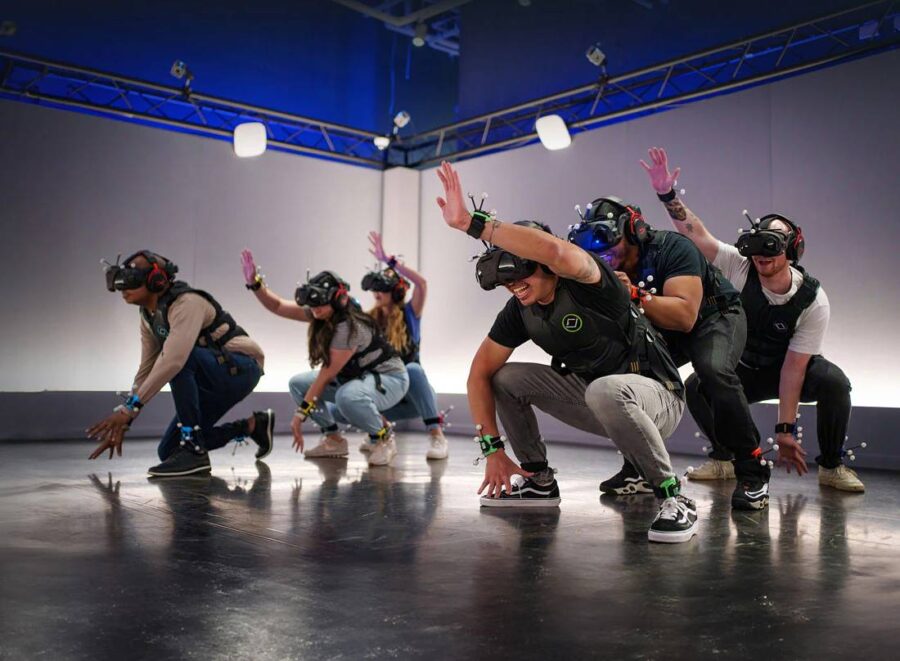
HTC Corporation has announced a new partnership with NTT Communications Corporation (NTT Com) aimed at boosting the adoption and scalability of large-scale location-based entertainment (LBE) experiences throughout Japan. The companies signed a Memorandum of Understanding this week, outlining their intention to combine HTC’s LBE platform technology with NTT Com’s expertise in smart venue infrastructure and networking solutions. This collaboration is designed to make immersive XR experiences more accessible and flexible for venue operators, while also broadening the appeal of such experiences to a wider audience.
LBE experiences leverage XR headsets within physical venues, enabling groups of users to interact with shared virtual content in real-world settings. HTC emphasized that its LBE deployment model allows for rapid installation and does not require major renovations, which can be a significant advantage for operators looking to maximize space efficiency and minimize downtime. The system is capable of supporting multi-user interactions in environments as large as 1,000 square meters, and can be adapted for various applications including exhibitions, performing arts, training, and tourism. HTC’s track record includes the deployment of immersive cultural exhibitions internationally, demonstrating the versatility and scalability of its platform.
The partnership aims to target existing sports and concert venues, particularly during off-peak periods, to create new revenue streams and attract diverse audiences. By leveraging NTT Com’s smart venue infrastructure, including advanced networking and IoT systems, the companies plan to enable real-time, multi-site interaction for future LBE deployments. NTT Com has also indicated plans to integrate technologies such as IOWN (Innovative Optical and Wireless Network) and tactile communication tools, which could further enhance the interactivity and immersion of these experiences.
Looking ahead, HTC and NTT Com intend to expand their content offerings by exploring partnerships with Japanese intellectual property holders in the gaming and anime sectors, as well as collaborating with local governments and cultural institutions. This approach could help drive the adoption of LBE experiences by tapping into popular cultural assets and engaging new user groups. For professionals in the XR industry, this partnership signals a growing emphasis on scalable, flexible, and content-rich LBE solutions that can be rapidly deployed in a variety of real-world venues across Japan.
Source: Auganix
Swave Photonics Secures €6M to Advance Holographic XR Displays

Swave Photonics has announced an additional €6 million (approximately $6.9 million) in funding as a follow-on to its Series A round, further bolstering its efforts to develop advanced holographic display technology for the spatial and AI computing era. The investment round was led by IAG Capital Partners, with strategic participation from Samsung Ventures, marking a significant endorsement from a major industry player. Swave plans to use the new capital to accelerate the development of its Holographic eXtended Reality (HXR) technology and to expand its go-to-market initiatives.
Swave positions its HXR platform as the world's first true holographic display solution tailored for the demands of spatial and AI computing. The technology relies on diffractive photonics, a method that sculpts lightwaves into high-resolution, natural 3D images, allowing for what Swave describes as "the world’s smallest pixel." This approach eliminates the need for traditional waveguides, which are commonly used in current AR and XR devices, and enables a more compact form factor. The company claims that this innovation supports a range of display use cases and delivers a more natural and immersive viewing experience, which could be a significant leap forward for spatial computing applications.
The latest funding round builds on Swave’s previous financial milestones, including a €27 million Series A round announced in January 2025 and a €10 million seed round in 2023. The continued interest from both existing and new investors underscores growing industry excitement around display technologies that can unlock the next generation of spatial computing platforms. Swave CEO Mike Noonen highlighted the significance of this investment, noting that it will help accelerate the commercialization and application of their holographic display technology at the core of future spatial computing devices.
For professionals in the XR industry, Swave’s progress signals a potential shift in how immersive displays are designed and integrated into products such as augmented reality smart glasses. By removing the need for waveguides and enabling smaller, more natural displays, Swave’s HXR technology could influence the next wave of hardware innovation, offering new possibilities for device form factors, user experience, and application versatility. The involvement of Samsung Ventures also suggests a growing interest from major electronics manufacturers in holographic and spatial computing technologies, which may lead to broader adoption and integration in consumer and enterprise devices.
Source: Auganix
LetinAR's Micromirror Optics for AR Glasses: Hands-On Review

At AWE US, LetinAR showcased its latest optical system for augmented reality (AR) glasses, and a hands-on session offered a closer look at the company's evolving micromirror-based technology. LetinAR does not produce its own glasses but instead supplies its optical modules to other manufacturers, aiming to enhance the display capabilities of a wide range of see-through devices, from smart glasses to advanced AR eyewear. The core of LetinAR's approach lies in embedding tiny mirrors within transparent lenses, which reflect virtual images from a light emitter into the user's eyes while maintaining a clear view of the real world. The company claims this method offers several advantages, though the specifics were presented in a dedicated session and are available on LetinAR's website.
This hands-on review builds on previous experiences with LetinAR prototypes. Two years ago, the system relied on pinhole mirrors, which sometimes resulted in visible halos but provided bright colors. A subsequent iteration introduced semitransparent horizontal mirror bars, which slightly reduced image brightness but aimed to address earlier issues. The current version, demonstrated at AWE US, uses these horizontal mirror bars and was integrated into a set of glass frames. When tested with a static virtual display, the resolution and color vibrancy were notably improved compared to previous models, and the earlier problems with transparency and washed-out images were resolved. The field of view was reported to be around 45°, which is competitive for current AR standards. However, some visual artifacts remained: dark horizontal halos from the mirrors were still visible under certain conditions, appearing as grayish lines superimposed on the virtual image.
The experience shifted during a second demo featuring 3D cubes floating approximately three meters away. In this scenario, the visual artifacts disappeared, delivering a cohesive and bright AR experience. This improvement was attributed to two factors: the user's eyes adapting to the optical system, effectively filtering out the lines, and the increased viewing distance, which blurred the artifacts out of focus. This demonstration offered a glimpse of LetinAR's vision for seamless AR, where the micromirrors become effectively invisible to the user.
Looking ahead, LetinAR shared its roadmap for further development. The company is working on expanding the field of view and reducing the visibility of the mirror lines, both for the wearer and for observers looking at the glasses. Currently, the bright lines across the eyes create a distinctive, if not entirely natural, appearance. LetinAR's progress over the past two years is evident, with significant improvements in image quality and artifact reduction. However, challenges remain, particularly in eliminating artifacts in all conditions and making the optics less conspicuous from the outside. For industry professionals, these advancements signal ongoing innovation in AR display technology, with LetinAR positioning itself as a key supplier for next-generation see-through devices.
Source: Skarredghost
DPVR Unveils Seated VR Cinema at Shanghai Film Festival
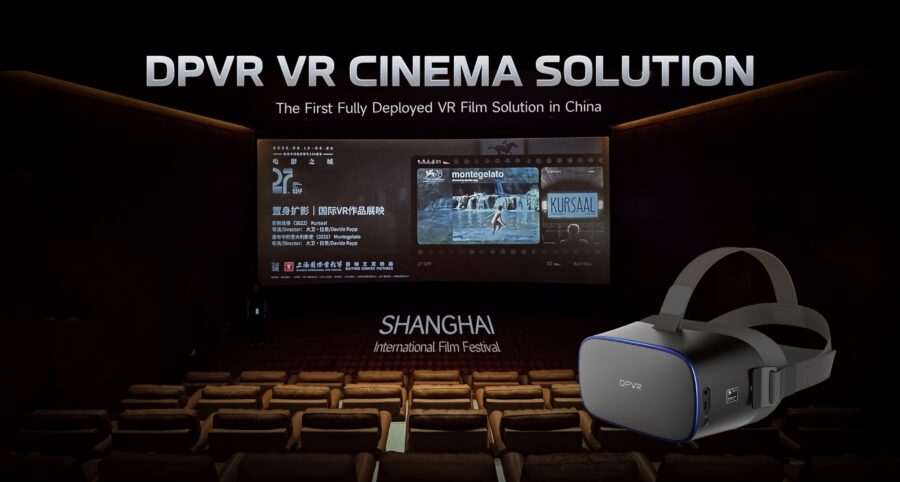
DPVR, a provider of virtual and mixed reality hardware and software, introduced its Seated VR Cinema Solution at the 27th Shanghai International Film Festival. The debut took place during the festival’s “International VR Screening Showcase,” where DPVR demonstrated the system with two immersive VR films: Tales of the Cinema and Italian Film History in the Waterfall.
The Seated VR Cinema Solution is built around three core technologies designed to enhance the immersive film experience. First, it employs a multi-camera real-time head tracking system that mirrors users’ head movements within the virtual environment, enabling smooth and natural transitions as viewers look around. Second, DPVR’s optimized rendering algorithms work to minimize latency and prevent image tearing, which is crucial for viewer comfort during extended sessions. Third, the solution includes a VR Content Management System that supports end-to-end encrypted streaming and synchronized playback across as many as 40 headsets, with centralized management of content delivery and playback. This system emphasizes security and the protection of intellectual property, which is a key concern for content creators and distributors in the VR space.
The films showcased at the event highlighted the unique storytelling possibilities enabled by VR. Tales of the Cinema uses spatial modeling to recreate the evolution of a century-old theater. Viewers can focus on specific seats to trigger historical footage, effectively engaging with the theater’s past and its audiences. Italian Film History in the Waterfall integrates hundreds of Italian film clips into a spatial montage set within the Monte Gelato waterfall. The film allows viewers to navigate between different timelines and narrative layers simply by moving their heads, offering a level of interactivity and immersion that traditional cinema cannot match.
Audience reactions at the festival were positive, with at least one attendee describing the experience as feeling “like I was really sitting in history, watching films as people did back then,” and noting that it felt more authentic than conventional 3D cinema. DPVR’s COO, Derek Liu, commented that the solution received strong feedback, with some critics calling it “a technological revolution in cinematic language.” He highlighted the potential for VR to transform both storytelling and audience engagement, a sentiment that will resonate with industry professionals exploring new narrative forms and distribution models.
For those working in VR and spatial computing, DPVR’s Seated VR Cinema Solution demonstrates a scalable, secure approach to group VR film screenings, with features that address both technical and content management challenges. The showcase at a major international film festival signals growing interest in immersive cinema and may encourage further investment and experimentation in this area.
Source: Auganix
Meta and Oakley Launch AI Smart Glasses for Athletes and Everyday Use
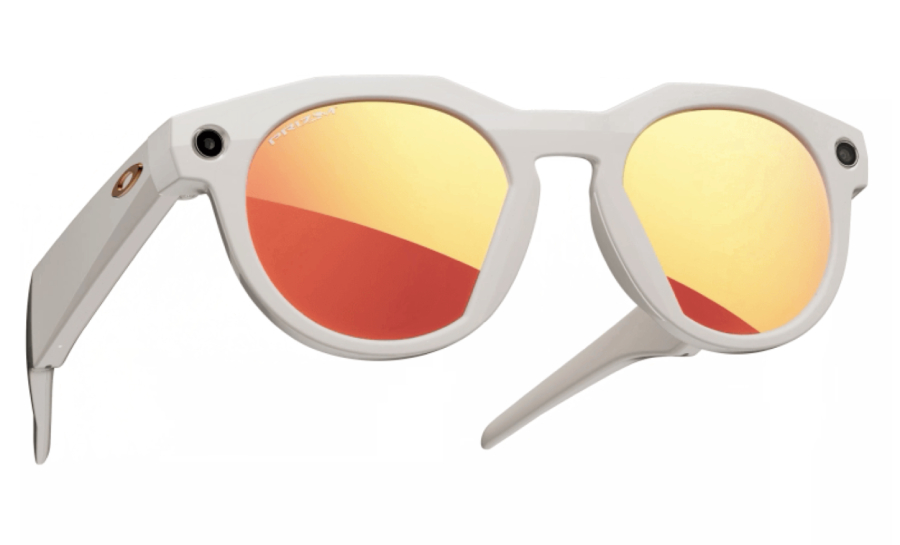
Meta and Oakley have unveiled a new line of 'Performance AI glasses' in partnership with EssilorLuxottica, marking a significant step forward in the smart eyewear market. The first model, Oakley Meta HSTN, blends Oakley's iconic sport-centric design with Meta's AI-driven features, aiming to appeal to both athletes and everyday users. This collaboration leverages Meta’s strategy of pairing advanced AI capabilities with recognizable eyewear brands, a move that has helped the company avoid the design missteps seen in earlier smart glasses attempts.
The Oakley Meta HSTN is engineered for hands-free content capture and audio experiences. Key features include a built-in 3K Ultra HD camera for high-resolution, first-person video recording, open-ear speakers, and IPX4 water resistance—making the glasses suitable for athletic and daily scenarios. Users can interact with Meta AI via voice commands, enabling tasks such as checking the weather, recording videos, and more, all without needing to reach for a phone. The glasses offer up to eight hours of battery life in typical use, with rapid charging that delivers 50% charge in just 20 minutes. A bundled charging case extends usage with up to 48 additional hours of battery life.
At the heart of the Oakley Meta HSTN is Qualcomm’s Snapdragon AR1 Gen 1 Platform, a chipset purpose-built for AI-powered wearables. According to Qualcomm, this hardware enables features like voice-activated photo capture, live video streaming, real-time translation, and AI-powered scene recognition, all while maintaining a slim profile and efficient battery consumption. The integration of Meta AI and the Snapdragon AR1 platform sets a new standard for what users can expect from smart eyewear, particularly in terms of seamless interaction and practical, on-the-go functionality.
Preorders for a limited-edition Oakley Meta HSTN will open on July 11 at a price of USD $499, with the broader collection launching later in the summer starting at USD $399. The initial rollout will cover markets including the U.S., Canada, the UK, several European countries, and Australia, with future expansion planned for Mexico, India, and the UAE. The glasses will make their public debut at high-profile sporting events such as Fanatics Fest and UFC International Fight Week, supported by a global campaign featuring Team Oakley athletes like Kylian Mbappé, Patrick Mahomes, Gabriel Medina, and J.R. Smith. This launch builds on the success of the Ray-Ban Meta smart glasses, positioning Oakley Meta HSTN as a scalable solution for both sports and lifestyle applications, and reinforcing Meta’s leadership in the AI smart glasses sector.
Source: Auganix
Prophesee Showcases Ultra-Low Power Eye Tracking with Event Cameras

At this year's Augmented World Expo (AWE), Prophesee demonstrated a novel approach to eye tracking using event cameras, offering a glimpse into how future AR glasses could benefit from dramatically reduced power consumption and increased privacy. Event cameras, sometimes referred to as neuromorphic cameras or dynamic vision sensors, differ fundamentally from traditional cameras. Rather than capturing full image frames at fixed intervals, each pixel in an event camera operates independently, only reporting changes in brightness as they occur. This means the camera outputs an asynchronous stream of events, each representing a discrete change in the scene, rather than a continuous series of complete images.
The most striking advantage of this technology is its extremely low power usage. For instance, the event camera used for eye tracking in Prophesee’s demo consumes as little as 2 milliwatts during operation and drops to just 16 microwatts in standby mode. To put this in perspective, even the hand tracking demo from Ultraleap using similar technology last year required 23 milliwatts. For wearable AR devices, where battery life and heat management are critical, this kind of efficiency could be a game changer.
Prophesee’s booth demo featured a prototype: a pair of glasses frames equipped with two event cameras—one for each eye—and two IR LEDs per eye for illumination. The system was developed in collaboration with 7Invensun, a leading Chinese eye-tracking company, with Prophesee providing the sensors and 7Invensun handling the mounting and software. Calibration involved a simple manual process, with a target on paper moved to three positions, after which the system tracked gaze direction in real time. The demo displayed the user’s gaze as an orange dot on a mirrored laptop view, and the tracking consistently followed the user’s focus, indicating the system’s responsiveness.
In terms of performance, Prophesee claims their event camera system achieves a tracking latency of less than 1 millisecond and an accuracy of under 1 degree. While the hands-on test could not independently verify these figures, the system’s reactivity was evident. Another notable benefit is privacy: because event cameras do not capture full images of the eye, they inherently reduce the risk of exposing sensitive biometric data, unlike conventional eye tracking systems.
For industry professionals, the implications are significant. If tracking algorithms continue to improve, event camera-based solutions could replace traditional camera systems in both eye and hand tracking, enabling AR glasses with higher framerates, lower latency, and far greater energy efficiency. While there are still challenges—such as potentially reduced tracking accuracy due to the lack of full image data—the promise of this technology is clear. Prophesee’s ongoing collaborations and demonstrations suggest that event cameras could play a pivotal role in the next generation of spatial computing hardware.
Source: Skarredghost
Anywhere Bungee VR Delivers a Thrilling Upside-Down Experience

One of the standout attractions at this year’s AWE showfloor was "Anywhere Bungee VR," a location-based bungee jumping simulation from Japanese company Logilicity. The experience garnered significant attention for its unique blend of physical and virtual sensations, ultimately winning the Best In Show award at AWE. The setup involves a patent-pending machine designed to safely flip participants upside down, combined with fans that simulate wind and software that visually recreates the sensation of plummeting from a great height above Tokyo.
Safety is a clear priority for Logilicity. Before the jump, participants are secured with ankle locks and a shoulder harness, and asked to grip handles for additional security. The preparation process, which takes about a minute, ensures that users are firmly attached to the machine before being inverted. Once ready, users don a VR headset and find themselves atop a large metallic rail suspended high above a digital Tokyo skyline. The cityscape, while expansive and densely packed with buildings, is visually basic, resembling white cubes rather than detailed structures. The virtual environment is reportedly based on open-source point cloud data from Tokyo, which may explain the minimalist look.
The bungee jump itself is a multi-sensory event. The machine physically tilts the participant upside down while the VR simulation rapidly descends toward the city streets, enhanced by haptic feedback and gusts of air from the fans. This combination of motion, tactile effects, and visuals creates a convincing sense of freefall, despite the simple graphics. The machine then mimics the recoil of a real bungee cord, bouncing the user back up before settling into a standing position. The entire experience lasts about two and a half minutes, balancing a sense of thrill with careful attention to user safety.
While VR falling simulations are not new, "Anywhere Bungee VR" stands out for its clever integration of physical motion and environmental effects, making the jump feel more authentic and memorable. The attraction’s popularity at AWE suggests strong potential for event-based VR entertainment, especially for audiences seeking novel, shareable experiences. The memorable moments—such as the writer’s own enthusiastic scream, which became an impromptu highlight at the AWE awards ceremony—underscore the social and emotional impact that well-designed immersive attractions can have in the industry.
Source: Skarredghost
Rokid Adds Alipay Payments to AR Glasses for Chinese Shoppers
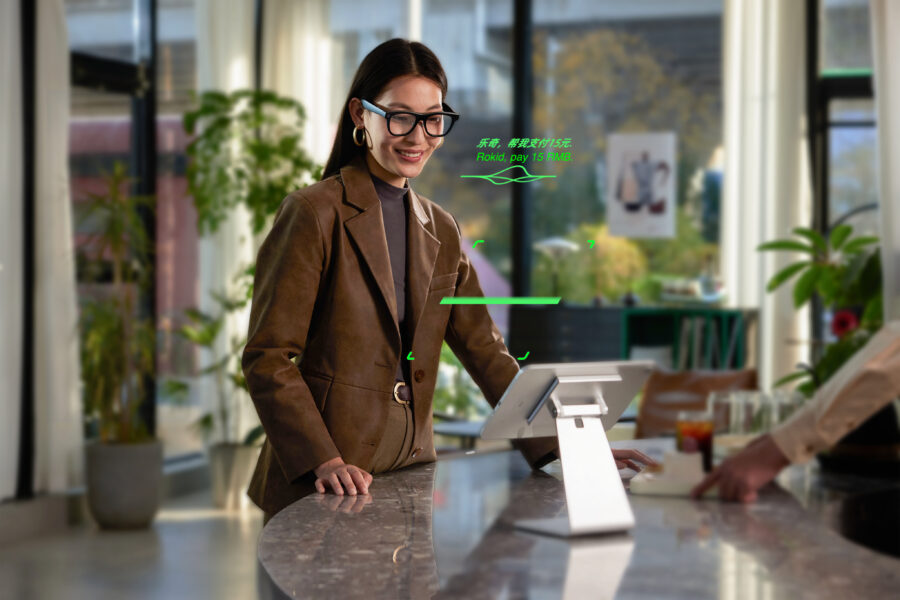
Rokid, a leading Chinese augmented reality (AR) technology provider, has announced a significant update to its Rokid Glasses: in-store payment functionality powered by Alipay. This integration allows users in China to make purchases directly through their AR glasses using voice and gesture commands, removing the need to handle a smartphone at checkout. The system leverages Alipay’s digital payment infrastructure and its multidimensional risk control solution, which has been specially adapted for AR devices.
According to Rokid, over 250,000 units of Rokid Glasses have already been ordered, with distribution beginning in June 2025. The payment process is designed for simplicity and speed. At checkout, users say, “Rokid, pay 10 RMB,” prompting the glasses to scan the merchant’s Alipay QR code. Payment details are displayed within the AR interface, and users confirm the transaction with another voice command. Rokid claims this hands-free system completes transactions faster than traditional smartphone-based QR code payments, which typically take 20-30 seconds, while also offering a more intuitive experience.
Company leadership sees this as a milestone for both AR and digital payments. Zhu Mingming, Founder and CEO of Rokid, stated that equipping AR glasses with payment capabilities delivers a smoother and more intuitive user experience, marking a new era for AI glasses in commerce. Zhang Aijuan, Vice President of Ant Group and Rotating President of its Digital Payment Business Unit, echoed this sentiment, emphasizing Alipay’s commitment to supporting emerging industries and enhancing user value. Alipay’s own ‘Alipay Tap!’ feature, launched in 2024, has already seen rapid adoption, with more than 100 million users as of April 2025, underscoring the growing momentum for contactless payments in China.
This latest integration is part of a broader trend toward immersive commerce, where AR wearables become key interfaces for product discovery, personalized shopping, and seamless transactions. Rokid envisions a future where consumers can complete purchases simply by looking at or gesturing toward a product, further reducing friction in both physical and digital retail environments. The company also highlighted the potential for businesses to engage customers through location-aware services and interactive experiences, such as virtual try-on or personalized recommendations, made possible by the convergence of AR and payment technologies.
For industry professionals, this development signals a shift toward more seamless and intuitive retail experiences, and points to new opportunities for integrating commerce, AI, and spatial computing. As AR glasses gain payment capabilities, the boundaries between digital and physical shopping continue to blur, setting the stage for innovative customer engagement strategies and new business models in the XR ecosystem.
Source: Auganix
XelerateVR Treadmill Delivers Enhanced Realism with Spherical Floor

At AWE 2025, XelerateVR made a notable impression with its new VR treadmill, offering a fresh take on the established “slipmill” category. While the device shares the familiar concave platform and harness system seen in products like Kat VR and Virtuix Omni, XelerateVR distinguishes itself through its innovative walking surface composed of numerous passive metallic spheres. These spheres, free to rotate, facilitate smoother foot movement as users walk or run, aiming to provide a more controlled and responsive experience than traditional slip-based treadmills.
During a brief hands-on session, the setup process mirrored that of other VR treadmills: users remove their shoes, don special slippery footwear, and are secured into the harness system. The unique surface of rotating spheres quickly became apparent, reportedly making it easier to gain confidence and move naturally. The reviewer found themselves able to walk, run, and even dance with relative ease, describing a sensation of improved foot control compared to previous systems. While the overall walking experience still felt somewhat unnatural—akin to walking on ice, a common trait among slipmills—the enhanced responsiveness and stability set XelerateVR apart. The ability to crouch and jump was present, though crouched walking was noted as less comfortable than on some competitors, such as the Kat VR.
For VR integration, the system uses Vive Ultimate trackers on the feet to capture movement, rather than relying solely on the rotation of the spheres. According to a company spokesperson, this approach addresses a key limitation: floor sensors alone cannot detect the initial foot lift, resulting in lag. By tracking the feet directly, XelerateVR achieves highly reactive movement detection, which the reviewer found closely matched their real-world actions when playing a demo of Skyrim VR. Backward walking remained awkward, but forward movement and overall tracking responsiveness were praised.
XelerateVR is currently positioned as an enterprise solution, priced around €7,000. The company plans to introduce a consumer version in 2026, targeting a price point below €2,000. For industry professionals, XelerateVR represents an incremental but meaningful step forward in VR locomotion hardware. Its passive, sphere-based surface offers a more intuitive and responsive user experience, potentially lowering the learning curve and increasing comfort for both enterprise and, soon, consumer users. The device does not redefine the treadmill category, but its thoughtful refinements could influence future designs and adoption rates in location-based entertainment, training, and eventually home VR setups.
Source: Skarredghost
UDEXREAL Unveils UDCAP Data Glove for Robotics and XR
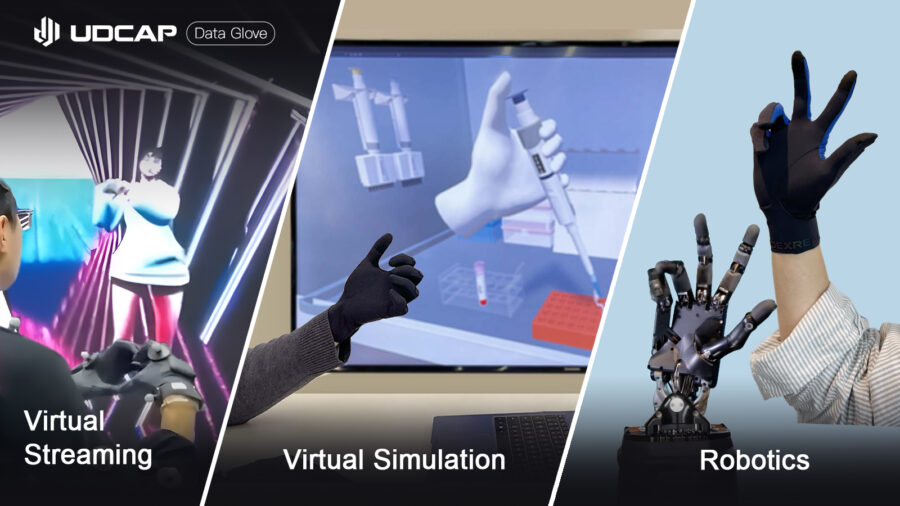
UDEXREAL, a company specializing in motion capture and hand tracking, has launched its latest wearable, the UDCAP Data Glove, at AWE USA 2025. The new glove is designed to deliver high-precision hand tracking for use in robotics, simulation, and virtual streaming. Central to its capabilities is a proprietary 0.1mm elastic sensor, which allows the glove to capture subtle finger movements and gestures with lifelike accuracy. The plug-and-play design eliminates the need for external cameras or lighting, streamlining setup and enabling seamless integration into both physical and virtual workflows.
The UDCAP Data Glove is compatible with PCs and VR headsets, and can connect directly to platforms such as Unity and Unreal Engine via an SDK tailored for industrial applications. It also supports mainstream head-mounted displays, integrated tracking systems, and a range of spatial positioning systems. According to UDEXREAL, the glove is intended for a variety of industrial scenarios, with particular emphasis on robotics, virtual simulation, and virtual streaming.
In robotics, the glove enables teleoperation and training of dexterous robotic hands through natural gestures. It supports both real-world and virtual robotic training, allowing operators to record detailed hand-motion datasets for research and the development of humanoid systems that better replicate natural human gestures. For simulation, the glove is built for real-time, accurate motion capture in scenarios ranging from high-risk industrial tasks to delicate medical procedures. Haptic feedback and an interactive SDK allow for customized gesture recognition, while the integrated UDCon controller enhances the training experience in fields like equipment maintenance and medical training.
For virtual streaming, the UDCAP Data Glove’s lightweight design (45g) supports long-duration performances by VTubers and creators. Its camera- and marker-free operation is well-suited for dynamic activities such as dancing or group virtual concerts. The glove supports up to eight units used simultaneously, enabling complex group choreography and interaction. UDEXREAL announced that a beta version of the enterprise-focused glove is available for early trial registration, with a standard unit priced at USD $1,799.
UDEXREAL also showcased the UDCAP VR Glove at AWE USA 2025, targeting the gaming and social VR market. Promoted as the world’s lightest VR glove, it features 12 sensors tracking 21 joint angles for lifelike motion capture. The VR Glove is compatible with all SteamVR games and major VR headsets, and can be paired with the UDCon controller for combined gesture and joystick input. The company reported raising $600,000 in two months on Kickstarter for the VR Glove, which is offered at $699, with a limited-time launch price of $539–$599 through July 31 on UDEXREAL’s website.
Source: Auganix
Spotted something wrong in this issue? Report it.