Apple Vision Air Rumored for 2027, Valve Teases 'Steam Frame'
This issue covers Apple Vision Air rumors, Valve's 'Steam Frame' trademark, hands-on with Deadpool VR, new enterprise training, and shifting headset sales.

Apple Vision Air Rumored for 2027, Valve's 'Steam Frame' Trademarked
This week’s XR industry roundup brings a flurry of significant developments, with major players like Apple, Valve, Meta, and others making headlines. The most widely discussed rumor centers on Apple’s next move in mixed reality hardware. According to analyst Ming-Chi Kuo, Apple is reportedly planning to launch a device called the Vision Air in 2027. This headset is said to be 50% cheaper and 40% lighter than the current Vision Pro, directly addressing two of the most common criticisms: high price and discomfort. Despite these improvements, Kuo claims that Apple’s internal shipment target for Vision Air is one million units in its launch year. While this would put Vision Air in the same ballpark as Meta’s Quest 3 in terms of initial sales, it falls short of the numbers needed for mainstream adoption. The projected $1750 price tag remains a significant barrier, suggesting that true mass-market appeal may not arrive until later generations.
Valve is also making waves with its upcoming VR headset, previously known under the codename “Deckard.” Recent developments suggest the device may be branded as “Steam Frame,” following Valve’s trademark of the name for use with computer hardware and peripherals. This speculation is bolstered by datamining from Brad Lynch’s team, which found that Valve is rebranding SteamVR “Overlays” to “Frames” in the latest SteamVR Beta. While no official details about the headset’s specifications or features have been confirmed, the community expects a device that could leverage SteamOS and potentially stream games from a nearby PC. Given Valve’s history, the launch could come with little warning, possibly coinciding with a major industry event like Meta Connect.
Speaking of Meta, the full agenda for the upcoming Meta Connect has been published, revealing a strong focus on smartglasses. Mark Zuckerberg’s keynote will spotlight advancements in AI glasses, and Michael Abrash is also expected to discuss related topics. Several sessions hint at new development tools, likely SDKs for smartglasses. Notably, the keynote is scheduled for 5 pm PT, a departure from the usual morning slot, which may affect European viewers. This shift underscores Meta’s intent to position smartglasses as a central pillar of its spatial computing strategy.
Other notable updates include a sharp 7% increase in Quest 3 family headset usage on Valve’s Steam Hardware & Software Survey, attributed to the launch of the Quest 3S XBOX Edition and recent discounts. Meanwhile, the PCVR market remains relatively flat, though its community continues to support XR developers. In military XR, the US Army’s Soldier Borne Mission Command (SBMC) contest has advanced, with Anduril (working with Meta) and Rivet (backed by Palantir) reaching the final stage. Rivet recently secured a contract to prototype and produce 470 devices, highlighting the military’s ongoing interest in AR solutions. Pimax’s Dream Air headset, initially slated for release in May 2025 and then delayed to Q3, has seen further delays, though the company promises a substantial update soon. Lastly, SteamVR has restored support for Windows Mixed Reality headsets via the new “Oasis” driver, developed by Mbucchia and now automatically installed for NVIDIA users, ensuring continued compatibility for legacy devices.
Source: Skarredghost
Hands-On with Deadpool VR on Meta Quest 3
A recent hands-on demo allowed players to step into the shoes of Deadpool in virtual reality, using the Meta Quest 3 headset. The experience gives fans a chance to embody the iconic Marvel character in an immersive VR setting.
This demo showcases the potential for superhero experiences on standalone VR hardware, offering interactive elements and a first-person perspective as Deadpool. Such demos highlight the growing trend of bringing popular franchises into the VR space, leveraging the capabilities of devices like the Quest 3.
Source: LaughingPlace.com
Apple Expands Exclusive Immersive Content for Vision Pro

Apple is continuing its push into immersive content for Vision Pro, announcing a new slate of exclusive films and documentaries from a diverse group of international partners. The upcoming releases, which will be available through the Apple TV app on Vision Pro, include projects from high-profile collaborators such as Audi F1 Project, the BBC, CANAL+, CNN, HYBE, MotoGP, and Red Bull. This move signals Apple’s ongoing commitment to providing unique, spatially immersive experiences that leverage the capabilities of its mixed reality headset.
In addition to previewing future content, Apple has made two new immersive films available immediately for Vision Pro users. The first is the latest episode of the Apple Immersive series, which continues to showcase the platform’s storytelling potential. The second is 'Tour De Force,' a MotoGP documentary that offers an in-depth look at the sport, designed specifically for immersive viewing on Vision Pro. Both titles can be accessed via the Apple TV app, reinforcing Apple’s strategy of making Vision Pro a destination for exclusive, high-quality immersive media.
The newly announced collaborations span a range of genres and interests, from sports and music to news and entertainment. By partnering with established brands like the BBC and CNN, as well as motorsport giants such as MotoGP and Red Bull, Apple is positioning Vision Pro as a versatile platform for both mainstream and niche audiences. This approach could help differentiate Vision Pro from other headsets on the market, which have often struggled to secure a steady stream of exclusive, premium content.
For professionals in the VR and spatial computing industry, Apple’s continued investment in exclusive content is a significant development. It underscores the importance of high-quality, proprietary experiences in driving hardware adoption and user engagement. As Apple deepens its relationships with major content creators, industry stakeholders may see increased demand for immersive production expertise and new opportunities for collaboration. The focus on exclusive content could also set a precedent for competitors, potentially reshaping expectations for content ecosystems in the XR space.
Source: Road to VR.
Meta Unveils Ray-Ban Meta Display and SDK, Samsung Moohan Rumored for October

This week saw a flurry of developments in the XR industry, with Meta's annual Meta Connect event taking center stage. The event focused heavily on smartglasses and the evolution of Horizon Worlds, marking a significant shift toward wearable devices and spatial computing. Among the key announcements was the introduction of a refreshed Ray-Ban Meta glasses lineup, which now includes 3K video recording, double the battery life, and additional features previously announced for the Oakley Meta HSTN. The new Ray-Ban Meta glasses start at $379, while the Oakley Meta Vanguard, designed for athletes with a wide-angle central camera and water resistance, starts at $499 and integrates with Strava and Garmin devices.
The highlight of the event was the debut of the Ray-Ban Meta Display, Meta's first smartglasses equipped with a display. Controlled via the Meta Neural Band—a wristband that tracks finger poses through electrical signals—these glasses offer a 600×600 pixel color display with a 20° field of view. This enables use cases such as live captioning and translation, though the device's bulk and monocular display have been noted as drawbacks. The Ray-Ban Meta Display is set to launch on September 30 in select US stores, with international expansion planned for 2026. The starting price is $799. Early hands-on impressions suggest that while the device is a promising step forward for Meta, mainstream adoption may require further iterations to address comfort and usability concerns.
Meta also introduced the Wearable Devices Access Toolkit, an SDK aimed at developers looking to add smartglasses support to native mobile apps. While still in its early stages and not supporting standalone applications on the glasses themselves, the SDK represents a move to open the platform to third-party developers. Companies like Disney and Twitch are already experimenting with the toolkit, signaling growing interest in the ecosystem. Additional features announced for the glasses include "Conversation Focus," which enhances the voices of people users are looking at, improving communication in noisy environments. However, the event was not without hiccups—two live demos failed, one due to a voice command inadvertently triggering all Ray-Ban Meta glasses in the room and overloading Meta's servers.
On the VR front, Meta confirmed that third-party headsets for Horizon OS are in development, though no release dates were provided. Discord is finally coming to Quest, and Horizon Worlds received major updates, including a new engine for faster loading and support for over 100 concurrent players. Horizon Studio, with deep AI integration, will allow creators to build worlds by chatting with an assistant, and a contest for mobile-optimized Horizon Worlds content offers $2.5 million in prizes. Meanwhile, Snap released Snap OS 2.0 for its Spectacles AR glasses, laying the groundwork for next year's consumer launch. Samsung is reportedly preparing to launch its Moohan headset in October, adding further momentum to the rapidly evolving XR landscape.
Source: Skarredghost
Valve Expands Steam Link PC VR Streaming to More Headsets
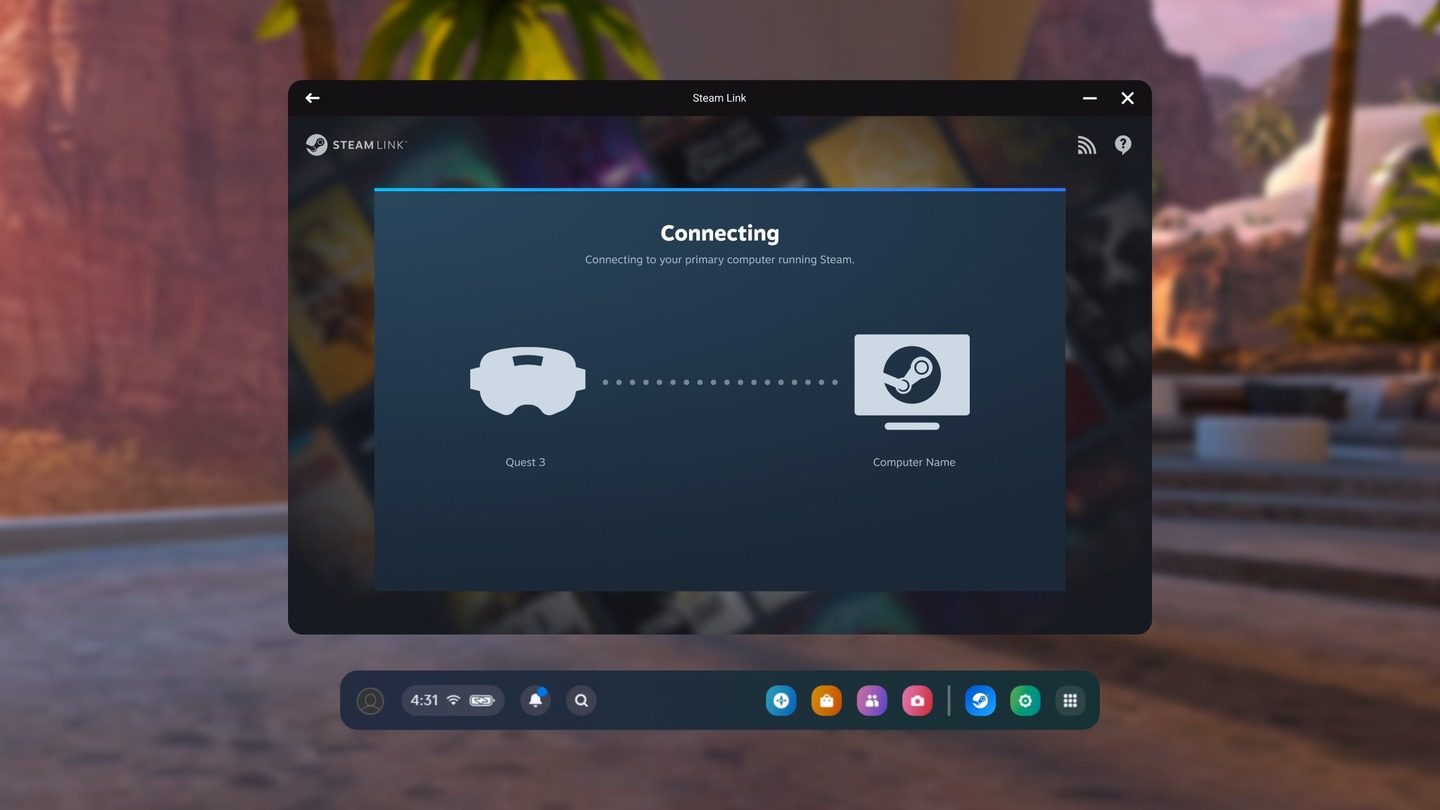
Valve has announced a significant expansion of its wireless PC VR streaming solution, Steam Link, bringing official support to a new wave of headsets from PICO and HTC. The company has rolled out Steam Link on both the PICO Store and HTC's Viveport store, extending its reach beyond the Meta Quest headsets that first received support in 2023. This move marks a notable step in Valve's ongoing effort to make SteamVR content more accessible across the growing landscape of standalone and Android-based XR devices.
The newly supported PICO headsets include the Pico 4 Ultra, Pico 4 (and 4 Pro), and Pico Neo3 (and Neo3 Link). On the HTC side, the Vive Focus Vision is now compatible, with the Vive XR Elite slated to receive support later this year. With Steam Link, users of these devices can wirelessly connect their headsets to a PC on the same network, granting them access to their SteamVR library—including titles that are not available as standalone apps, such as Half-Life: Alyx. This capability is particularly valuable for VR enthusiasts and developers, as it bridges the gap between standalone hardware and the expansive PC VR ecosystem.
In addition to expanding headset compatibility, Valve has revealed plans to release a Steam Link APK. This move is designed to make it easier for other hardware manufacturers to validate and implement Steam Link support on their own devices, potentially with minimal involvement from Valve itself. The APK will also be available to users, allowing those with unsupported headsets to experiment with compatibility and features. This could open the door for modders and advanced users to sideload or adapt Steam Link for a wider array of devices, possibly even beyond Android, though such efforts would depend on the openness of Valve's developer documentation and the technical constraints of non-Android platforms.
Valve's approach stands out in the VR industry, as the company appears more focused on broadening SteamVR's accessibility than on promoting its own hardware. The expansion to new headsets and the forthcoming APK release suggest Valve is preparing for a future where Android XR devices become increasingly prevalent, with some expected to launch before the end of the year. For developers and headset manufacturers, this could mean easier integration with the SteamVR ecosystem and greater flexibility in delivering PC VR experiences to users. For the industry at large, Valve's strategy reinforces the importance of platform openness and cross-device compatibility as VR hardware continues to diversify.
Source: Road to VR
VR headset sales fall as smart glasses gain momentum
Recent industry headlines indicate a shift in consumer interest, as sales of VR headsets are declining while smart glasses are experiencing a rise in popularity. This trend suggests changing preferences in the spatial computing market, with users possibly seeking lighter, more versatile wearable technology.
For professionals in the VR and AR industry, this development may signal the need to adapt product strategies and focus on emerging opportunities in the smart glasses segment.
Source: Apple World Today, Counterpoint Research.
Valve Could Announce New VR Headset Soon
Valve may be preparing to reveal a new virtual reality headset in the near future. While details are not yet confirmed, the potential announcement has attracted attention from industry watchers and could signal Valve's next move in the VR hardware space. Source: GameRantWhistleblowers accuse Meta of concealing VR risks
Whistleblowers have told a Senate panel that Meta allegedly hid information about the potential harms associated with its virtual reality platforms. The claims suggest that the company may not have been fully transparent about the risks users could face while engaging with its VR products. This development could prompt further scrutiny of Meta's practices and the broader safety standards within the VR industry. Companies working in this space may need to consider how they communicate potential risks and ensure user safety in immersive environments. Source: Roll Call, The Guardian.Star Wars: Beyond Victory Playset Gets Trailer and Release Date
Industrial Light & Magic has announced a new trailer and release date for 'Star Wars: Beyond Victory - A Mixed Reality Playset.' This upcoming experience blends mixed reality with the iconic Star Wars universe, offering fans a new way to engage with the franchise.
The playset is developed by ILM and was highlighted in coverage by both Meta and Industrial Light & Magic. Details on the specific features or gameplay are not available, but the announcement signals a continued investment in high-profile mixed reality content tied to major entertainment brands.
For professionals in the VR and MR industry, the release of a Star Wars-themed mixed reality playset by a leader like ILM underscores the growing importance of immersive storytelling and branded experiences. Such projects may set new expectations for quality and interactivity in the spatial computing space.
Source: Meta.
Meta Prioritizes Horizon Worlds Mobile and Expands Retail Presence

This week in XR saw several significant developments, with Meta's shifting priorities at the forefront. The most notable move is Meta's internal studio, Ouro Interactive, releasing Super Strike, a shooter action game in Horizon Worlds, exclusively for mobile devices. Unlike previous Horizon Worlds experiences, which were designed for VR, Super Strike is not compatible with VR headsets. This marks a clear strategic pivot: Meta is increasingly focusing on mobile and web platforms for Horizon Worlds, rather than VR alone. This shift is further emphasized by Meta's launch of a $2.5 million contest for mobile games on Horizon Worlds, as announced at Meta Connect, along with other recent initiatives targeting the mobile gaming market.
While Meta continues to invest in MR/VR content and a new headset is rumored for next year, the company's recent announcements at Meta Connect centered on smartglasses, AI, and Horizon Worlds. The focus on mobile and web suggests Meta is aiming to replicate the success of platforms like Roblox by tapping into the vast mobile audience. For XR professionals, this signals a notable change: while VR remains part of Meta's roadmap, the company's immediate priorities are broadening to include more accessible, non-VR technologies. This could impact developers and studios currently focused on VR content, as Meta's resources and incentives shift toward mobile experiences.
In another major move, Meta is expanding its physical retail footprint. After opening a flagship store in Burlingame and a pop-up in Los Angeles, Meta has announced plans for a permanent, 20,000-square-foot store in LA themed around Southern California skating culture, as well as pop-up locations in New York and Las Vegas. These stores will offer hands-on demos of Meta's smartglasses and XR headsets, with exclusive limited editions available only in-store. The expansion suggests Meta's initial retail efforts have been successful, and the company appears to be planning a global rollout of Meta stores over the next five years. For the XR industry, this represents a significant investment in consumer education and brand-building, potentially increasing mainstream exposure to spatial computing devices.
Other notable updates this week include the SiNGRAY G2 AR enterprise headset from HMS, which is positioned as a potential successor to HoloLens and Magic Leap for enterprise customers. The device uses birdbath optics and a powerful processor, with mass production planned for 2026. Meanwhile, REK, a company founded by Cix Liv, held a successful event in San Francisco featuring VR-controlled robot boxing matches, drawing significant public interest. Additionally, Niantic Spatial has announced a partnership with Kojima Productions, though details remain scarce. Pimax has delayed shipping of its Dream Air headset, with new timelines set for December and next year, but it will feature innovative concave lenses offering a 110° field of view. Valve has expanded Steam Link PCVR support to more headsets and released an APK for broader compatibility. Finally, Meta's Quest v81 update now integrates PCVR "Rift" games into the Quest interface, streamlining access for users.
Source: Skarredghost
Spotted something wrong in this issue? Report it.