Valve's Next VR Headset Reportedly Enters Mass Production
This issue covers Valve's upcoming VR headset, 3D-printed headsets, Amazon's AR glasses, new VR games, enterprise training, and hardware innovations.

Valve's Next VR Headset Reportedly in Mass Production for 2025
Valve appears to be moving forward with its next virtual reality headset, as multiple supply chain leaks indicate the device has entered mass production. According to a report from the XR Research Institute, a Chinese research group previously known for accurate leaks around Ray-Ban Meta, Valve is ramping up manufacturing and targeting a production volume between 400,000 and 600,000 units for this year. The group claims Valve is aiming for a launch in the fourth quarter of 2025, likely to coincide with the holiday shopping season.
While the precise nature of the headset remains unclear, speculation is mounting regarding its capabilities and positioning. The device has been referred to in rumors as either 'Deckard' or 'Steam Frame,' with suggestions that it will be a standalone headset capable of wirelessly streaming PC VR games. Unlike the original Valve Index, which required SteamVR base stations and a physical tether to a PC, this new device is expected to feature inside-out tracking and wireless connectivity, potentially making it more competitive with recent lightweight headsets such as the Bigscreen Beyond 2 and the upcoming Pimax Dream Air.
Further evidence of Valve's progress comes from XR data analyst Brad Lynch, who noted that developer versions of the hardware—dubbed 'DV1' and 'DV2'—have appeared in the latest SteamVR beta code. In Valve's hardware development process, DV units typically represent the final stages before the production version reaches consumers. This suggests that Valve is nearing the end of its development cycle for the new headset.
The device may also offer features beyond VR, with leaks indicating the inclusion of a gamepad-style controller codenamed 'Roy' and the possibility of playing flatscreen games on a large virtual theater screen. There are also rumors that Valve is preparing games or demos that will run natively on the headset, potentially including an optimized version of Half-Life: Alyx. While it's not confirmed whether the device will be able to natively run all PC VR games, the combination of standalone functionality and high-quality wireless streaming could appeal to both VR enthusiasts and prosumers looking for more flexibility and convenience.
For those working in the VR industry, Valve's reported push into mass production and its potential move towards a more standalone, user-friendly device could signal a significant shift in the competitive landscape. The company's focus on innovation and integration with the Steam ecosystem may set new expectations for both hardware capabilities and content delivery. As more details emerge in the coming months, developers and hardware partners will be watching closely to see how Valve's next headset could shape the future of VR experiences.
Source: Road to VR
Amazon Unveils AR Smart Glasses for Delivery Drivers
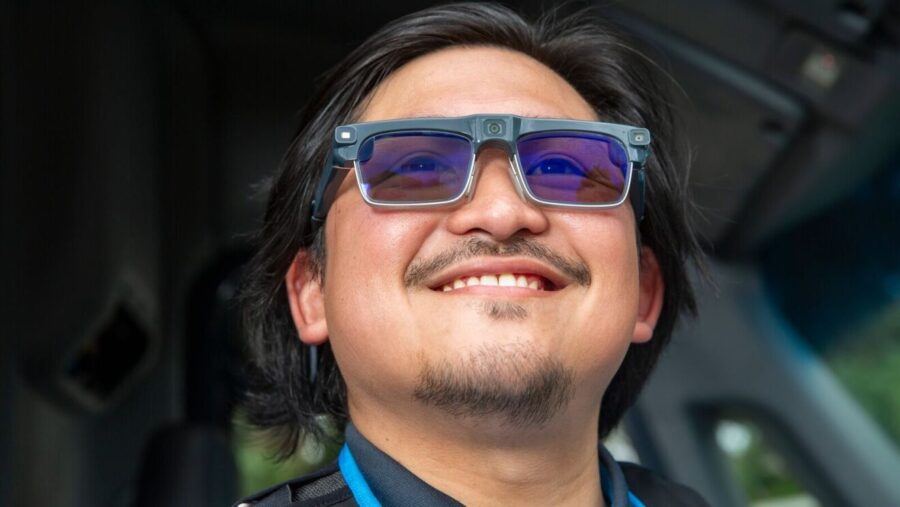
Amazon has officially revealed that it is developing augmented reality (AR) smart glasses designed to help its Delivery Associates (DAs) work more efficiently and safely during last-mile deliveries. The company’s announcement provides new insight into Amazon’s ongoing work in AR and hints at broader ambitions for wearable technology beyond logistics.
The smart glasses, which have reportedly been referred to internally as "Amelia," are intended to enhance the delivery process by overlaying critical information directly into the driver’s field of view. According to Amazon, the device was created with significant input from hundreds of DAs working for its Delivery Service Partners (DSPs). The system leverages advanced computer vision and artificial intelligence to enable hands-free operation, allowing drivers to scan packages, follow walking directions, and capture proof of delivery without needing to handle a phone.
Key features of the glasses include a heads-up display that provides real-time navigation, hazard alerts, and step-by-step delivery instructions. When a driver arrives at a delivery location, the glasses automatically activate, guiding the DA from identifying the correct package in the vehicle to delivering it to the right address. Amazon’s geospatial technology is used to offer precise walking directions, which is especially useful in complex delivery environments like apartment buildings. The device also incorporates a small controller worn in the delivery vest, a swappable battery to support extended shifts, and a dedicated emergency button for contacting emergency services. The glasses are designed to accommodate prescription and transitional lenses, ensuring usability in various lighting conditions.
Feedback from DAs was central to the development process, with Amazon focusing on comfort for all-day wear and ensuring that the display remains clear and unobtrusive. Kaleb M., a Delivery Associate from Maddox Logistics Corporation in Omaha, Nebraska, who participated in testing, noted, “I felt safer the whole time because the glasses have the info right in my field of view. Instead of having to look down at a phone, you can keep your eyes forward and look past the display—you’re always focused on what’s ahead.”
Looking ahead, Amazon stated its intention to continue refining the technology, with future updates expected to introduce features such as real-time defect detection, enhanced hazard identification, and additional safety notifications. For professionals in the spatial computing and logistics sectors, Amazon’s move signals a growing trend toward integrating AR wearables into enterprise workflows, with the potential to improve safety, efficiency, and situational awareness for frontline workers.
Source: Auganix
Magic Leap and Google Extend Partnership for AR Glasses Innovation
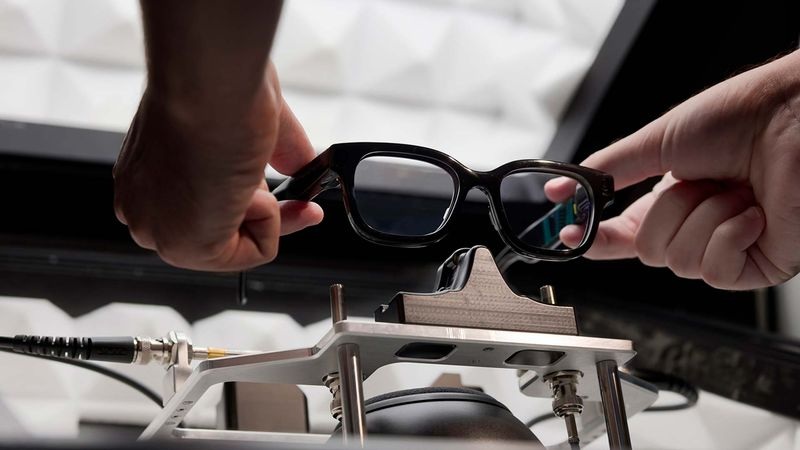
Magic Leap has announced a significant extension of its partnership with Google, focusing on the joint development of advanced augmented reality (AR) glasses and display technologies. The renewed collaboration, revealed at the Future Investment Initiative (FII) in Riyadh, marks a strategic shift for Magic Leap as it aims to leverage its strengths in optics, waveguides, device prototyping, and manufacturing design to support the next generation of AR wearables. This move is positioned as an evolution for Magic Leap, transitioning from a pioneering AR company to a broader ecosystem partner, according to CEO Ross Rosenberg.
The partnership with Google is structured as a three-year agreement, with the goal of pushing forward the Android XR ecosystem. The collaboration will focus on developing display technologies and AR glasses prototypes that prioritize visual quality, comfort, and manufacturability—key factors for creating all-day wearable AR devices. Magic Leap’s expertise in optics and hardware will be combined with Google’s technology platforms, aiming to produce AR glasses that can be worn comfortably by millions of users for extended periods.
As part of their joint efforts, Magic Leap and Google unveiled an AI glasses prototype at the FII event. This prototype integrates Magic Leap’s waveguide and optical systems with Google’s Raxium microLED light engine. The companies describe the device as both a technology demonstrator and a reference design for the broader Android XR ecosystem. Shahram Izadi, VP and GM of Google XR, highlighted the importance of Magic Leap’s precision in optics and waveguide design, stating that the prototype’s clarity and stability set a new standard for AR displays, making digital overlays more comfortable and natural for users.
This latest announcement builds on an initial partnership launched in May 2024, which first combined Magic Leap’s optics expertise with Google’s technology to accelerate XR development. For industry professionals, this renewed focus on practical, manufacturable, and high-quality AR glasses signals a move toward more viable consumer and enterprise AR solutions. The partnership’s emphasis on reference designs and ecosystem support could also help standardize key aspects of AR hardware, potentially lowering barriers for other companies entering the space and accelerating the overall adoption of spatial computing technologies.
Source: Auganix
Anduril Unveils EagleEye XR Headset for Military Use
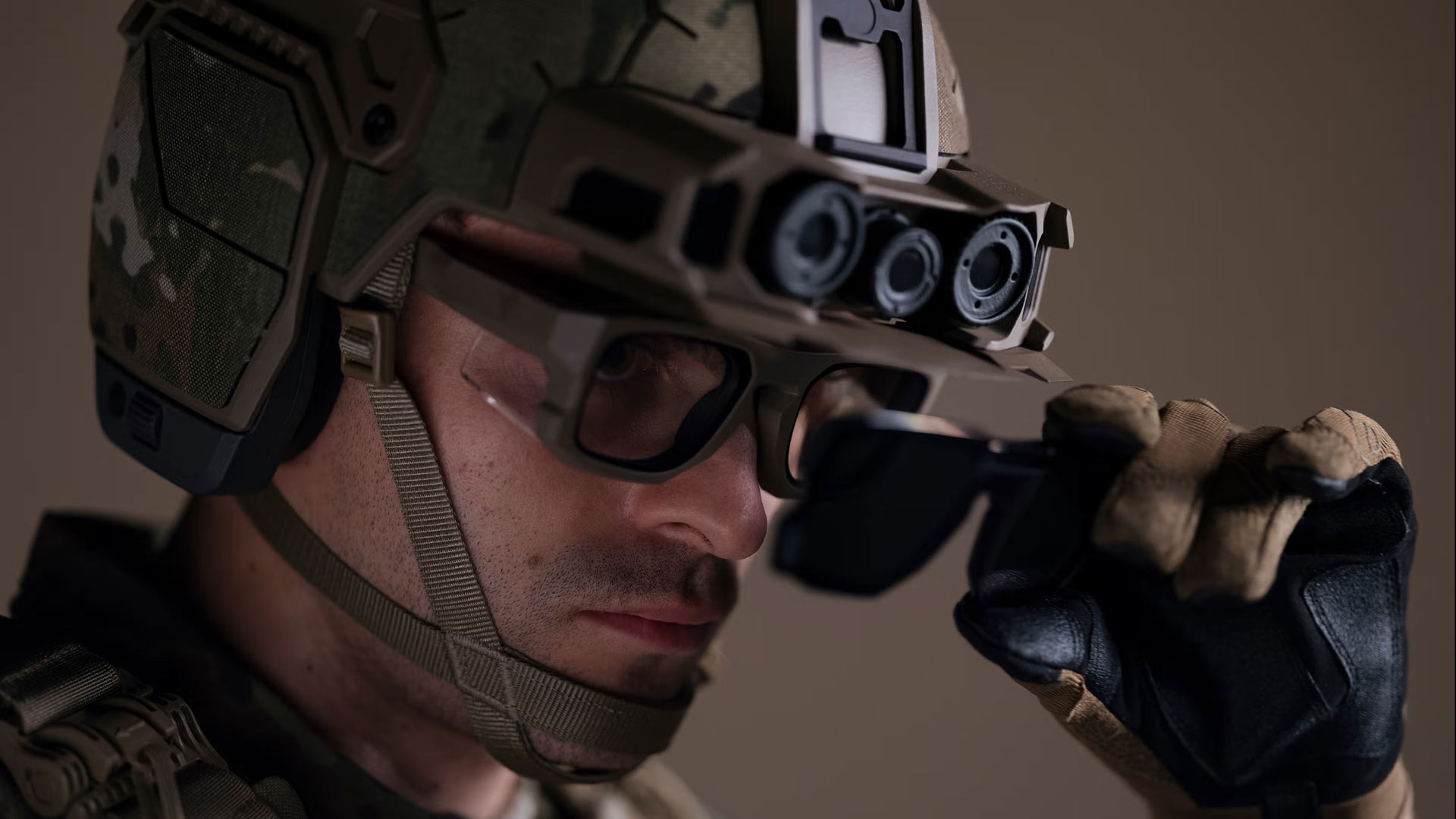
Anduril, the defense technology company founded by Palmer Luckey, has offered the first public look at its EagleEye XR headset, a device developed in partnership with Meta and designed specifically for military applications. This unveiling follows the announcement in May of the collaboration between the two companies, which aims to deliver advanced AR and VR systems for the U.S. military. The EagleEye system was showcased in a video posted on X, demonstrating its ability to integrate a wide array of digital information directly into a soldier’s field of view.
The demonstration video reveals several features that set EagleEye apart from previous military XR efforts. The AR display can overlay a mini-map, toggle between low light and thermal vision modes, display overhead drone feeds, and highlight friendly forces with AI-driven tracking—even when they are obscured by obstacles. These capabilities are designed to enhance situational awareness and survivability on the battlefield by providing real-time, actionable insights. Anduril’s approach leverages its Lattice battlefield platform, integrating data streams such as RF signature detection, rearview cameras, non-emissive lasers, biometric and environmental sensors, and battlefield alerts. The hardware itself consists of a pair of AR glasses with an optional shroud, likely intended to improve visibility in bright environments.
Anduril’s marketing has typically avoided CGI in favor of real-world demonstrations, and while the company has not confirmed if the video was captured directly through the headset, the UI shown is reminiscent of interfaces popularized by modern video games. This design choice could ease adoption among younger soldiers, many of whom are already familiar with similar control schemes from titles like Call of Duty and Battlefield. The use of established gaming UI conventions may reduce training time and streamline the integration of the headset into active operations. It also reflects a broader trend in defense technology, where gamepad-style controls are increasingly common across various military platforms.
The launch of EagleEye comes at a pivotal moment, as Anduril is reportedly competing with Rivet for a U.S. Army contract to replace the troubled Integrated Visual Augmentation System (IVAS) project previously awarded to Microsoft. The IVAS effort, based on HoloLens 2, struggled with comfort and usability issues despite a significant production contract. EagleEye’s debut suggests a new direction for military XR, with a focus on robust, user-friendly interfaces and real-time data fusion. Looking ahead, the underlying technologies could extend beyond wearables to power remote-operated or even autonomous systems, echoing Anduril’s broader work in autonomous vehicles and robotics.
Source: Road to VR
House of Golf VR Turns Your Home Into a Mini Golf Course

Starlight Games has announced House of Golf VR, a new entry in its mini golf series that brings mixed reality (MR) gameplay to the Quest platform. Launching on October 30th, the game will allow players to transform their physical living spaces into custom mini golf courses using MR, alongside a traditional VR mode featuring vibrant, interactive environments. This release marks a notable expansion for the series, previously known for its more conventional digital mini golf experiences.
In MR mode, players can design and play mini golf courses throughout their actual homes by placing a wide variety of obstacles, ramps, and whimsical contraptions—such as mini-cranes, cannons, and hot air balloons—directly into their real-world surroundings. According to Starlight Games, the game will include "hundreds of course pieces, hazards, and whimsical items" at launch, offering a high degree of modularity and customization. This approach leverages advancements in Quest’s room scanning and boundary detection, allowing for greater integration of physical spaces into gameplay. The VR mode, meanwhile, immerses players in colorful virtual worlds filled with interactive puzzles and competitive championships.
Starlight Games, formerly known as Atomicon, rebranded in early 2024 to focus on new intellectual property. The Liverpool-based studio has also teased additional titles in development, including a futuristic sports game and a sci-fi rogue-lite action experience, though it has not confirmed whether these will feature XR support. For now, House of Golf VR stands out by offering a mixed reality experience that few other mini golf games have attempted, despite Meta’s push for full-color passthrough and MR capabilities with the Quest 3.
While popular VR mini golf titles like Walkabout Mini Golf have set a high bar for gameplay mechanics and content, they have not yet embraced MR to the same extent. Integrating MR into mini golf presents unique challenges, particularly in adapting gameplay to a wide variety of real-world room layouts. Many existing MR games rely on simple passthrough windows or require user-driven object placement, but House of Golf VR aims to provide a more modular and creative approach to course building. The game is available to wishlist on the Horizon Store and supports Quest 2 and above, positioning itself as a notable experiment in spatial computing and user-generated content for the VR industry.
Source: Road to VR
Windows and Meta Quest Integration Now Available for Productivity
Microsoft has announced that immersive productivity features integrating Windows and Meta Quest are now generally available. This development enables users to leverage virtual reality for enhanced productivity experiences by combining Windows environments with Meta Quest devices.
The general availability of this integration is aimed at professionals and organizations seeking to utilize spatial computing and VR tools within their workflows. By merging Windows capabilities with Meta Quest hardware, users can expect new ways to interact with their digital workspaces in immersive settings.
This release marks a significant step forward in making VR productivity tools accessible to a wider audience, reflecting ongoing efforts to blend traditional computing with emerging immersive technologies.
Source: Windows Blog
Thief VR: Legacy of Shadow Launches on All Major Headsets December 4

The iconic stealth-action franchise is making its long-awaited debut in virtual reality with the upcoming release of Thief VR: Legacy of Shadow. Developed by Maze Theory and published by Vertigo Games, the title is set to launch on December 4th across all major VR platforms, including Meta Quest 2 and above, PlayStation VR2, and PC VR headsets via Steam. This marks the first time the Thief series has been built from the ground up specifically for VR, promising an immersive experience tailored to the strengths of the medium.
Players will step into the shoes of Magpie, a skilled thief orphaned by Baron Northcrest and shaped by the harsh realities of the streets. The narrative centers on Magpie’s quest to uncover the secrets behind a powerful ancient artifact, all while evading the City’s formidable guards and navigating a world rife with danger and opportunity. Armed with classic tools of the trade—a bow, a blackjack, and deft hands—players will employ stealth and cunning to bypass or confront adversaries and claim valuable treasures.
Hands-on impressions from an hour-long gameplay session highlight the game’s commitment to VR-native design. Objectives are structured as multi-step challenges, each layered with stealth mechanics and interactive elements that leverage the immersive capabilities of virtual reality. Players can scale buildings, sneak past heavily armored guards, and interact with objects in ways that feel intuitive and tactile, underscoring the developers’ focus on creating a believable and engaging VR world. The gameplay reportedly delivers on the promise of the Thief franchise, blending strategic planning with moment-to-moment tension and choice.
For industry professionals, the release of Thief VR: Legacy of Shadow signals a notable milestone in the adaptation of classic game IPs for spatial computing platforms. The game’s VR-first approach, from environmental traversal to object manipulation, sets a benchmark for how established franchises can be reimagined for immersive technology. The title is currently available for pre-order at $27, representing a 10% discount ahead of its $30 launch price. This pricing strategy, coupled with the broad platform support, positions Thief VR: Legacy of Shadow as a significant entry in the expanding VR games market and a case study in the evolution of genre-defining experiences for a new generation of hardware.
Source: Road to VR
Arken Age Launches on Quest 3 After Acclaimed Debut

Arken Age, a single-player VR adventure that first made waves on PSVR 2 and PC VR earlier this year, has now arrived on the Quest 3 platform. Developed by VitruviusVR, the game was initially slated for a November release on Quest 3 and Quest 3S, but its launch was moved up, making it immediately available to a broader audience of standalone headset users. This marks a significant expansion for one of 2025’s most talked-about VR titles, especially among those seeking immersive solo experiences.
The game distinguishes itself through a polished approach to VR design, drawing inspiration from genre standouts such as Stormland and Lone Echo. Arken Age focuses on combat-centric gameplay, offering players an adventure that leverages mature VR mechanics and well-crafted visuals. Its arrival on Quest 3 is notable not just for the technical achievement of porting a high-fidelity experience to a standalone device, but also for the way it brings a console and PC-quality adventure to a mobile VR audience.
Early feedback from Quest users has been overwhelmingly positive. At the time of writing, Arken Age holds a user score of 4.9 out of 5, based on 68 reviews. Players are praising the game’s immersive combat, visual fidelity, and overall execution of VR mechanics—qualities that had already earned it acclaim on other platforms. While the Road to VR team has yet to personally review the Quest port, the initial user impressions suggest that the game’s strengths have translated well to the new hardware.
For industry professionals, Arken Age’s successful transition to Quest 3 demonstrates both the increasing technical capabilities of standalone VR headsets and the growing appetite for sophisticated single-player content in the VR market. The game is available for $30 on the Horizon Store for Quest 3 and Quest 3S, as well as on the PlayStation Store for PSVR 2 and Steam for PC VR headsets. Its positive reception may encourage more developers to invest in high-quality, narrative-driven VR experiences that can reach users across multiple platforms.
Source: Road to VR.
NEO Robot Uses VR Teleoperation for Household Chores

Palo Alto-based robotics startup 1X has introduced NEO, a humanoid robot designed to assist with household chores, but with a twist: it currently relies on remote human operators using VR headsets to perform tasks and train its AI. While the long-term vision is for NEO to function autonomously, the robot’s neural network is still learning, and for now, humans wearing Quest 3 headsets step in to teleoperate NEO during scheduled periods, especially for more complex tasks.
NEO weighs 66 pounds and sports a sweater-clad appearance, but its capabilities are limited at this early stage. According to 1X CEO and Founder Bernt Børnich, NEO cannot handle heavy, hot, or sharp objects, so it won’t be tackling all household jobs just yet. The robot’s current skill set includes loading dishwashers, fetching drinks, and tidying up, but these are performed with the help of remote operators in what’s called ‘Expert Mode.’ This mode allows users to schedule specific tasks and even customize what the teleoperators should do, highlighting the robot’s flexibility but also its dependence on human intervention for now.
Privacy is a key consideration in NEO’s deployment. Børnich describes user data sharing as a “sliding scale,” where increased data access allows NEO to perform better. Users can restrict NEO’s access to certain areas or blur people for privacy, but the CEO emphasizes that the product’s effectiveness is tied to the data users are willing to share. Børnich frames this as a social contract, suggesting that by 2026, buyers will need to be comfortable with this exchange to benefit from NEO’s full capabilities.
NEO is available for reservation with a $200 refundable deposit and comes in grey, taupe, and black. The robot is expected to ship in the US in 2026, with a purchase price of $20,000 or a $500 monthly subscription option. The robot offers a four-hour battery life with quick charging, and while it eliminates traditional employment concerns like sick days or insurance, it still requires occasional maintenance—such as laundering its jumpsuit. Despite its promise, demonstrations have shown that even with human control, NEO can struggle with basic tasks and operates more slowly than a person would. This is partly due to the limitations of current VR hardware, which lacks tactile feedback and can introduce latency, making teleoperation a temporary solution as the neural network improves.
For industry professionals, NEO represents a significant step in integrating VR telepresence with robotics, providing insights into real-world training of AI through human demonstration. While it may not yet be a full replacement for human help, its development signals growing opportunities for VR-enabled teleoperation and data-driven robot learning in domestic environments. Additional use cases, such as remote home monitoring via VR, could further expand its appeal beyond simple chores, though its high price point currently limits its market to affluent early adopters.
Source: Road to VR
Road to VR Editor Ben Lang Shares Insights in Interview
Road to VR Executive Editor Ben Lang recently participated in an in-depth interview, offering a behind-the-scenes look at his work and the publication's approach to covering virtual reality. The conversation provides industry professionals with valuable perspectives from one of VR journalism's leading voices.
Source: Road to VR.
Meta Launches Fall Frights Sale with Major VR Game Discounts

Meta has rolled out its annual 'Fall Frights' sale for Quest users, offering substantial discounts of up to 50% on a wide array of VR titles just in time for the Halloween season. The promotion, which runs through November 2nd at 11:59 pm PT, features a mix of horror-themed games and other popular titles, giving VR enthusiasts a chance to expand their libraries at a fraction of the usual cost.
While the sale spotlights some of the spookiest experiences available on the Quest platform, it also includes well-known non-horror games. Among the notable titles discounted by more than 20% are Skydance’s Behemoth, GORN 2, The Climb 2, and UNDERDOGS. In total, Meta is offering deals on a large selection of games, with a highlighted list of 15 favorites curated for the occasion. This broad approach ensures that both fans of horror and those seeking other genres will find something appealing in the sale.
One feature that stands out in Meta’s approach is its dynamic bundle pricing. If a user already owns one or more games included in a discounted bundle, the price of those owned titles is automatically subtracted at checkout. This system provides added flexibility and value, allowing customers to avoid paying for games they already have and making it easier to complete collections or try new experiences.
Sales like the 'Fall Frights' event have become a regular occurrence on the Quest platform, and industry watchers expect more deals as the year draws to a close. Meta typically follows up with another sale toward the end of November, alongside a major holiday promotion. For those working in VR, these recurring sales not only drive engagement and boost sales numbers but also help maintain momentum for both established and emerging titles on the platform.
In addition to game discounts, attention is turning toward potential hardware deals, particularly for the Quest 3S. The headset is usually priced at $300 for the 128GB version, but previous promotions have seen it offered as low as $225 (with Amazon gift cards) or $250 directly from Meta. With Black Friday and the holiday season approaching, industry professionals and consumers alike are watching closely to see if Meta will introduce even deeper discounts on hardware, which could further expand the Quest user base and drive additional software sales.
Source: Road to VR
Meta to Release Project Aria Gen 2 for Researchers in 2026
Meta has announced plans to ship its Project Aria Gen 2 device to researchers in 2026. This move is positioned as a step toward advancing the development of future AR glasses. The initiative signals Meta's ongoing commitment to augmented reality research and innovation. Source: Road to VR.RAONTECH P13 Microdisplay Targets Sleeker, Efficient AR Glasses
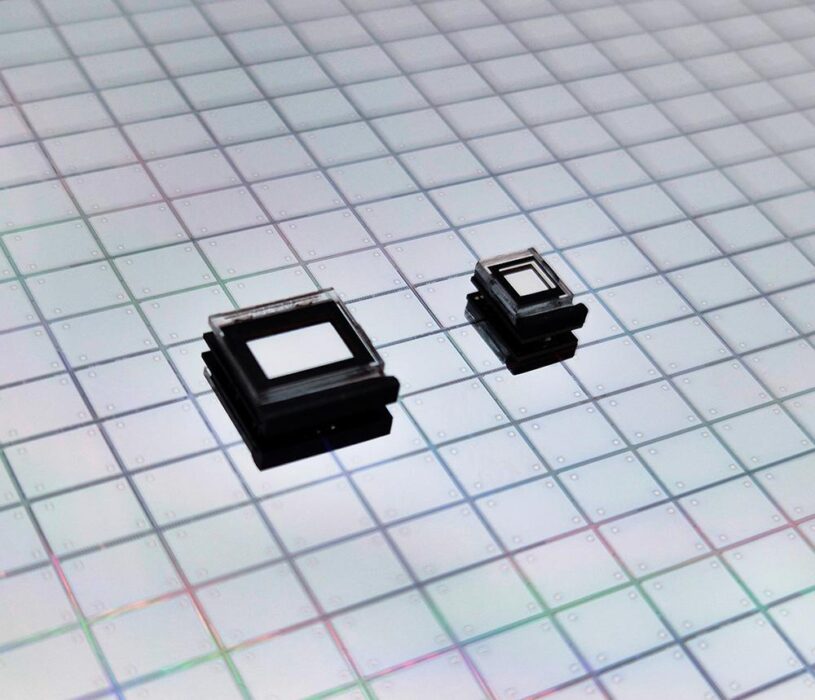
RAONTECH has introduced its latest microdisplay, the P13, a 0.13-inch Liquid Crystal on Silicon (LCoS) panel engineered for augmented reality (AR) glasses that demand both compactness and power efficiency. The P13 is positioned as a step forward in miniaturizing AR hardware, addressing longstanding challenges in display size and energy consumption without compromising visual fidelity. According to RAONTECH, this new microdisplay is designed to enable AR glasses that are lighter and closer in form factor to everyday eyewear, a key milestone for widespread consumer adoption.
The standout feature of the P13 is its "extreme miniaturization." Measuring just 6.25 mm by 4.65 mm, the P13 is approximately 60% smaller than RAONTECH’s previous solutions with similar resolution capabilities. The company notes that this reduction in size allows for the creation of ultra-compact light engines, each less than 1 cubic centimeter, making it possible to fully embed the display module within the temple (arm) of smart glasses. This innovation opens the door to more discreet and comfortable AR devices, a significant improvement over bulkier predecessors.
Technically, the P13 leverages 3µm pixel technology to deliver an 800×800 resolution, offering more than double the pixel density of similarly sized LEDoS displays, according to RAONTECH. This high pixel density is crucial for achieving the precision imagery required in AR applications, where clarity and color quality are essential. Unlike many LEDoS-based systems that require complex optical setups involving three separate panels and an X-Cube, the P13 uses a single-panel design. This approach simplifies the optical architecture, enabling high-quality color reproduction in a much smaller form factor. The P13 also expands RAONTECH’s full-color display portfolio, building on the company’s previous P18 LEDoS panel.
RAONTECH states that the P13 is designed to meet the industry’s growing demand for smaller, simpler, and more powerful AR systems. Its combination of higher pixel density, full-color performance, and ultra-compact design addresses key barriers to mainstream AR adoption. The company reports that global customers are already developing next-generation light engines and AR glasses featuring the P13, with prototypes expected to appear at major international exhibitions such as CES 2026. For professionals in the AR industry, the P13 represents a significant advancement in display technology, potentially accelerating the development of more practical and appealing consumer AR wearables.
Source: Auganix.org
Spotted something wrong in this issue? Report it.