Apple Vision Pro M5 at a Crossroads: What’s Next for Spatial Computing?
This issue examines critical decisions for Apple Vision Pro M5, Meta Quest 4 redesign rumors, new immersive content, enterprise VR launches, and major hardware updates.

Apple Brings Real Madrid and Red Bull Immersive Content to Vision Pro
Apple is expanding its lineup of immersive content for the Vision Pro headset, announcing upcoming exclusive experiences in collaboration with Real Madrid and Red Bull. These new offerings are designed to leverage Vision Pro’s spatial video capabilities, providing users with unprecedented access to major sporting events and extreme sports environments.
According to a recent confirmation from Apple, a new immersive documentary featuring Spanish football giant Real Madrid is set to debut exclusively on Vision Pro next year. The documentary, which does not yet have an official title, was filmed using more than 30 Blackmagic immersive cameras during the 2025-26 Champions League. The featured match saw Real Madrid face off against Juventus, and the production promises to offer fans a behind-the-scenes look at the club, from training sessions to high-stakes moments on the pitch. Apple describes the project as giving viewers a level of access to the world’s most decorated club that has never been available before.
In addition to the Real Madrid documentary, Apple is also preparing to launch the first installment of the "World of Red Bull" series on Vision Pro. This series, first announced several months ago, will kick off with an episode titled ‘Backcountry Skiing,’ which showcases top freeskiers navigating the challenging wilderness of Revelstoke, British Columbia. The premiere is scheduled for December 4th, marking a significant addition to Vision Pro’s immersive sports content. Following this, the next episode, ‘Big-Wave Surfing,’ will transport viewers to the remote coast of Teahupoʻo, Tahiti, where they can experience the thrill of elite surfers tackling some of the world’s most formidable waves. This surfing episode is expected to arrive sometime next year.
For professionals in the VR and spatial computing industry, these announcements highlight Apple’s ongoing commitment to premium, exclusive immersive content as a differentiator for Vision Pro. The use of advanced camera technology and partnerships with globally recognized brands like Real Madrid and Red Bull signals a push to attract both sports fans and enthusiasts of high-quality immersive experiences. As Apple continues to invest in original spatial video productions, content creators and developers may find new opportunities to collaborate or innovate within this expanding ecosystem. The focus on exclusive, high-profile sporting events also suggests a strategic approach to drawing in mainstream audiences who may be seeking unique, interactive ways to engage with their favorite teams and athletes.
Source: Road to VR
1HMX Unveils Nexus NX1: Turnkey VR System for Robotic Teleoperation
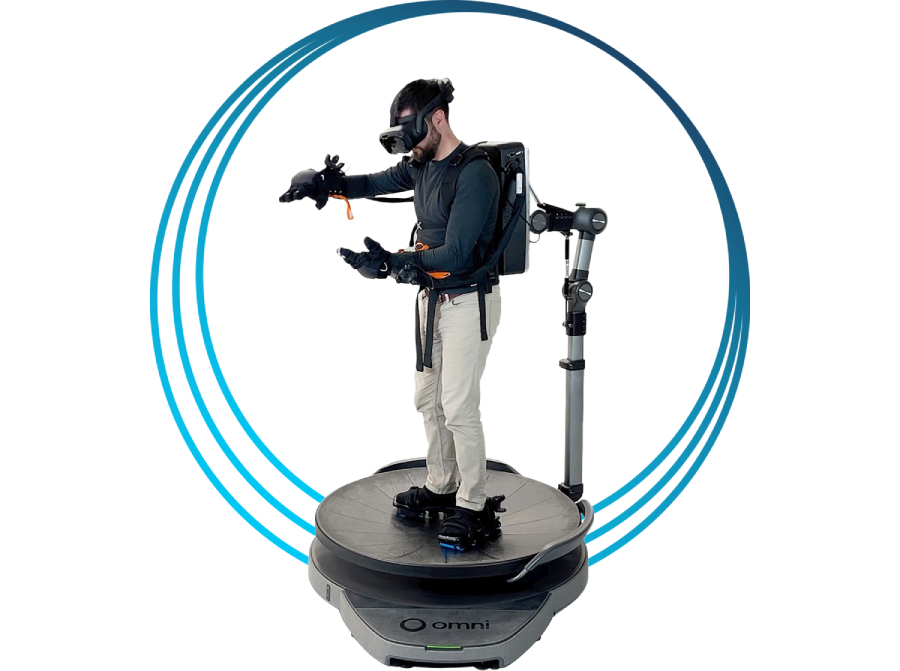
1HMX has announced the Nexus NX1, a comprehensive turnkey system designed to advance robotic teleoperation through the integration of virtual reality and immersive technologies. The system, introduced this week, is positioned as a unified solution for companies working with humanoid robots and simulation platforms, reflecting the growing role of VR in robotics workflows where precise operator control is increasingly essential.
The Nexus NX1 package brings together several established XR industry devices to deliver a full-body control experience. Among its core components are the HaptX Gloves G1, which provide tactile and force feedback, the Virtuix Omni One platform for 360-degree movement, and Freeaim’s motorized robotic shoes. These hardware elements are complemented by a robust tracking system offering 72 degrees of freedom (DoF) for both body and hand movements. Additionally, the system includes a software development kit (SDK) to facilitate integration with existing VR and robotics platforms, supporting a range of applications from teleoperation to high-fidelity training simulations.
According to 1HMX, the Nexus NX1 enables users to experience realistic touch feedback and natural mobility, resulting in a heightened sense of full-body presence. The system is engineered to capture a wide array of data, including sub-millimeter precision motion capture, skeletal and soft tissue modeling, detailed tactile displacement and pressure data across hundreds of points on the hands, center of mass location, locomotion metrics, and foot-to-ground distance. This comprehensive data collection is intended to enhance both the realism and utility of teleoperation and simulation environments.
1HMX is targeting the Nexus NX1 at industrial and enterprise sectors such as manufacturing, medical, defense, and research. The system also supports multi-user networking, allowing for collaborative environments with full-body avatars and real-time touch feedback. Company executives have highlighted the expansion from the award-winning HaptX Gloves to a complete immersive system as a strategic move to address labor challenges and provide customers with a competitive edge. The Nexus NX1 is now available for pre-order, with shipments scheduled to begin in the second quarter of 2026.
Source: Auganix
Titanic VR Experience Opens at Florida Mall in Orlando
Visitors to Orlando’s Florida Mall can now experience the Titanic in virtual reality. The new attraction offers an immersive way to explore the historic ship using VR technology.
This installation provides a unique opportunity for guests to engage with the story of the Titanic in a modern, interactive format. Details about the specific content or technology used have not been reported.
Source: WFTV and San Francisco Chronicle.
Pico Plans Vision Pro Rival with Custom Chip for 2026
Pico, the XR hardware subsidiary of ByteDance, is reportedly preparing to launch a new mixed reality headset in 2026 that aims to rival the Apple Vision Pro. According to information shared by Zhenyuan Yang, Vice President of Technology at ByteDance, at the company's annual scholarship award ceremony, the upcoming device will feature a self-developed display chip and a high-resolution microOLED display, reportedly reaching 4,000 pixels per inch (PPI). This would surpass the Apple Vision Pro's 3,386 PPI, marking a notable leap in display technology for XR headsets.
The custom chip, which began development in 2022 and is now in mass production, is designed to address real-time processing challenges associated with high-resolution, high-frame-rate mixed reality video. Yang reportedly stated that the chip can reduce system latency to around 12 milliseconds while maintaining precise image quality. The chip is also said to enhance performance for simultaneous localization and mapping (SLAM), motion compensation, and inverse-distortion tasks, all of which are crucial for delivering smooth and immersive mixed reality experiences on low-power devices.
In addition to the chip, the headset will utilize a custom microOLED display that is said to achieve an average of 40 pixels per degree (PPD), exceeding 45 PPD at the center of the display. To address typical brightness limitations of microOLED panels, Pico is reportedly incorporating microlens array (MLA) technology and optical compensation to ensure uniform color and luminance. The company is also investing in its own data-capture systems to advance eye-tracking, gesture-tracking, and spatial-understanding capabilities, which are increasingly important for next-generation XR interfaces.
Yang emphasized that since 2023, ByteDance has shifted Pico's focus from aggressive content and marketing investments to prioritizing long-term technology development. He clarified that this strategic pivot was not a withdrawal from the XR market, but rather a recognition that the hardware experience needed to mature before pursuing large-scale market adoption. This aligns with previous reports, including one from The Information, which suggested Pico was working on a lightweight MR headset codenamed 'Swan' that could weigh as little as 100 grams.
Despite these ambitious plans, Pico's headsets have historically been available only in China, East and Southeast Asia, and Europe, with limited presence in North America. Additionally, Pico's products have typically been priced higher than Meta's offerings, which has limited their appeal in regions where Meta is dominant. However, ByteDance's strong financial position—having reportedly overtaken Meta in revenue—could enable Pico to position its upcoming headset as a premium XR platform on the global stage, should it choose to expand distribution.
Source: Road to VR
Rheinmetall and Varjo Team Up for Mobile Mixed Reality Military Training
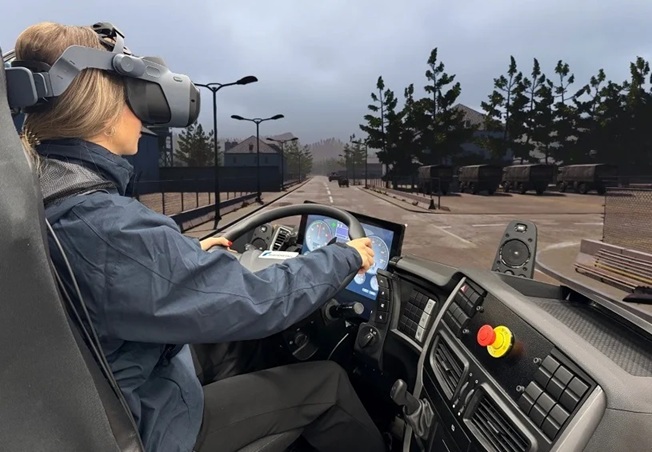
Rheinmetall has announced a strategic partnership with Varjo to integrate the XR-4 Series mixed reality (MR) headsets into its deployable land training systems, marking a significant advance in the use of immersive technology for military training. This collaboration aims to enhance the flexibility and realism of training for armed forces, particularly across Europe and NATO, by equipping Rheinmetall’s modular driving and weapons simulation systems with Varjo’s MR capabilities.
The integration of Varjo’s XR-4 Series headsets allows Rheinmetall’s mobile simulators to blend physical and virtual elements. Crews can interact with actual hardware while being immersed in synthetic environments that closely replicate operational conditions. This approach is designed to deliver the level of immersion and realism necessary for effective training, without the need for large, fixed-site simulators. The systems are deployable and can be quickly set up in the field, with the flexibility to reconfigure for different vehicle types as training needs evolve.
According to Rheinmetall Electronics’ VP Training Systems Land, Bartek Panasewicz, the partnership addresses an urgent need for scalable training capacity, enabling large numbers of soldiers to train wherever they are needed without sacrificing quality or realism. Varjo’s XR-4 Series headsets, recently refreshed with high-resolution visuals, realistic passthrough vision, and advanced eye tracking, further enhance the training experience. The XR-4 platform also provides instructors with tools to monitor trainee interactions, situational awareness, and performance under simulated stress, supporting more effective and data-driven training outcomes.
Valentin Storz, Chief Revenue Officer at Varjo, emphasized that mixed reality offers a new edge for land training by accelerating preparedness at a lower cost compared to traditional methods. The collaboration with Rheinmetall enables military forces to train with greater speed, mobility, and fidelity, aligning with the operational demands of today’s defense landscape.
Rheinmetall and Varjo will showcase their joint training solutions at the Interservice/Industry Training, Simulation and Education Conference (I/ITSEC) in Orlando, Florida, from December 1–4, 2025. At the event, they will demonstrate an XR truck driving simulator, providing attendees with a firsthand look at the capabilities of their integrated system.
Source: Auganix.org
Meta Unveils WorldGen: AI Tool for Creating VR Worlds from Text
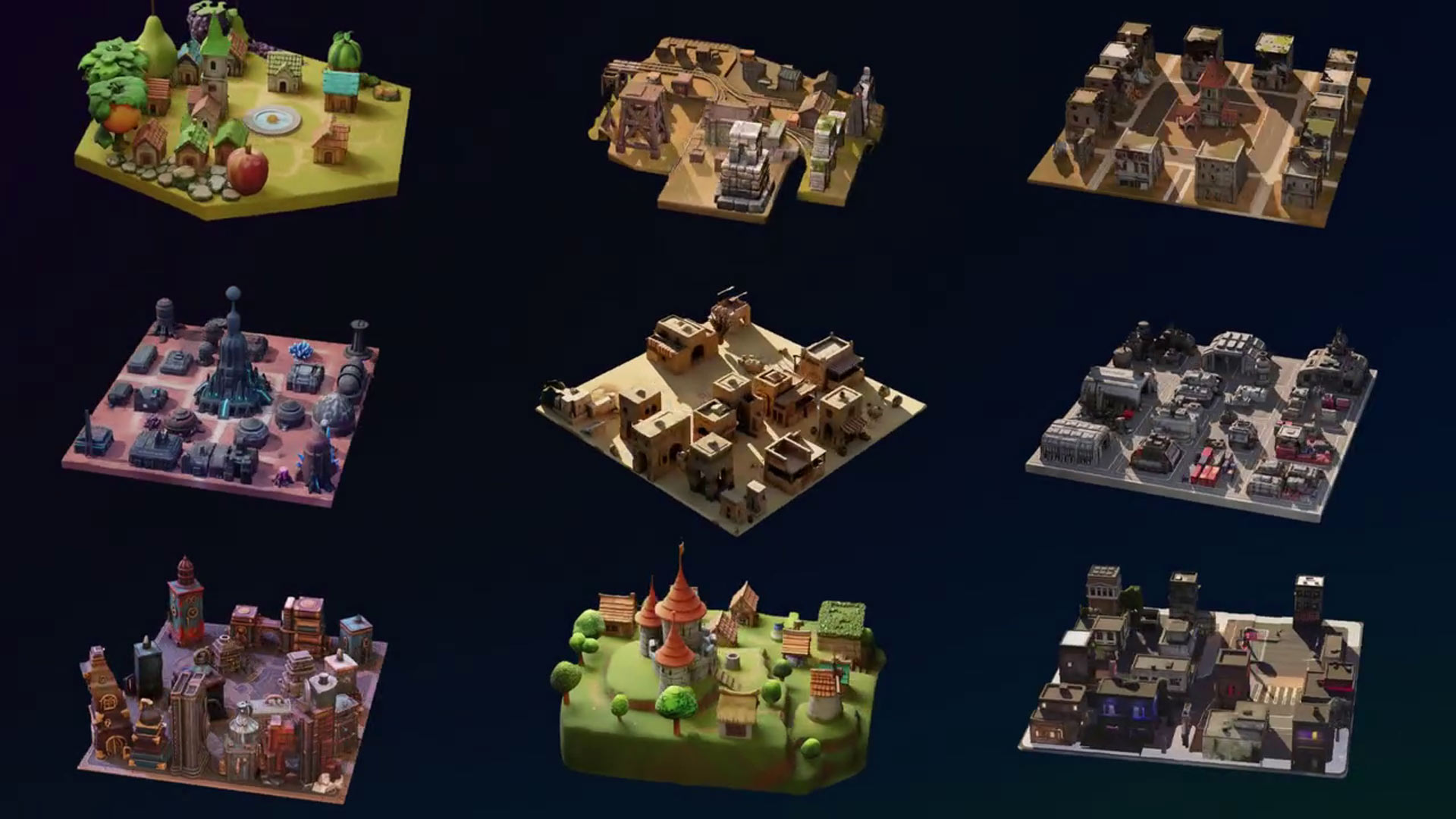
Meta has introduced WorldGen, a research-stage AI tool designed to generate fully navigable 3D virtual worlds from a single text prompt. Announced by Meta Reality Labs, WorldGen aims to streamline and accelerate the process of environment creation for virtual reality by leveraging advanced AI techniques. Unlike previous tools that might only generate a single viewpoint or a small, static environment, WorldGen is capable of producing expansive, consistent 3D scenes as large as 50 by 50 meters. These worlds are not only explorable but can also be imported directly into popular game engines such as Unity and Unreal Engine, making them accessible to developers and creators working across the VR ecosystem.
The WorldGen pipeline incorporates several sophisticated components, including procedural layout generation, image-based planning, diffusion-driven 3D reconstruction, navmesh extraction, scene decomposition, mesh refinement, and texturing. This multi-stage process allows the system to create coherent environments that users can walk through and interact with. Additionally, Meta highlights the tool’s ability to decompose scenes into individual objects using an accelerated AutoPartGen process. This feature enhances the reusability and editability of generated environments, potentially reducing the time and effort required for world-building in VR applications.
Despite its promise, WorldGen is not yet available for public use, and Meta acknowledges several limitations in its current form. According to the Reality Labs research paper, WorldGen currently generates scenes based on a single reference view, which restricts the scale of environments it can produce. Creating vast open worlds spanning multiple kilometers would require stitching together several local regions, a process that can introduce visual artifacts or non-smooth transitions at the boundaries. The system also cannot yet model multi-layered environments, such as multi-floor dungeons or seamless transitions between indoor and outdoor spaces. Furthermore, unlike traditional human-created environments, WorldGen does not currently reuse textures or geometry for rendering efficiency—a capability Meta is exploring for future iterations to improve scalability.
For industry professionals, WorldGen represents a significant step toward automating some of the most labor-intensive aspects of VR content creation. Meta has already integrated several AI-driven features into Horizon Worlds, including an AI-powered Creator Assistant, mesh and texture generation, typescript code creation, and tools for sky and audio generation. WorldGen appears to unify many of these disparate systems into a single, prompt-driven tool, potentially raising the baseline quality and variety of virtual environments. While it remains to be seen how rando-generated AI worlds will impact user engagement, the technology could help creators focus on higher-level design and interactivity by handling much of the foundational work. As Meta continues to refine WorldGen, the industry edges closer to the possibility of fully AI-generated games and expansive virtual spaces developed with minimal manual intervention.
Source: Road to VR.
DPVR Enters Smart Glasses Market With Six AI-Enabled Models
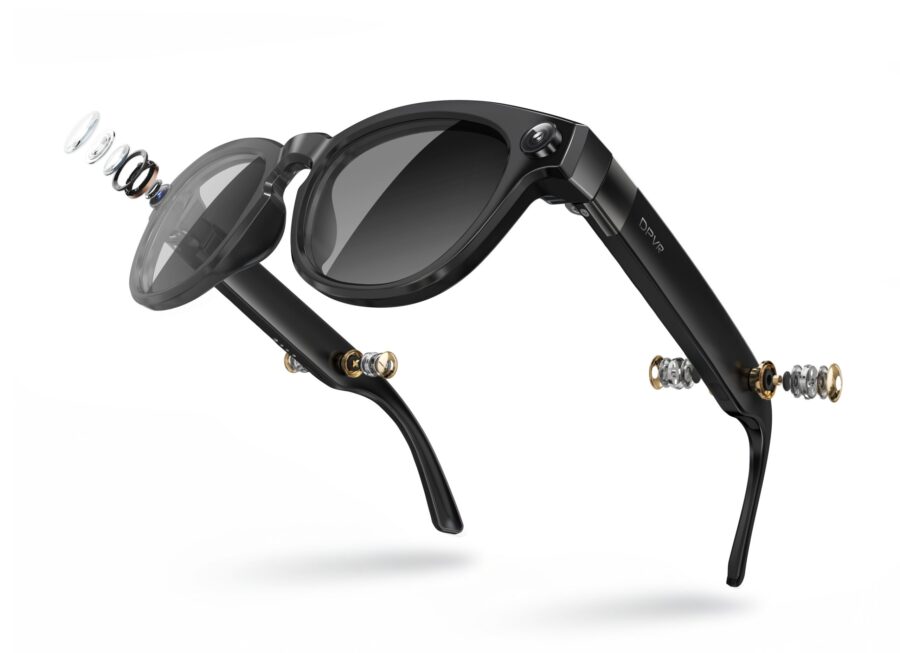
DPVR, recognized as the fifth largest global provider of VR headsets according to Counterpoint Research, has announced its entry into the smart glasses sector with the launch of six new models under the G Series lineup. This expansion marks DPVR’s strategic move into the growing market for AI-powered wearables, positioning the company to leverage its established expertise in virtual reality hardware within the adjacent smart glasses space.
The newly introduced G Series consists of the G1, G2, G3, G4, G5, and G6 models. According to DPVR, these devices are designed to offer a blend of personal computing, advanced imaging, and artificial intelligence capabilities, all within a lightweight and stylish glasses form factor. The company emphasizes that AI features are central to the series, aiming to enhance daily interactions by enabling users to interact with their environment and access contextual information hands-free.
Among the six models, the G1, G3, G4, G5, and G6 are equipped with AI-driven Diagram and Dialogue processing, which include photo recognition and conversational AI functionalities. These features allow real-time object and scene identification, as well as natural language interaction. The G2 model stands apart as a Bluetooth-only device, lacking AI capabilities and visual input functionalities. Most models, except the G2, feature an 8MP camera with a photo resolution of 3264 x 2448 and video recording at 1600 x 1200. The G1, G3, G4, and G6 further support image stabilization for clearer images. All models are fitted with dual speakers and a microphone, supporting music playback, voice prompts, and calls.
Under the hood, the G1, G3, G4, G5, and G6 utilize the Allwinner V821 chip, offering 4GB of storage and 64MB of DDR. The G1, G3, G5, and G6 are powered by a 290mAh battery, which DPVR states can provide 6 to 7 hours of music playback or 45 to 55 minutes of continuous recording. To access full functionality, users need to install the HeyCyan or DPVR Glasses app on Android 9.0 or later, or iOS 10.0 or later devices.
- The G1 and G2 models are available now through DPVR’s website, priced at $89.99 and $39.99 respectively (with limited time coupon pricing).
- The G3 and G6 are scheduled for release in November, while the G4 is expected in December 2025.
- The G5 is planned for launch in 2026, with pricing for these upcoming models yet to be announced.
DPVR has affirmed its ongoing commitment to its VR headset product line, stating that its expansion into smart glasses will benefit from its expertise in optics, display technology, and spatial computing. For industry professionals, this move signals a growing convergence between VR and AI-enabled wearables, and highlights the increasing importance of cross-category innovation in the XR ecosystem.
Source: Auganix
Valve's Steam Frame Ergonomic Kit and Modular Design Explained
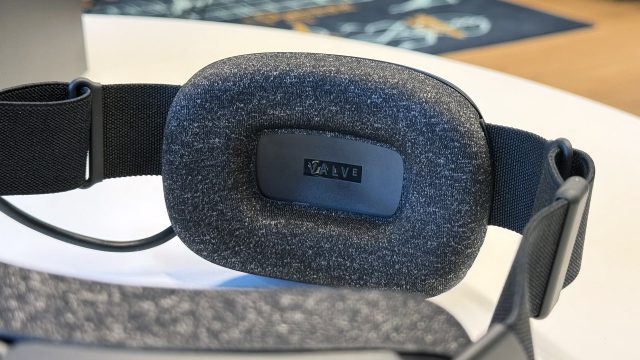
Valve’s recent unveiling of the Steam Frame VR headset has brought attention to its modular construction and the introduction of an optional ‘ergonomic kit’ aimed at enhancing user comfort. While the initial announcement focused on the headset’s technical capabilities and design, further details have emerged about how Valve is addressing comfort and customization, which are critical factors for VR professionals and enthusiasts alike.
Unlike its predecessor, the Index, which featured a rigid strap and a top strap for optimal weight distribution, the Steam Frame comes standard with a soft strap and omits the top strap entirely. This design choice offers benefits such as increased portability and reduced overall weight, but it also introduces ergonomic challenges. The battery is mounted at the back of the strap to help balance the headset, but without a top strap, the rear weight cannot effectively counterbalance the front, potentially leading to discomfort during extended use. Additionally, tightening the soft strap requires both hands, making it awkward for users to adjust the fit while ensuring the lenses are properly aligned, a process that could have been streamlined with a ratcheting dial mechanism.
To address these issues, Valve plans to offer an optional ergonomic kit for the Steam Frame. This kit will include a top strap for the headset, which is expected to significantly improve comfort by better distributing weight across the head. The ergonomic kit also features knuckles-style straps for the controllers, allowing users to secure the controllers to their hands and open their grip without fear of dropping them. Although Valve has not yet announced the price of this kit, there is speculation that it will be priced under $50, given its composition of fabric, padding, and Velcro. However, the top strap is not included with the headset by default, meaning users seeking enhanced comfort will need to purchase it separately.
Beyond the ergonomic kit, the Steam Frame’s modular architecture stands out. The entire headstrap, facepad, and battery can be removed and replaced with either third-party accessories or DIY modifications. Valve has indicated that it will release detailed models and schematics to support developers and modders in creating their own custom components, though the company has not committed to producing complete headstrap replacements itself. This open approach could foster a vibrant ecosystem of accessories and modifications, allowing users and industry professionals to tailor the headset to specific needs or preferences.
For those working in VR hardware or content development, these design decisions signal Valve’s intent to balance portability and user comfort while encouraging third-party innovation. The Steam Frame’s modularity and the forthcoming ergonomic kit could set a new standard for customization in the VR headset market, offering opportunities for accessory makers and modders to address diverse ergonomic requirements.
Source: Road to VR.
SnkeXR Medical AR Glasses Launch with Lumus Waveguides
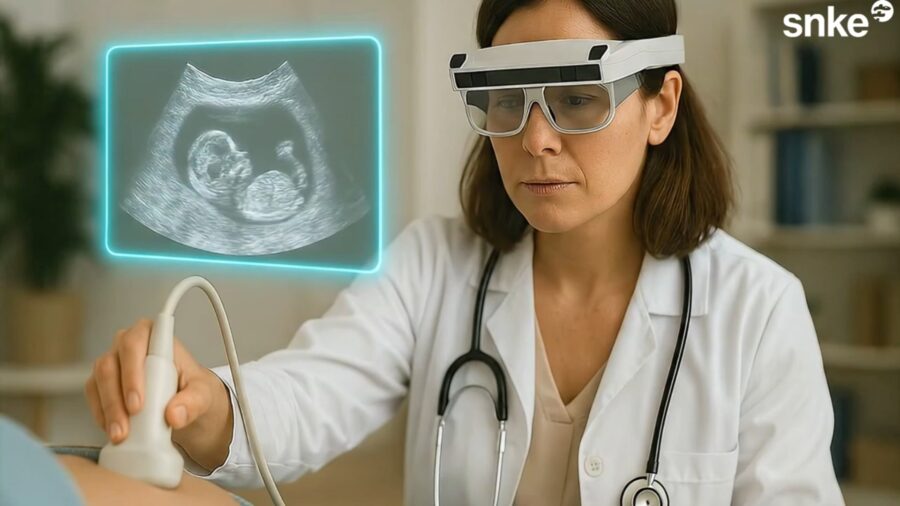
Snke has introduced SnkeXR, a new medical-grade augmented reality (AR) glasses system tailored for use in surgical and clinical settings. The launch marks a significant step for AR in healthcare, as the sector moves beyond experimental devices toward solutions that are validated for routine clinical use. SnkeXR is designed as an open platform, aiming to integrate seamlessly into a variety of clinical workflows and meet the stringent standards required for medical devices.
Snke developed SnkeXR to address the shortcomings of consumer AR devices, which typically fall short of medical requirements. The system is intended for a wide range of medical applications, including orthopedics, neurosurgery, spine surgery, electrophysiology, interventional radiology, and obstetrics and gynecology. Beyond direct surgical use, SnkeXR also targets procedure planning, remote assistance, and clinical training, reflecting the growing adoption of AR across multiple facets of healthcare.
One of the defining features of SnkeXR is its optical system, developed in partnership with Lumus. The glasses incorporate Lumus’s geometric waveguides, which deliver a 1440 x 1440 resolution per eye and a 50-degree field of view. The optics are engineered to provide brightness above 3,000 nits per watt, ensuring that anatomical overlays remain visible even under the intense lighting conditions typical of operating rooms. To improve ergonomics for clinicians working over reclined patients, the optical system features an approximately 33-degree downward tilt, a result of collaboration between Snke, Lumus, and manufacturing partner Quanta.
Nissan Elimelech, general manager of Snke XR and previously the founder and CEO of Augmedics, emphasized that SnkeXR aims to fill the gap left by consumer AR devices by offering a purpose-built, medical-grade solution. Ari Grobman, CEO of Lumus, highlighted the importance of optical quality in enabling safe and precise work in the operating room, noting that the SnkeXR glasses set a new milestone for medical AR technology.
For professionals in the healthcare and AR industries, the arrival of SnkeXR signals a maturing market for medical-grade AR solutions. The system’s open platform and focus on clinical integration may encourage broader adoption and innovation, while its technical specifications address key challenges faced by earlier AR devices in medical environments. As AR becomes an increasingly standard part of the surgical toolkit, products like SnkeXR could help set new expectations for performance, safety, and workflow compatibility.
Source: Auganix.org
Stormland’s Lasting Influence on Open World VR Design

Six years after its release, Insomniac Games’ Stormland remains a touchstone for open-world VR design, with its innovative approaches to weapons, locomotion, and world-building continuing to inspire developers. As highlighted in Road to VR’s Inside XR Design series, Stormland’s thoughtful systems still offer valuable lessons for anyone working in immersive technology.
Stormland’s weapon mechanics stand out for their unique take on reloading and inventory management. Unlike most VR shooters that rely on magazine swapping—a process that can be cumbersome and error-prone during fast-paced action—Stormland introduced a visceral “gun-ripping” mechanic. When a weapon runs out of ammo, players physically tear it apart, instantly replenishing ammunition and collecting crafting materials for upgrades. This approach not only maintains the game’s run-and-gun pace but also ensures reloading remains fun and intuitive. The design was so well received internally that it was extended to non-weapon items like health and energy canisters. To further streamline gameplay, Stormland prevents dropped weapons from disrupting the action by allowing them to float in place briefly, giving players a chance to recover them or have them return automatically to their holster. This mechanic also aids inventory management, acting as a temporary third hand when juggling equipment.
Locomotion in VR presents unique challenges, especially in expansive open worlds. Stormland tackled this with a multi-modal system that encourages players to seamlessly switch between thumbstick movement, climbing, and gliding. Climbing is made more accessible by allowing players to grab surfaces from a distance, reducing the need for precise hand placement and minimizing physical strain. The game’s gliding mechanic lets users traverse large distances rapidly, a feature that could easily induce motion sickness. However, Stormland cleverly mitigates discomfort by restricting fast movement to cloud surfaces and minimizing fast-moving visuals in the player’s field of view, reducing vection and maintaining comfort even at high speeds.
Perhaps most notably, Stormland reimagined open-world exploration for VR by structuring its map as a series of islands, each a point of interest separated by expanses navigable via gliding. This design gives players a true sense of scale and freedom without requiring tedious, slow traversal across empty spaces. Upgrades like cloud ramps further enhance traversal, making movement itself a rewarding part of the experience. For VR developers, Stormland’s solutions to the challenges of open-world design—balancing freedom, comfort, and engagement—remain highly relevant, demonstrating how thoughtful mechanics can elevate both user experience and gameplay depth.
Source: Road to VR
Major Reveals and New Titles at VR Games Showcase Fall 2025

The fourth VR Games Showcase concluded with a packed lineup of announcements, highlighting both anticipated franchises and brand-new intellectual properties from established VR studios. The event, which has become a regular fixture for industry professionals and enthusiasts, showcased a diverse array of upcoming and newly released titles, with a particular emphasis on immersive gameplay and genre variety. Among the standout moments was the reveal of Vampire Survivors but it’s in virtual reality, bringing the indie hit’s bullet hell chaos to the Meta Quest platform with a release date set for November 13, 2025.
Other significant announcements included Orcs Must Die: By The Blade, which marks the franchise's debut in VR, promising players a fully immersive trap-slaughter experience on Meta in January 2026. The showcase also introduced original projects from veteran developers, such as Knights of Fiona by CharacterBank and The Lightkeepers by Spectral Games, both targeting Meta and Steam with releases in 2026. Notably, Teenage Mutant Ninja Turtles: Empire City was revealed as the first VR title for the iconic franchise, coming to Meta and Steam in 2026, allowing players to embody the Turtles in a post-Shredder New York.
The event covered a broad spectrum of genres, from cooperative action in The Lightkeepers and Exoshock to narrative-driven experiences like Syberia VR and Star Trek: Infection. Competitive and social gaming also featured prominently, with titles such as Glassbreakers: Champions of Moss launching across Apple, Meta, and Steam on November 13, 2025, and Among Us 3D now available on Meta, Steam, and PS VR2. For those seeking more tranquil or creative experiences, Lushfoil Photography Simulator VR is set for a December 5, 2025 release on Steam, offering detailed landscapes for exploration and photography.
- Several games are immediately available, including Project Freefall and Golf 5, while others like Deadly Delivery and Ready or Not VRO Mod are scheduled for release in late 2025.
- Upcoming titles such as Wrath: Aeon of Ruin VR, Penguin Festival, and EXOSHOCK extend the showcase’s reach into 2026, reflecting the growing calendar of high-profile VR content.
For industry professionals, the breadth of genres, platforms, and innovative gameplay mechanics on display at the VR Games Showcase underscores the maturing VR ecosystem. The event’s focus on both established IP and original creations signals robust investment in content diversity, while the cross-platform releases highlight the importance of accessibility and audience reach. With a mix of immediate launches and long-term projects, developers and publishers are clearly betting on sustained growth and engagement in the VR market.
Source: Road to VR
Even Realities Unveils G2 Smart Glasses and R1 Smart Ring with AI

Even Realities has introduced its latest wearable technology offerings: the second-generation G2 smart glasses and the new R1 smart ring, both featuring advanced AI integration. This launch marks a significant step for the company as it aims to blend artificial intelligence, productivity, and wellness tracking into everyday devices, further intensifying the competition in the augmented reality (AR) wearables space.
The Even G2 smart glasses showcase notable improvements over their predecessor, featuring a slimmer design, upgraded optics, and expanded AI functionality. At the heart of the G2 is the proprietary Holistic Adaptive Optics (HAO) 2.0 system, which integrates microLED projectors, waveguides, and lenses to deliver what the company describes as a “perfect optical orchestra.” The new microLED projectors are 40% smaller than those in the first-generation model, allowing for brighter, higher-contrast imagery through multi-layer lenses that are 30% thinner at the center. The G2 offers a 75% larger display area, 50% sharper detail, and improved brightness uniformity, all while maintaining clear real-world visibility with 98% passthrough transparency when the display is inactive.
Functionality is further enhanced by the Conversate AI feature, which provides real-time information, summaries, and definitions during conversations. The glasses also support real-time translation in 31 languages, teleprompter mode, voice-activated commands, and navigation with a built-in geomagnetic sensor. Technical specifications include a 27.5-degree field of view, 640 × 350 resolution, and a 60 Hz refresh rate, powered by a green microLED display with up to 1,200 nits of brightness. The G2 is constructed with a magnesium alloy frame and titanium temples, offers IP67 water and dust resistance, and supports up to two days of battery life. The included charging case can recharge the glasses up to seven times. Prescription lenses from −12.00 to +12.00 are supported, and the new UltraFit service allows opticians to customize the frame geometry for individual users.
Complementing the G2 is the Even R1 smart ring, designed to provide intuitive control over the glasses through tap, swipe, and press gestures. The R1 also tracks biometric and wellness data such as heart rate, blood oxygen, sleep quality, and skin temperature, and generates a “Productivity Score” to reflect mental readiness. Both devices connect via Bluetooth 5.2 and integrate with the Even Realities mobile app for iOS and Android. The TriSync connectivity feature links the G2, R1, and the companion app, enabling seamless control and communication across the ecosystem. The company has also announced the upcoming Even Hub, expected later this year, which will allow developers to create new applications for the G2.
The Even G2 smart glasses are priced at USD $599, while the R1 smart ring is available for USD $249. Early buyers of the G2 will receive a 50% discount on the R1, and existing G1 customers are eligible to receive the ring for free. Both products can be ordered directly from the company’s website.
Source: Auganix.org
ROLI Acquires Ultraleap to Boost Gesture-Based Music Tech

ROLI has announced the acquisition of Ultraleap, a move set to accelerate the integration of advanced hand tracking and computer vision technologies into music creation tools. The deal, which was not disclosed in financial terms, brings together ROLI’s expertise in expressive digital instruments and Ultraleap’s leading spatial interaction and AI capabilities. This partnership aims to make music learning and performance more intuitive and expressive by leveraging gestural recognition and artificial intelligence.
Ultraleap, formed in 2013 through the merger of Ultrahaptics and Leap Motion, has been a major player in the XR space, developing hand tracking and mid-air haptic feedback systems that enable natural, touch-free digital interactions. Its technology has found applications in XR, automotive, and interactive display sectors, using computer vision and ultrasound-based feedback for gesture control. With this acquisition, Ultraleap will shift its focus from broad XR applications to a more targeted role within music and interaction, aligning with ROLI’s mission to make music technology more human-centric.
ROLI, established in 2009 and restructured as Luminary ROLI in 2021, is known for products like the Seaboard, BLOCKS, and its flagship ROLI Piano systems. The company’s Airwave platform, which applies spatial AI to enhance piano learning and expressive play, will particularly benefit from Ultraleap’s integration. According to the announcement, the new alignment will foster deeper collaboration across hardware, software, and computer vision systems. As part of the deal, Ultraleap Co-Founder and CEO Tom Carter will join ROLI as Chief Technology Officer and board member, taking a leading role in the next phase of product development. Carter highlighted the success of Airwave in unlocking new forms of musical expression and emphasized the combined potential of ROLI and Ultraleap to create transformative music tools.
The acquisition comes after a period of transition for Ultraleap, which had reportedly considered restructuring or selling assets earlier in the year. By joining ROLI, Ultraleap’s technology will now be channeled toward enhancing embodied music interaction, supporting ROLI’s broader goal of making music learning more accessible. ROLI CEO Roland Lamb stated that the unified company will focus on using gestural recognition technology and AI to transform the music learning and creation process, aiming to establish a strong technological foundation in the music sector.
For professionals in the VR, XR, and music technology industries, this acquisition signals a significant step toward more immersive, intuitive, and accessible music creation experiences. The collaboration between ROLI and Ultraleap could set new standards for spatial computing in music, offering innovative tools that bridge the gap between human expression and digital interaction.
Source: Auganix
Spotted something wrong in this issue? Report it.