VR Game of the Year 2025: Winners, Trends, and Industry Moves
This issue covers the VR Game of the Year Awards 2025, major XR platform updates, Netflix’s avatar acquisition, new hardware, and key market shifts.
VR Game of the Year Awards 2025: Standouts and Industry Trends
As virtual reality celebrates nearly a decade since its first major consumer headsets, the industry has moved well beyond its early novelty. Devices like the Oculus Rift, HTC Vive, and PlayStation VR set the stage for immersive experiences, and today’s games are being measured not just by their technical prowess but by how they build on the foundations laid by their predecessors. This year, Road to VR’s 2025 Game of the Year Awards highlight titles that have meaningfully advanced the medium, reflecting both technological progress and evolving player expectations.
Among the most celebrated is Ghost Town from Fireproof Games, the studio behind the acclaimed The Room series. Ghost Town distinguishes itself with immersive environments, well-animated characters, and a compelling narrative, creating a world that feels both alive and meticulously crafted. Its puzzles are approachable and satisfying, offering players moments of respite within the game’s moody atmosphere. Notably, Ghost Town delivers high-quality visuals and effects across platforms, but its PC VR version stands out for dynamic lighting, reflections, and higher-resolution textures, making it the definitive way to experience the game.
Marvel’s Deadpool VR also garnered attention for its production values and entertainment factor. The game features a star-studded voice cast, including Neil Patrick Harris, John Leguizamo, Dolph Lundgren, Kal Penn, and Tom Cavanagh, which elevates the cinematic quality of the experience. With its blend of action-packed gameplay, irreverent humor, and top-tier graphics, Deadpool VR sets a new benchmark for VR storytelling and polish, offering players a memorable, fourth wall-breaking adventure.
Other notable winners include Arken Age, which impressed with its diegetic design and hands-on mechanics, making weapon upgrades and crafting an immersive part of gameplay rather than a menu-driven task. The game’s unique approach to healing and crafting, such as collecting fruit and using physical gestures, exemplifies the industry’s shift toward more embodied interactions. Laser Dance stood out in the mixed reality space, offering intuitive, room-adaptive gameplay that’s accessible even to VR newcomers, thanks to controllerless hand tracking and quick setup. Meanwhile, Reach received praise for its innovative movement mechanics, such as arm-swinging jumps and creative use of tools like grappling hooks and climbable arrows, all designed to keep players comfortable while enhancing immersion.
These award-winning titles underscore a maturing VR landscape where meaningful innovation, player embodiment, and platform parity are increasingly essential. For developers and industry professionals, the focus is shifting toward creating experiences that are not only visually impressive but also deeply interactive and accessible, setting new standards for what VR can deliver as it enters its second decade.
Source: Road to VR
Google Debuts Likeness Avatars, Project Aura, and More in XR

This week in XR brought a flurry of announcements and industry updates, with Google taking center stage at "The Android Show — XR Edition." Among the most notable reveals was Google’s Likeness Avatars, a new feature set to roll out to Android XR users on supported devices. Likeness Avatars are Google’s response to Apple Personas, allowing users with eye and face tracking hardware to appear in Zoom or Meet calls as highly realistic avatars. The creation process is designed to be simple, requiring just a quick scan with a compatible phone. However, fragmentation remains a challenge for Android XR, as not all devices support these features, and developers are left to manage inconsistent hardware support and fallback behaviors.
Google also introduced several other features aimed at enhancing the XR ecosystem. Travel mode will allow Galaxy XR headset users to watch movies while in transit, and a beta version of PC Connect—a first-party virtual desktop app for Android XR—was announced. Perhaps the most intriguing reveal was a demo showing Android XR’s ability to convert any flatscreen game into 3D spatial content in real time, responding to user head movements. While this technology has generated considerable interest, the XR community is awaiting hands-on evaluations to verify its performance and limitations. These moves indicate Google’s intention to build a robust XR ecosystem, even if initial hardware sales are modest.
On the hardware front, more details emerged about XREAL’s Project Aura, a pair of birdbath see-through AR glasses tethered to a puck powered by Qualcomm’s Snapdragon XR 2 Gen 2. Early hands-on reports from XR journalists highlight Project Aura’s potential, with its 70-degree diagonal field of view and the ability to switch between see-through AR and immersive quasi-VR by dimming the lenses. This approach points toward a future where AR and VR converge in a single device, offering flexibility for both immersive and mixed reality experiences. Project Aura’s design and capabilities are being closely watched as a possible blueprint for next-generation spatial computing hardware.
Meanwhile, sales data for recent XR hardware paints a mixed picture. Estimates based on app installs suggest that Samsung’s Galaxy XR sold between 10,000 and 15,000 units in its first month, a figure dwarfed by Apple’s Vision Pro (150,000–200,000 units) and Meta’s Quest 3 (about 300,000 units) in their respective launch months. The Galaxy XR’s limited availability and high price likely contributed to these modest numbers, but Google appears more focused on ecosystem development than immediate hardware success. In contrast, Meta’s Quest line enjoyed a strong Black Friday, with at least 120,000 units sold through Amazon.com in November alone, outselling major gaming consoles like PlayStation and Xbox. This performance, buoyed by promotional pricing, underscores ongoing consumer interest in VR despite periodic skepticism about the sector’s health.
Other industry highlights include the launch of SenseGlove’s new haptic gloves for robot training and the annual XR Awards gala hosted by AIXR, celebrating innovation across the sector. As the XR landscape continues to evolve, these developments signal both the challenges and the momentum driving the industry forward.
Source: Skarredghost
Netflix Acquires Ready Player Me, Ending VRChat Avatar Staple
Netflix has announced the acquisition of Ready Player Me, a well-known avatar creation platform, in a move that signals the streaming giant's growing interest in expanding its gaming ecosystem. Although the financial terms of the deal were not disclosed, it is confirmed that Ready Player Me’s team of around 20 employees will join Netflix, with the exception of three of the four founders—Haver Järveoja, Kaspar Tiri, and Timmu Tõke—who will not be making the transition. Only CTO Rainer Selvet will join Netflix, as reported by TechCrunch.
Ready Player Me, founded in 2014 in Tallinn, Estonia, has become a staple in the XR and VR community, particularly for VRChat users seeking to create custom avatars. The platform allowed users to generate cross-platform avatars, often by uploading a personal photo and customizing features with a simple, web-based interface. Over the years, Ready Player Me raised a total of $72 million from prominent investors, including a16z, Endeavor, Konvoy Ventures, Plural, and angel investors from companies such as Roblox, Twitch, and King Games. Its most recent funding round, a $56 million Series B, closed in 2022.
Despite speculation about Netflix’s broader ambitions in XR, the company has not indicated plans to enter XR gaming. Instead, the acquisition appears to be aimed at enhancing user personas within Netflix Games. As part of the transition, Ready Player Me will take its avatar creation services offline starting January 31, 2026. This move is expected to have a significant impact on the VRChat community, where Ready Player Me has long been recommended as the go-to tool for beginners looking to create avatars quickly and easily. With its intuitive interface and compatibility with VRChat, the platform offered a unique solution for users who wanted a personalized, rigged avatar without the complexity of 3D modeling software.
For VRChat users, the loss of Ready Player Me narrows the options for avatar creation. Currently, VRChat points users to either Ready Player Me or MakeAvatar, while more advanced users rely on platforms like Blender, VRCMods, Gumroad, and Booth for custom or pre-made avatars. The shutdown of Ready Player Me’s services will likely push more users toward these alternatives, potentially raising the barrier to entry for those new to VRChat or spatial computing. For industry professionals, this development underscores the volatility of third-party service dependencies in the XR ecosystem and highlights the strategic moves by major entertainment companies like Netflix to consolidate unique digital identity technologies for their own platforms.
Source: Road to VR
Breath of the Wild Gets Unofficial VR Mod with Full Motion Controls

The Legend of Zelda: Breath of the Wild, originally released in 2017, is set to receive a significant fan-made upgrade this week: an unofficial VR mod that brings full six degrees of freedom (6DOF) support and motion controller compatibility to the game. Developed by modder 'Crementif', the BetterVR mod is designed specifically for the Wii U version of Breath of the Wild running in the Cemu emulator on PC, and aims to deliver a fully immersive, stereo-rendered VR experience.
The BetterVR mod stands out by offering comprehensive hand and arm tracking, enabling players to physically wield weapons, torches, and even Bokoblin arms within the game. This level of interaction promises to transform familiar gameplay mechanics—such as cutting down trees, engaging in combat, or blocking attacks—into more tactile, immersive experiences. However, the mod’s creator is upfront about the current limitations: not all features are fully functional, and users should expect some rough edges and technical quirks, which are typical in early-stage VR mods for emulated games.
Compatibility is another important consideration. The mod is intended for use with a legal copy of the Wii U version of Breath of the Wild, and does not supply any game files itself. Because it leverages the Cemu emulator, the mod also benefits from broad compatibility with other mods available for the platform. However, support for AMD graphics cards is not available at launch due to a driver issue encountered during testing, meaning users with AMD GPUs may not be able to run the mod until this is resolved.
- Performance Caveats: Crementif notes that performance will not match that of native VR titles, as the CPU-intensive nature of emulation introduces challenges such as jumpy frame rates and inconsistent texture loading. Despite these hurdles, frame interpolation has made the experience playable on several test systems.
- Open Source Release: The BetterVR mod is being released as an open source project on December 30th and will be freely available for download from Crementif’s GitHub page.
For VR developers and enthusiasts, this mod represents a notable advancement in the intersection of emulation and immersive technology. While the project is still in its early stages and comes with the expected caveats of emulation-based VR, it demonstrates the growing capability and creativity of the modding community to bring beloved flatscreen experiences into virtual reality. Those interested in experimenting with the mod should be prepared for some technical challenges, but the potential for immersive Zelda gameplay is likely to generate significant interest within the VR and gaming communities.
Source: Road to VR
Meta Halts Third-party Horizon OS Headsets from Asus and Lenovo
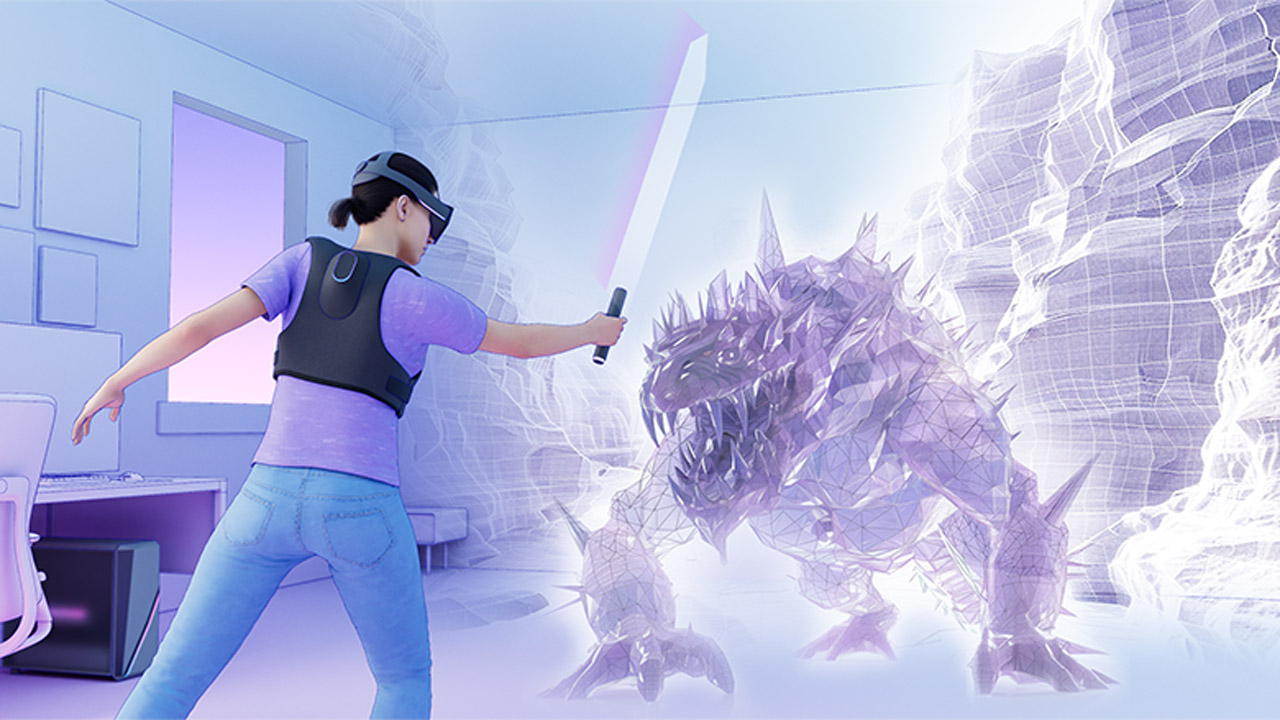
Meta has officially paused its third-party Horizon OS headset program, a move that effectively cancels the anticipated devices from partners Asus and Lenovo. The company announced the shift in strategy, stating it will now prioritize developing its own first-party hardware and software to advance the VR market. This marks a significant reversal from Meta's previous ambitions, which saw it rebrand the Quest operating system as Horizon OS and announce plans to collaborate with select hardware manufacturers to expand the platform's reach.
Originally, Meta had positioned Asus and Lenovo as the inaugural partners for Horizon OS-powered headsets. Asus was reportedly working on a high-performance gaming headset, while Lenovo was developing mixed reality devices aimed at productivity, learning, and entertainment. However, with the program now frozen, these headsets are unlikely to launch. Meta explained the decision as a necessary step to focus resources on improving the quality and integration of its own products, with a spokesperson stating that the company remains committed to the long-term potential of third-party partnerships, but will revisit them as the XR category evolves.
The decision comes amid a broader strategic shift within Meta’s Reality Labs division, which oversees AI and XR initiatives. In an effort to elevate the design and user experience of its wearables, Meta recently brought on a former Apple design lead to unify hardware and software efforts. Additionally, the company is reportedly taking steps to make Reality Labs more sustainable, which has included delaying a planned Vision Pro competitor until 2027 and considering price increases for future gaming headsets.
Meta's change in direction is influenced by intensifying competition in the XR space, particularly following the introduction of Apple's Vision Pro and the emergence of Android XR. Meta had previously aspired to position Horizon OS as the 'Android of XR,' offering an open alternative to Apple’s more closed ecosystem. However, with Android XR now entering the market and backed by the extensive Google Play app ecosystem, Meta faces a significant disadvantage in attracting both developers and hardware partners. Horizon OS, while boasting a strong library of immersive experiences, lacks the breadth of mainstream apps available on competing platforms.
Another challenge for the third-party Horizon OS initiative has been pricing. Meta’s strategy of selling its own headsets at or below cost, with the goal of recouping revenue through software, makes it difficult for partners like Asus and Lenovo to compete on hardware alone. In contrast, Android XR offers third-party manufacturers access to the Google Play store and a more favorable competitive landscape, as Google is not currently producing its own XR hardware. For industry professionals, Meta’s pause signals a more consolidated approach to hardware and a shifting competitive environment, with implications for platform choice, app development, and market strategy in the evolving XR sector.
Source: Road to VR
Youbiquo's Leonardo XR: Italy's Enterprise VR Headset

Italian company Youbiquo has entered the enterprise VR market with the Leonardo XR, a standalone headset designed specifically for immersive learning and training. Based in Southern Italy near Salerno, Youbiquo developed the Leonardo XR in response to customer feedback, prioritizing affordability and comfort for long-duration use over high-end specifications. According to CEO Pietro Carratù, the headset was built to enable extended training sessions without causing discomfort, leading the company to start with a Qualcomm reference design and optimize it for enterprise needs.
The Leonardo XR is powered by the XR2 Gen 1 chipset, the same processor found in the Meta Quest 2, and features a resolution lower than that of the Quest 2. While this may seem dated to VR enthusiasts, the device compensates with a significantly longer battery life than both the Quest 2 and Quest 3, making it well-suited for lengthy training sessions. The headset’s lightweight build and ergonomic design further enhance comfort, with a halo crown fitting system that distributes weight around the head and forehead, reducing facial pressure. However, the halo crown does present some ergonomic challenges, as users may have to choose between optimal head comfort and ideal lens positioning, which can affect the perceived field of view.
Leonardo XR includes several features tailored for enterprise use. The headset supports 6DOF tracking for both the device and its controllers, as well as hand tracking—though the latter is not as advanced as Meta’s offering, it is sufficient for training applications. The controllers, reminiscent of those from the Quest 1, are narrow and can be difficult to distinguish between left and right, with some comfort trade-offs. The device also offers colored passthrough for mixed reality experiences, though its definition and depth correction do not match the Quest 3 or Apple Vision Pro. Additional features include mechanical IPD adjustment, a myopia correction ring, a flip-up display, and a removable facemask for easy cleaning—important for multi-user enterprise settings.
For device management, Youbiquo provides its own MDM software, allowing organizations to oversee a fleet of headsets. The Leonardo XR is fully GDPR compliant, making it particularly attractive for European customers and sectors where data privacy and the company’s country of origin are crucial, such as defense. The company is also researching the integration of a thermal camera, which could open up new enterprise applications. Priced at €600, the Leonardo XR is €100 cheaper than the Pico 4 Ultra Enterprise and matches the Pico 3 Enterprise, positioning it as a cost-effective solution for businesses. While it may not compete with the latest consumer headsets in terms of specs or visual fidelity, the Leonardo XR delivers on its promise of comfort, battery life, and enterprise-focused features, making it a practical choice for organizations seeking a European-made VR solution.
Source: The Ghost Howls
Meta Plans VR Headset Price Hikes and Longer Product Lifecycles
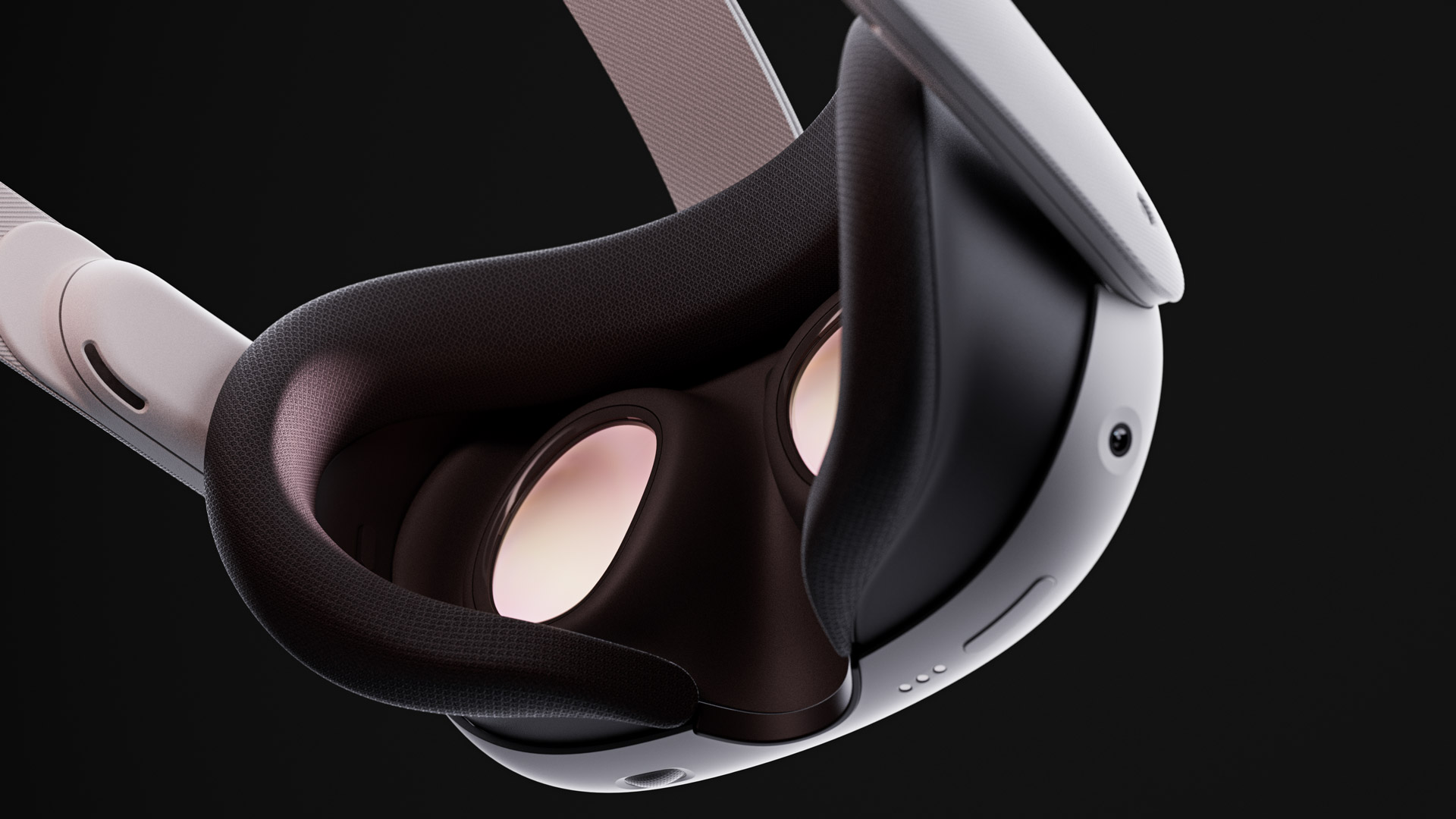
Meta is reportedly preparing to raise prices on its VR headsets and extend the market lifespan of existing devices, according to details from an internal memo first reported by Business Insider and covered by Road to VR. The memo, authored by Meta's metaverse leaders Gabriel Aul and Ryan Cairns, outlines a shift in strategy aimed at addressing rising costs, including tariffs, and establishing a more sustainable business model for the company’s VR division.
In the December 4th memo, Aul and Cairns informed employees that Meta's devices will become “more premium in price going forward,” with the goal of creating a healthier business and moving away from dependence on the success of any single device. The company also plans to keep hardware like the Quest 3 and Quest 3S on the market longer than previously anticipated, rather than cycling through rapid hardware refreshes. This approach is expected to help Meta manage costs associated with tariffs, content subsidies, and go-to-market expenses.
The memo also calls for a renewed focus on delivering high-quality software experiences to match the hardware’s "excellence." Additionally, Meta will slow its hardware release cadence, a notable change from its previous strategy of running multiple device programs in parallel. The memo mentions a delay in a puck-tethered XR headset and hints at a new Quest headset that promises a "large upgrade" in capabilities and improved unit economics, though no concrete details or timelines were provided.
Currently, Meta’s Quest 3 starts at $500 and the Quest 3S at $300, with the latter on sale for $250. Historically, Meta has subsidized headset prices to drive adoption, recouping costs through software sales—a model familiar to the broader gaming industry. However, with rising costs and intensifying competition from platforms like Google’s Android XR and Valve’s Steam Frame, Meta appears to be recalibrating. The company may choose to increase prices on the Quest 3 while keeping the Quest 3S as an entry-level option, or implement modest price hikes across the lineup, potentially offset by bundled games or extended free memberships to its Horizon+ service.
For developers and industry professionals, the memo signals that the Quest 3 platform will remain relevant for a longer period, requiring ongoing support even as Meta works on new hardware with potential advances like more powerful chipsets, higher-resolution displays, and built-in eye-tracking. This strategic pivot could impact how studios plan releases and optimize for Meta’s ecosystem, especially as the company balances serving entry-level users with a move toward more premium pricing.
Source: Road to VR
Thief VR: Legacy of Shadow Delivers Immersive Stealth, With Caveats

Thief VR: Legacy of Shadow marks the long-awaited return of the iconic stealth franchise, this time reimagined for virtual reality. Developed by Maze Theory and published by Vertigo Games, the title is available on Quest, PSVR 2, and SteamVR, with reviews conducted on Quest 3 and SteamVR platforms. Priced at $30 and released on December 4th, 2025, Thief VR is the first entry in the series since 2014, and it aims to bring the franchise’s signature stealth gameplay into a new immersive medium.
Players step into the shoes of Magpie, a professional thief who stumbles upon a magical relic, transforming from a mere prowler into a so-called Super Thief. The narrative is driven by Cassandra, Magpie’s fixer, who tasks the player with uncovering the sinister motives of Baron Northcrest. Gameplay centers around infiltrating heavily guarded buildings, with the freedom to choose between knocking out, killing, or avoiding guards. The game rewards non-lethal and stealthy approaches, unlocking new abilities such as improved health regeneration, quieter movement, and increased arrow supplies at the end of each level.
Thief VR’s missions are set in multilayered environments that encourage exploration and offer multiple ingress points, supporting a variety of playstyles. The arsenal includes a blackjack, lockpicks, and a bow with several arrow types—water, fire, blunt, standard, and rope arrows—each serving distinct tactical purposes. However, arrows are a scarce resource, often dictating the player’s approach to each challenge. The campaign can be completed in just over five hours, but replayability is encouraged through secondary objectives and ability unlocks.
The game excels in visual storytelling, with detailed environments filled with posters, graffiti, and notes that flesh out the world. Voice acting stands out, notably with Stephen Russell reprising his role as Garrett, lending authenticity and depth to the experience. Despite these strengths, Thief VR is not without flaws. Object interaction, initially described as smart, reveals inconsistencies upon deeper play. Immersion is sometimes broken by audio bugs—such as inconsistent sound muffling through walls—and guards whose AI is notably less sophisticated than in comparable titles like Hitman. The game’s ending is also a notable disappointment, with reused levels and an abrupt finale that fails to leverage the skills developed throughout the campaign.
For VR developers and industry professionals, Thief VR: Legacy of Shadow demonstrates both the potential and the pitfalls of adapting classic franchises for immersive platforms. While it raises the bar for narrative and environmental design in VR stealth games, it also highlights the ongoing challenges of AI sophistication and maintaining immersion. The game’s mixed execution serves as a valuable case study for those looking to blend beloved IP with the unique affordances and constraints of virtual reality.
Source: Road to VR
VR helps older adults foster real-world connections
Virtual reality technology is increasingly being used to help older adults build closer relationships in their everyday lives. By offering immersive experiences, VR can provide new opportunities for social interaction and engagement among seniors.
These developments highlight the potential of VR to address social isolation and improve quality of life for older people, creating meaningful connections that extend beyond the virtual world.
Source: AP News
Zuckerberg reduces metaverse spending as priorities change
Meta CEO Mark Zuckerberg is reportedly scaling back on investments in the metaverse as the company's strategic priorities shift. This move suggests a change in focus for Meta, which has previously emphasized virtual worlds and immersive technologies as core to its future vision.
Source: IT Brew, Bloomberg.com
Meta Quest 3 Outsells Switch 2 and Other Consoles on Amazon

Meta's Quest 3-series headsets have managed to outpace Nintendo's newly released Switch 2 in Amazon US sales, despite being on the market for over a year. According to recent data, the combined sales of Quest 3 and Quest 3S models reached 154,000 units on Amazon US in the last 30 days, which notably includes the busy Black Friday shopping period. In comparison, Nintendo's Switch 2, launched just this summer in June, sold 150,000 units during the same timeframe. Other major gaming consoles, such as the PlayStation 5 (including the 5 Pro) and Xbox Series X / S, trailed behind both Meta and Nintendo in sales volume.
Amazon's 'Best Sellers' list in the Video Games category further highlights this trend. The Quest 3S (128GB), Meta's most popular individual headset, currently sits at number six, narrowly ahead of Nintendo's top-selling Switch 2 bundle at number seven. Other notable placements include PlayStation 5 at number thirteen, Quest 3 (512GB) at twenty-four, and Xbox Series X at sixty. The Quest 3S's strong showing is attributed in part to its $250 holiday sale price, which undercuts the Switch 2's $400 MSRP by a significant margin. This aggressive pricing strategy has enabled Meta to move large volumes of hardware, even as some industry observers continue to question the viability of consumer VR.
However, the latest Quest generation appears to be experiencing a slight dip in sales volume compared to the previous year on Amazon US. While there is potential for a late surge, historical trends suggest that Quest sales typically peak by December 23rd. Despite these impressive sales figures, Meta continues to face challenges with user retention. Although tens of millions of Quest headsets are estimated to be in circulation, the number of active users remains well below that of major game consoles. This retention issue has hindered Meta's ability to recoup profits through software sales, contributing to the ongoing financial losses reported by its Reality Labs division.
In response, Meta has taken steps to improve software and user experience on its wearable devices earlier this year, aiming to boost retention and long-term engagement. However, these improvements are reportedly expected to result in higher headset prices in the future, which could dampen the high sales volumes seen in recent years. For industry professionals, these developments underscore the delicate balance between aggressive hardware pricing, user retention, and the long-term sustainability of the VR ecosystem.
Source: Road to VR.
Capcom Confirms No VR Mode for Resident Evil Requiem

Capcom has officially stated that there are "no plans" to bring a VR mode to Resident Evil Requiem, the next entry in its long-running survival horror franchise. This confirmation came directly from the game's producer, Masato Kumazawa, during a Q&A session, where he clarified that the upcoming title will not be targeting VR headsets as previous Resident Evil games have done. Instead, Kumazawa noted that while the game can be played in a first-person perspective for immersion, there are currently no intentions to support VR platforms. He also mentioned that more details about Leon’s gameplay will be shared in the future.
Resident Evil Requiem is slated for release on February 26th, 2026, and will be available across PlayStation 5, Nintendo Switch 2, Xbox Series X and Series S, and Windows PCs. This marks a departure from recent Resident Evil titles, several of which launched with or received free VR modes, especially on PlayStation platforms. The absence of VR support in Requiem is notable given the series' history of embracing virtual reality, particularly with the original PlayStation VR and, more recently, PSVR 2.
The decision appears to reflect broader industry trends and platform-specific challenges. Capcom’s previous VR modes for Resident Evil titles were among the most prominent releases for PlayStation VR headsets, but the shift away from VR with Requiem suggests a significant change in strategy. One possible factor is the apparent decline in VR player numbers on PlayStation platforms, with adoption rates reportedly dropping from PSVR 1 to PSVR 2. The reporting suggests that Capcom may be less inclined to invest in VR development for PSVR 2, especially given Sony’s limited content support following the headset’s launch. Since its release, PSVR 2 has seen only a handful of Sony-funded exclusives, such as Horizon Call of the Mountain, Firewall Ultra, and Gran Turismo 7’s VR mode, with little indication of a renewed push for VR content.
For industry professionals, Capcom’s stance signals a potential cooling of AAA VR development, at least for major franchises on PlayStation. The situation is further underscored by Sony’s recent move to allow PSVR 2 users to play SteamVR games via an optional wired adapter, which could be interpreted as a shift away from proprietary content and a reduced focus on exclusive VR experiences. While PSVR 2 hardware has become more affordable since its $550 launch, dropping to $400 or less during sales, the lack of first-party and major third-party VR support may limit its appeal and growth prospects.
Source: Road to VR
Spotted something wrong in this issue? Report it.