Firewall Ultra to Shut Down: What It Means for PSVR 2
This issue covers Firewall Ultra's PSVR 2 shutdown, AuraTap's Vision Pro debut, Meta's piracy crackdown, Rec Room closure, and new VR games and hardware.

Firewall Ultra to Shut Down on PSVR 2 in 2026
Firewall Ultra, the tactical team shooter launched for PlayStation VR2 in 2023, is officially scheduled to go offline in September 2026, marking the end of its three-year run. Sony recently updated its original launch announcement to confirm that the game will be "terminated and will no longer be available on September 17, 2026." This shutdown means that, after this date, Firewall Ultra will not be playable in any form, as the game relies heavily on online functionality.
While Firewall Ultra does offer limited single-player PvE combat, its core appeal was always its online multiplayer experience. Sony clarified that on September 17th at 10:00am PDT, the game’s servers will be switched off, making all modes inaccessible. This decision underscores the challenges faced by VR-exclusive multiplayer titles, particularly those dependent on ongoing server support and active player communities.
Firewall Ultra was initially positioned as a major shooter for PSVR 2, aiming to build on the success of its predecessor, Firewall Zero Hour, which debuted on the original PSVR in 2018. However, the sequel encountered significant hurdles from the outset. Upon its release in August 2023, critics highlighted issues with the game’s control scheme, limited gameplay variety, and a progression system that failed to engage many players. These factors contributed to a middling Metacritic score of 61/100, dampening its reception among both critics and the VR community.
The situation worsened when developer First Contact Entertainment closed its doors just four months after Firewall Ultra’s launch, effectively leaving the game without ongoing development or support. In early 2025, Sony attempted to revive interest with a surprise update that tweaked in-game incentives, but this was widely regarded as a final effort to attract new players before the game’s eventual sunset. For industry professionals, Firewall Ultra’s lifecycle highlights the volatility of the VR games market, especially for titles that hinge on live service models and require sustained post-launch investment.
Source: Road to VR
AuraTap Launches on Vision Pro, Leveraging Apple's Persona Avatars
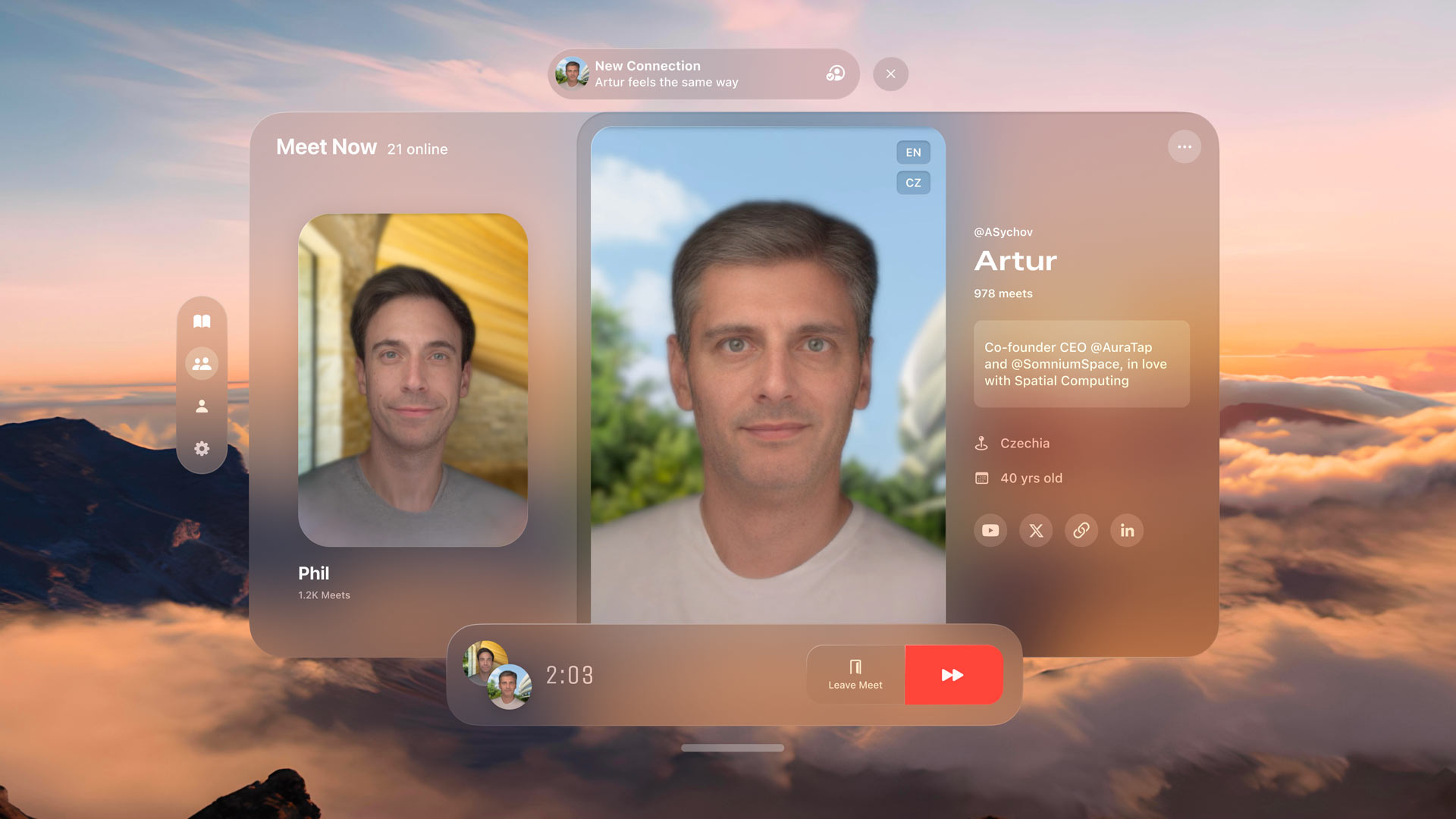
AuraTap, a new social networking app designed exclusively for Apple Vision Pro, is betting on the platform's realistic Persona avatars to foster authentic connections between users. Rather than following the conventional path of XR social platforms that place users in shared virtual spaces for gaming or group chats, AuraTap takes a more focused approach. The app facilitates short, one-on-one video calls powered by Vision Pro’s Persona system, which generates photorealistic avatars with eye and mouth tracking, aiming to create a more lifelike and engaging interaction while preserving a layer of abstraction.
The core mechanic of AuraTap is its unique matching and timing system. Users express interest in chatting by tapping on another user's profile. Only when both parties signal their willingness are they matched and a call begins. Each conversation starts with a strict two-minute limit, acting as an icebreaker and ensuring that only mutually interested users continue. If both participants independently choose to connect further, the time restriction is lifted, allowing the conversation to flow naturally and potentially form a lasting connection.
AuraTap was founded by Artur Sychov, a serial XR entrepreneur known for projects such as Somnium Space, the crypto-based social network Authencity, and the Somnium VR1 headset. The app’s design comes from Phil Traut, an experienced iOS and visionOS designer also behind the launcher app chocolift. AuraTap is set to launch on the Vision Pro App Store on March 27, with pre-orders becoming available ahead of the release.
What sets AuraTap apart is its reliance on Vision Pro's Persona avatars, which offer users a high degree of realism while maintaining privacy and comfort. The avatars require a physical face scan and are stored locally, making it difficult to spoof identities or scale fraudulent activity—an advantage over many existing social networks. However, the app’s success will depend on the size and activity of the Vision Pro user base, as a critical mass of online users is necessary to ensure meaningful and timely matches. This challenge echoes the early days of multiplayer VR platforms, where network effects were key to adoption and retention.
For professionals and enthusiasts in the XR industry, AuraTap represents an intriguing experiment in digital networking, blending elements of speed dating and spontaneous social encounters with the technical sophistication of Apple's spatial computing platform. While its future hinges on Vision Pro's adoption rate, AuraTap could become a valuable tool for business networking or casual connections among early adopters seeking novel ways to interact in the spatial era.
Source: Road to VR
Meta Takes Action Against Major Quest Piracy Platform
Meta has taken decisive action against one of the most prominent sources of pirated VR games for its Quest platform, marking a significant step in the ongoing battle against unauthorized content distribution in the VR industry. The move, widely reported by outlets such as 6DOF Reviews, CGMagazine, and UploadVR, targets a key hub that has been facilitating the illegal sharing of VR titles, which has long been a concern for developers and platform holders alike.
This crackdown comes at a time when the VR ecosystem is expanding rapidly, with more developers investing resources in creating high-quality immersive experiences. Piracy has been a persistent issue, undermining revenue streams for studios and potentially discouraging investment in new VR projects. By targeting a central outlet for pirated Quest games, Meta is sending a clear message about its commitment to protecting intellectual property and supporting the developer community.
The specifics of Meta's enforcement actions have not been fully detailed in the available reporting, but the impact is expected to be significant for both the Quest platform and the broader VR industry. Developers have often voiced concerns about the ease with which their games can be illegally accessed, particularly on standalone headsets like Quest, which have become a primary target for piracy due to their popularity and large user base. By disrupting a major piracy network, Meta aims to create a safer environment for content creators and encourage continued innovation in VR gaming and applications.
For professionals working in the VR industry, this development underscores the importance of robust content protection measures and the need for ongoing vigilance against piracy. It also highlights the role that platform holders like Meta play in maintaining the health of the VR ecosystem. As the market matures and competition intensifies, actions like these are likely to become more common as stakeholders seek to safeguard their investments and ensure fair compensation for creative work.
Source: 6DOF Reviews
Meta Preps New Ray-Ban Smartglasses as Metaverse Faces Fresh Doubts

This week in XR, Meta is reportedly preparing to launch two new smartglasses in partnership with EssilorLuxottica, according to recent FCC filings uncovered by journalist Janko Roettgers. The devices, currently referred to as the Ray-Ban Meta Scriber and Ray-Ban Meta Blazer, have the model numbers RW7001 and RW7002, indicating they are likely a new generation of Ray-Ban smartglasses. While the FCC documents are heavily redacted and offer few technical details, such filings typically precede a commercial launch, suggesting an announcement could arrive as soon as this spring, potentially even before Meta Connect. The filings leave little doubt that Meta is doubling down on its smartglasses line, which has become a key part of its AR strategy.
Meanwhile, the metaverse narrative continues to take a hit. Last week, reports surfaced that Meta was shifting its Horizon Worlds platform away from VR and toward mobile, sparking a wave of negative coverage in the consumer tech press. Headlines widely claimed that Meta was abandoning its multibillion-dollar metaverse ambitions, with some outlets suggesting the concept was now "completely dead." However, these reports often conflated Meta's broader XR investments with the fate of Horizon Worlds, which was never positioned as the definitive metaverse. Despite the noise, Horizon Worlds remains operational—just not in VR. Adding to the skepticism, Neal Stephenson, who coined the term "metaverse," recently stated that he believes the VR metaverse is dead, favoring platforms like Roblox over VR goggles. This wave of negativity is expected to impact investor confidence and consumer interest, making 2026 a challenging year for XR companies.
Despite the gloom, the VR industry continues to see creative output. The recent VR Games Showcase highlighted a range of upcoming titles, with Fast Travel Games announcing "Payday: Aces High," a co-op heist game for up to four players. The showcase demonstrated that, even as mainstream enthusiasm for the metaverse wanes, developers remain committed to pushing the boundaries of immersive gaming. For a full rundown of the games announced, industry professionals are encouraged to consult Road to VR's comprehensive coverage.
Elsewhere, the Oculus Rift CV1 marked its 10th anniversary, prompting reflection on the evolution of consumer VR since its launch. Apple has scheduled its annual WWDC event for June 8, where updates to visionOS—including the latest version, 26.4, with foveated streaming—are expected. Meanwhile, PlayStation 5 consoles are seeing price hikes in the US and UK, and Google introduced Vibe Coding XR, a new prototyping tool that leverages AI to generate interactive WebXR applications from developer prompts. These developments underscore both the challenges and ongoing innovation within the XR ecosystem.
Source: Skarredghost
Valve Details Steam Frame Game Certification Requirements

Valve has outlined the key requirements for games seeking the 'Steam Frame Verified' badge, setting the stage for developers preparing titles for its upcoming Steam Frame VR headset. The company shared these specifications during its 'Steam Hardware' presentation at this year's Game Developers Conference (GDC), highlighting the technical standards that will define the user experience on the new device.
For VR games running natively on Steam Frame, Valve requires a minimum of 90 frames per second (fps), a threshold that surpasses the headset's own variable 72Hz refresh rate. This is a notable jump from the Horizon Store's minimum of 72 fps for VR content on Quest devices, and represents a roughly 25% increase in rendering workload for developers aiming to port or optimize existing titles. Non-VR content, which Steam Frame can also download and play natively, faces a more modest requirement: a minimum of 30 fps at 1,280 x 720 resolution. For comparison, general media on the Horizon Store must reach at least 60 fps.
Beyond frame rates, Valve stipulates that games must feature a "legible UI" and be fully playable with Steam Frame controllers to qualify for certification. The company also clarified that any game already marked as 'Verified' or 'Playable' on Steam Deck will be automatically tested for Steam Frame compatibility. However, titles not supported on Deck due to performance or SteamOS compatibility issues will not be considered for the badge.
For PC VR gameplay, Valve is taking a hands-off approach: thanks to the headset's direct WiFi 6 connection and Foveated Streaming protocol, no additional verification is needed. Valve asserts that if a game runs well on a user's host PC, it should perform equally well when streamed to Steam Frame, including VR titles. This approach mirrors the flexibility seen with Steam Deck, where users are free to download and play any Steam title, with the certification system serving as a consumer guide rather than a gatekeeper.
These requirements have implications for developers: those aiming to bring Quest VR games to Steam Frame will need to optimize for the higher 90 fps target, while non-VR titles may find it easier to achieve certification. The announcement comes as Valve faces delays in releasing Steam Frame, Steam Machine, and the new Steam Controller, reportedly due to global RAM and storage shortages. For industry professionals, these guidelines provide an early framework for preparing content ahead of the headset's eventual launch, and set clear expectations for performance and usability on Valve's next-generation standalone VR platform.
Source: Road to VR
Rec Room to Close in June as Snap Acquires Select Assets

Rec Room, a major player in the VR social platform space, will permanently shut down on June 1st, 2026, at 12:00 PM PT. The announcement comes after a decade of growth, during which the platform attracted over 150 million players and creators, and facilitated the making of more than half a billion friendships. Despite its popularity and the creation of a thriving user-generated content ecosystem, Rec Room's creators stated they were unable to find a path to sustainable profitability, with costs consistently outpacing revenue.
Founded in 2016 and based in Seattle, Rec Room raised more than $294 million in funding, including a $145 million round in December 2021 that valued the company at $3.5 billion. However, financial challenges became apparent in August 2025 when the company laid off about half its staff, attributing the move to costs associated with a surge of low-level content from mobile and console users. While millions continued to use the platform across VR headsets, consoles, PCs, and mobile devices, the company cited difficult market conditions and a shift in Meta's VR gaming priorities as key factors behind its decision to wind down operations.
According to a GeekWire report cited by Skarred Ghost, Snap has acquired select assets from Rec Room, including hiring some of its talent for its XR-focused subsidiary, Specs Inc., which is developing upcoming XR glasses. However, neither company has indicated that Rec Room itself will continue under Snap's ownership. This acquisition appears to be more about technology and talent than about preserving the Rec Room platform or brand.
As Rec Room prepares to close, the company is taking steps to support its community and creators. Third-party creatives will be paid out, and users will have at least two months to make arrangements, including downloading room and invention data to potentially recreate their content in other engines like Unity. The closure also signals the loss of a family-friendly VR space that pioneered built-in child safety features, in contrast to platforms like VRChat, which lack dedicated kid modes and have less regulated content. The end of Rec Room represents not only the departure of a key VR social hub but also a cautionary tale for developers and investors about the challenges of sustaining large-scale, user-driven VR platforms outside of major players like Meta.
Source: Road to VR
PAYDAY: Aces High Brings Co-op Heists to Quest and PC VR
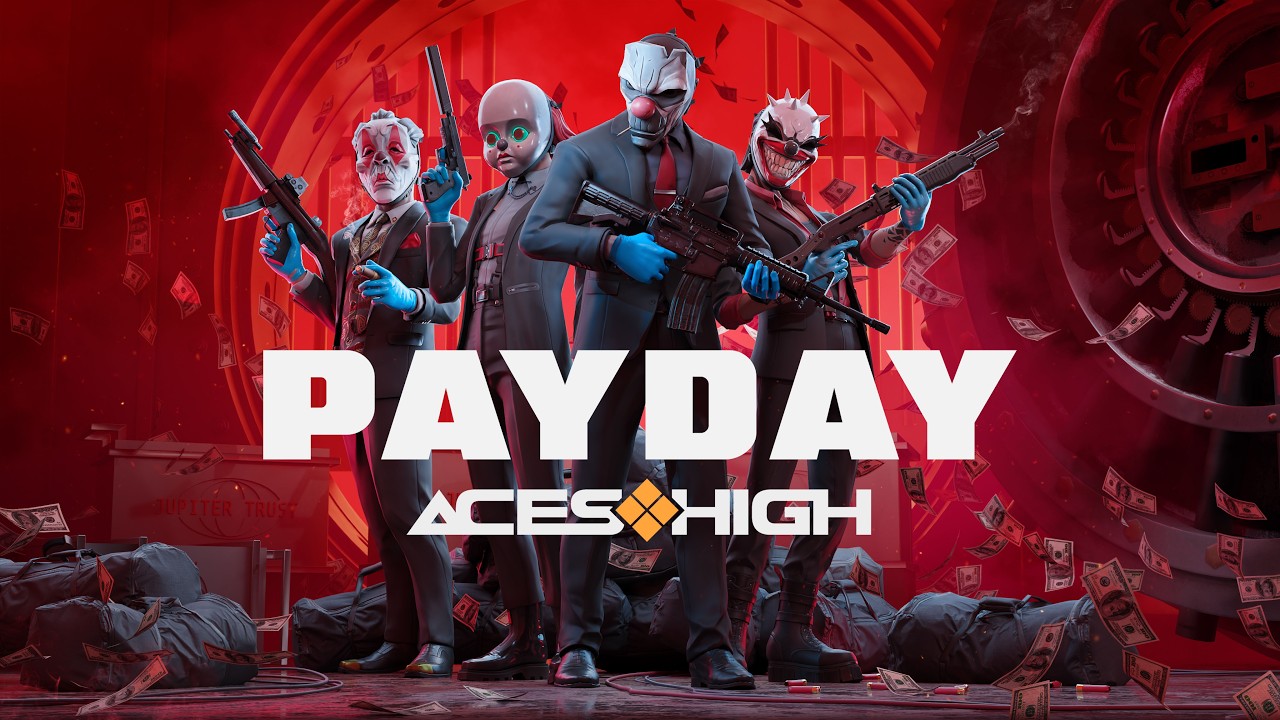
Fast Travel Games has officially announced PAYDAY: Aces High, a new virtual reality co-op heist game set in the well-known PAYDAY universe from Starbreeze Entertainment. The reveal took place during the VR Games Showcase, where the studio shared a first look at the upcoming title and confirmed its development for both Quest and SteamVR headsets. PAYDAY: Aces High is scheduled to launch in 2026, with players able to wishlist the game now on the Horizon Store for Quest and on Steam for PC VR.
This new VR installment promises to deliver the signature four-player cooperative gameplay that PAYDAY fans expect, but with an immersive twist tailored for virtual reality. Players will step into the shoes of one of four unique 'Aces,' each offering their own gameplay style. The narrative centers on a classic PAYDAY setup: after being framed by business magnate Warren Jupiter, players join forces to exact revenge through a series of high-stakes heists. The game will challenge teams to infiltrate a variety of locations, including banks, museums, and luxury penthouses, requiring careful planning and tactical execution before deciding when to go loud and secure their payday.
Customization is a key feature in PAYDAY: Aces High. Players can design their own loadouts, mixing and matching weapons, gadgets, and skills to suit their preferred approach. While the initial reveal trailer highlighted only a small selection of weapons, Fast Travel Games has stated that the full release will include a comprehensive arsenal. Players can expect access to assault rifles, submachine guns, shotguns, pistols, and a range of gadgets such as grappling hooks and sentry guns. As in previous PAYDAY titles, successful missions will reward players with cash and reputation, allowing them to unlock improved skills, gear, and additional gadgets as they progress.
The emphasis on teamwork and tactical planning appears to be central to the gameplay experience. The four Aces each bring distinct abilities and playstyles, encouraging players to coordinate and strategize for each mission. This approach aims to capture the chaotic yet calculated action that has defined the PAYDAY franchise, now reimagined for the immersive possibilities of VR. With its focus on cooperative play, deep customization, and a familiar yet fresh narrative, PAYDAY: Aces High is positioned to attract both longtime fans and newcomers to the series as it prepares for its 2026 release.
Source: Road to VR
2Sync brings adaptive mixed reality to your real environment

2Sync is introducing a new approach to mixed reality by allowing virtual experiences to adapt dynamically to the user's real-world environment. Unlike traditional mixed reality systems that simply overlay digital content onto a static view of the physical world, 2Sync scans the user's surroundings and integrates real-world objects into the virtual experience. For example, if you launch a zombie wave shooter in your kitchen, 2Sync can transform your actual table into a virtual crate and your sofa into a virtual bench, ensuring the virtual world mirrors the layout of your real space. This responsiveness is akin to how a website adapts to different devices, making each experience unique to the user's environment.
This approach offers several advantages for immersive experiences. First, it enhances safety: instead of relying solely on digital boundaries like the Guardian system on Meta Quest, 2Sync uses visible virtual objects mapped to real obstacles, making it more intuitive for users to avoid collisions. Second, it introduces what the company calls "passive haptics"—when you touch a virtual object, you also feel the corresponding real-world item, increasing the sense of presence. For instance, sitting on a virtual rock that overlays your real sofa provides tactile feedback, helping the brain accept the illusion of the virtual world.
However, there are notable limitations. 2Sync's system is best suited for experiences where users physically walk around the space, as the virtual environment is anchored to the real one. This restricts its use in games that rely on controller-based movement or in small, cluttered rooms. The technology is therefore particularly well-matched to location-based entertainment venues, such as VR arcades, where large, open spaces are common. There are also challenges with sensory mismatch—such as when the virtual object does not physically match the real one in feel—and with the accuracy of object mapping, which is crucial for safety. Additionally, there is an open question about whether enough developers will create content specifically for this type of adaptive mixed reality to sustain the business.
For developers, 2Sync offers an SDK compatible with Unity and Unreal Engine, supporting major VR headsets like Quest and Pico. The SDK enables apps to scan the environment at startup, detect walls and objects, and generate a virtual world that fits the real layout according to developer-defined rules. This includes the ability to substitute real-world objects with virtual counterparts of matching shape and size. A standout feature is colocated multiplayer, allowing several users to share the same physical and virtual space, each seeing the same environment and avatars. The SDK is currently in closed beta, with applications open on the 2Sync website, and a simple demo is available on the Quest Store for non-developers to try at home.
Source: The Ghost Howls
Army National Guard Launches Disasterville MR Simulations in Schools
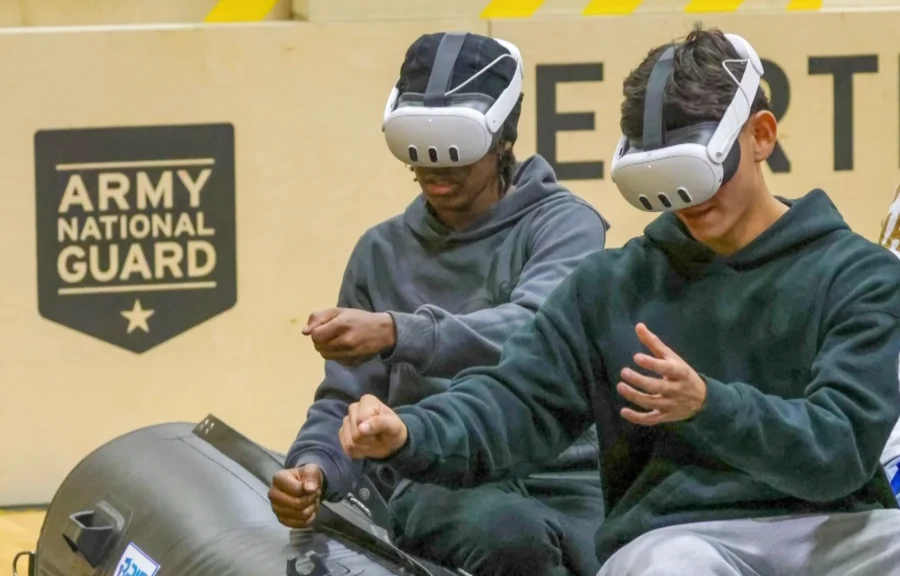
The U.S. Army National Guard has launched a new mixed reality (MR) initiative called ‘Disasterville,’ bringing immersive disaster response simulations directly to high school students across the United States. This program, designed as a nationwide roadshow, aims to educate students on the technical and interpersonal skills required to manage large-scale emergencies, while also showcasing the potential of immersive technology in public education.
Disasterville transforms high school gymnasiums into simulated disaster zones, where students participate in three different 10-minute missions. Each mission is crafted to mirror real-world scenarios faced by National Guard personnel during natural disasters and domestic emergencies. Working in teams and equipped with virtual reality (VR) headsets, students are tasked with completing objectives that demand effective communication and problem-solving. The hands-on nature of these simulations allows participants to experience firsthand the complexity and urgency of disaster response operations.
The Army National Guard emphasizes that the Disasterville experience not only introduces students to the critical role of the Guard in responding to natural disasters—an increasingly frequent challenge for many communities—but also highlights the broader importance of teamwork and technical proficiency in crisis situations. By engaging students in realistic, mission-based activities, the program seeks to foster a deeper understanding of the skill sets essential for effective emergency response, potentially inspiring future careers in public service or emergency management.
The Disasterville tour is scheduled to visit select high schools in Detroit, Michigan; Indianapolis, Indiana; and Omaha, Nebraska throughout February and March. By leveraging MR technology in an educational setting, the National Guard demonstrates how immersive experiences can be scaled for outreach and training, offering a model for other organizations interested in using spatial computing to engage and inform the next generation.
Source: Auganix
Pico Teases Project Swan, The8thWall Goes Open Source, and More

This week in XR brought several notable developments, led by Pico's official sneak peek at its upcoming headset, codenamed Project Swan. In a YouTube premiere, Pico revealed select details about the device and its new operating system, Pico OS 6. While not a full product launch, the preview highlighted the headset's dual-chip architecture, reminiscent of Apple's Vision Pro. Project Swan will use a custom Pico Silicon chip for tracking and environment understanding, alongside a "Flagship SoC"—expected to exceed the computational power of the Snapdragon XR2 Gen 2 by a factor of two. This suggests the use of a next-generation XR2 Gen 3 or equivalent chip, positioning the headset at the cutting edge of XR hardware.
Project Swan's hardware will support dual 4K displays, offering an average angular resolution of 40 PPD and a peak of 45 PPD. This high pixel density is designed to ensure crisp, readable text, a critical feature for productivity and enterprise applications. Pico OS 6 will enable spatial computing and multitasking, allowing both 2D and 3D apps to run simultaneously—again drawing clear parallels to the Vision Pro's approach. Users will be able to interact using gaze-and-pinch gestures or traditional controllers, depending on the context. The OS's main menu closely mirrors that of the Vision Pro, reinforcing Pico's intent to compete directly in the prosumer and enterprise segments. Developers will benefit from new tools supporting both XR specialists and general app creators, with compatibility for familiar environments like Android Studio and Kotlin. While pricing and release timelines remain undisclosed, Pico indicated a 2026 launch window.
Another significant update comes from The8thWall, previously announced as shutting down. In a surprising turn, The8thWall's WebAR engine is now being open-sourced under the MIT license. The initial release includes the core architecture and major AR modules such as Face Effects, Image Targets, and Sky Effects, though SLAM functionality remains in closed-source binaries. The company plans to release additional components, like an MCP server and sample projects, in the coming months. This move offers the XR developer community a valuable resource for building custom WebAR solutions, ensuring The8thWall's legacy continues and lowering barriers for companies seeking to develop or extend web-based AR experiences.
Other news includes privacy concerns raised by reporting from Svenska Dagbladet, which found that images captured by Ray-Ban Meta smartglasses may be reviewed by human operators in low-wage countries, sometimes exposing sensitive personal moments. This practice, permitted by Meta's privacy policy, highlights ongoing challenges around user consent and data handling in AI-assisted devices. Meanwhile, dataminers uncovered a low-resolution image of Meta's next lightweight headset in Horizon OS firmware, suggesting a device similar in philosophy to Pico's Project Swan, with support for eye tracking and likely gaze-based interactions.
Additional highlights from the week include Google's unveiling of the "Glimmer" design language for Gemini smartglasses interfaces, Canon's demonstration of a compact, handheld tethered headset at CP+ 2026, and the introduction of rapid XR prototyping tools for Gemini Pro subscribers using Galaxy XR headsets. Meta is reportedly preparing to roll out Air Link 2.0, an improved PCVR streaming solution for Quest, while Steam's Next Fest showcased a range of upcoming VR games, offering developers and enthusiasts a chance to experience new content firsthand.
Source: skarredghost.com
InvestiGhost VR Shooter Debuts on Meta Quest
A new VR shooter inspired by Ghostbusters, called InvestiGhost, has launched on the Meta Quest platform. The game draws on the iconic Ghostbusters franchise for its theme and gameplay style.
Players can now experience ghost-hunting action in virtual reality, bringing a fresh take to the Meta Quest library. The launch adds another title to the growing list of VR experiences based on popular film and media properties.
Source: Ghostbusters News, UploadVR.
The Boys: Trigger Warning Delivers Gore but Misses Depth

ARVORE’s The Boys: Trigger Warning brings the irreverent, over-the-top world of the hit TV series to VR, but the adaptation struggles to balance franchise spectacle with satisfying gameplay. Released on March 26th, 2026 for the Quest platform (with a PSVR 2 version coming soon), the $30 title puts players in the shoes of Lucas Costa, who is thrust into a familiar revenge plot after a run-in with the Armstrongs, a family of low-level 'Supes'. Injected with 'Compound V' by The Boys, Lucas gains telekinetic powers and embarks on a mission of vengeance against Vought.
The narrative closely mirrors the show’s penchant for shocking violence and dark humor, with players popping heads, wielding outrageous weapons, and enduring Butcher’s signature profanity. The game’s visuals are cartoonish and at times glitchy, which softens some of the more graphic moments and occasionally clashes with the series’ more premium elements. Despite the spectacle, the story feels somewhat watered down, and the gameplay loop is surprisingly shallow. There are no upgrades, unlockables, or mission selection features, and achievements are limited to end-mission report cards.
Players are given a suite of superpowers, including telekinesis, teleportation, x-ray vision, and the ability to pop heads from behind. Temporary powers like 'Bone Blades', 'Active Camouflage', and 'Laser Eyes' are introduced during the campaign, especially in the game’s two boss fights and select encounters with tougher enemies. While these abilities are fun and can be overpowered, the lack of meaningful challenge is compounded by simplistic enemy AI, which makes stealth and combat encounters trivial. The absence of real penalties or rewards allows players to bulldoze through levels, making the experience feel more like a brand engagement tool than a true power fantasy.
On the production side, the game features voice acting from series regulars Laz Alonso, Jensen Ackles, Colby Minifie, and P.J. Byrne. However, Karl Urban and Anthony Starr do not reprise their roles as Butcher and Homelander, though their replacements deliver convincing performances. Character animations are stiff, particularly during dialogue-heavy scenes, and environmental interaction is mostly limited to telekinesis, which can disrupt immersion due to imprecise hand tracking. The campaign lasts around four hours, with level design offering some exploration and hidden items, but little incentive to revisit content.
Comfort options are comprehensive, though some involuntary camera movements can be disorienting, especially in confined spaces like air ducts. For fans of The Boys, the game’s faithfulness to the show’s tone and narrative may be enough, but industry professionals will note its rushed feel, lack of depth, and missed opportunity to deliver a truly engaging VR action experience.
Source: Road to VR
Spotted something wrong in this issue? Report it.