Virtuix Omni One Targets Quest with Made for Meta Integration
This issue covers Virtuix Omni One’s move toward Meta Quest compatibility, Vision Pro for remote work, Meta’s XR market growth, and more key VR trends.
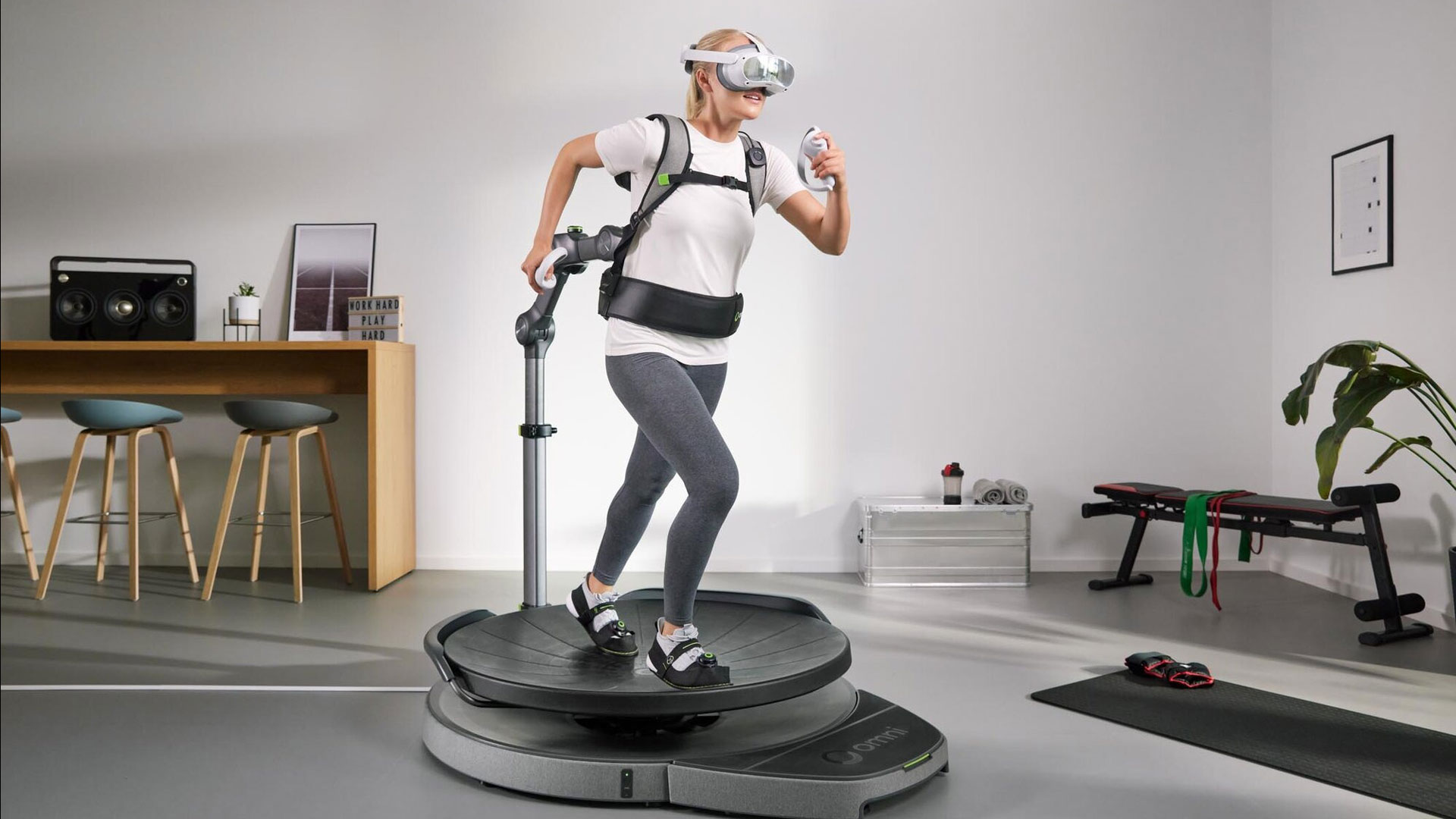
Virtuix Omni One Joins Made for Meta, Eyes Quest Compatibility
Virtuix has announced that its Omni One VR treadmill has been accepted into Meta's Made for Meta program, marking a significant step toward official compatibility with Meta's Quest headsets. The Made for Meta initiative certifies hardware accessories that not only function seamlessly with Meta devices but also meet the company's quality standards. Since its launch in 2023, the program has certified a range of accessories, including the bHaptics TactSuit Pro, Logitech MX Link stylus, and Roto VR Explorer Chair. Virtuix's inclusion in this program opens the door for the Omni One to reach a much broader audience by tapping into the vast and active Quest user base.
Prior to this partnership, the Omni One treadmill was compatible only with PC VR headsets via its 'Core' device, which is priced at $2,600, and with a custom Pico 4 Enterprise Ultra headset through its 'Complete' system, retailing for $3,500. Official Quest support will be a first for the Omni One, and Virtuix says this move will expand its addressable market to millions of Quest users who already own and regularly use their VR headsets and games. CEO Jan Goetgeluk emphasized the significance of this development, expressing enthusiasm about collaborating with Meta to scale Virtuix's consumer business and bring its immersive, full-body gaming experience to a mass audience.
While the Omni One will not support every Quest game, Virtuix plans to ensure compatibility with a large number of titles. The company aims to achieve this through tight integration with the Omni One SDK, which should help developers optimize their games for the treadmill's unique locomotion capabilities. More details about specific product features and game compatibility are expected to be revealed at a later date, according to Goetgeluk.
This announcement comes on the heels of Virtuix's recent debut on the Global Market tier of the Nasdaq, a milestone that was accompanied by an $11 million investment from Chicago Venture Partners and an additional $50 million equity line of credit. Virtuix intends to use these funds to scale up sales of the Omni One, leveraging its new partnership with Meta to reach a wider consumer base. For industry professionals, this move signals a growing ecosystem of officially supported VR peripherals and highlights the ongoing trend of expanding compatibility for immersive hardware. As the XR market continues to evolve, collaborations like this one between Virtuix and Meta could play a pivotal role in shaping the future of spatial computing and consumer VR experiences.
Source: Road to VR.
Meta Smartglasses Hit 7M Units as XR Market Heats Up

This week’s XR news cycle brought a mix of milestones, product teasers, and developer-focused updates, painting a dynamic picture for the spatial computing industry. Among the highlights, Meta’s smartglasses have reportedly reached 7 million units sold, with company leadership emphasizing strong user retention. This figure underscores Meta’s continued momentum in the wearables space, where its partnership with Luxottica for the Ray-Ban Meta Display line has been credited as a significant driver of success. The company’s approach contrasts with Apple’s reported strategy for its upcoming smartglasses, which, according to a Mark Gurman report, will forgo eyewear brand partnerships in favor of leveraging Apple’s own retail network and design expertise.
Apple’s smartglasses, codenamed N50, are reportedly accelerating toward production, with a potential launch in 2027. The device is expected to focus on familiar use cases such as music playback, phone calls, real-time translation, and hands-free photography and video. Apple’s decision not to partner with established eyewear brands is notable, as its strong retail presence and status-driven brand may allow it to succeed where others have needed external support. The industry will be watching closely to see if Apple can deliver a product that is both aesthetically appealing and functionally competitive in a rapidly evolving market segment.
Meanwhile, Pico is preparing to showcase its next-generation headset, codenamed Project Swan, at the upcoming Game Developers Conference (GDC). The presentation will cover the device’s graphics performance, multimodal interaction system, and developer toolchain, as well as guidance for porting existing apps into spatial computing workflows. Project Swan is expected to run on Pico OS 6 and feature a self-developed chip paired with a custom 4,000 PPI microOLED display. While details remain limited, Pico’s move to reveal more at a developer-focused event may signal confidence in the device’s technical capabilities and a bid to attract content creators ahead of a broader launch.
Other notable developments include Meta reportedly planning to launch the Ray-Ban Meta Display 2 (codenamed Hypernova 2) this year, despite ongoing distribution challenges with the first-generation model. The competitive pressure from Apple and Google may be prompting Meta to accelerate its product roadmap, though questions remain about the features and global rollout of the new device. In the broader XR ecosystem, SlimeVR’s Butterfly Trackers have surpassed $400,000 in crowdfunding, Pimax has started shipping its Dream Air headset, and Apple Vision Pro has introduced foveated streaming in its latest beta, a feature aimed at optimizing cloud rendering for enterprise users. These developments reflect an industry that, despite market uncertainties, continues to innovate and push the boundaries of what’s possible in spatial computing.
Source: skarredghost.com
Valve Revises Steam Frame Launch Plans Amid RAM Shortage
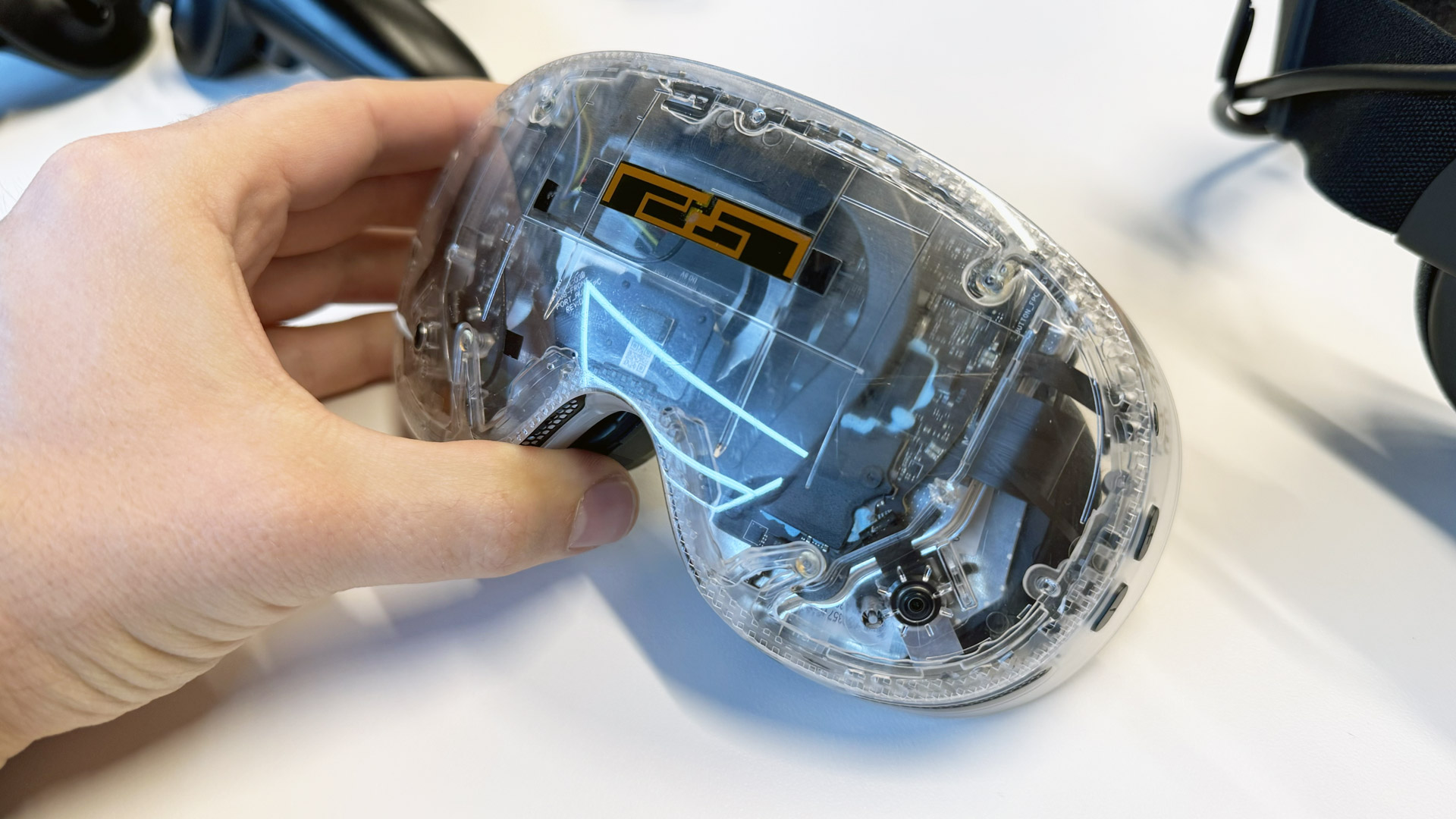
Valve has announced that the ongoing global shortage of RAM and storage components is forcing the company to rethink both the price and release date of its upcoming standalone VR headset, Steam Frame. In a recent hardware update, Valve confirmed that not only Steam Frame, but also the Steam Machine and Steam Controller, are being affected by the component supply issues. The company originally planned to share concrete pricing and launch dates by now, but the rapid increase in demand for memory and storage—driven largely by AI and data center expansion—has led to significant cost hikes and limited availability.
According to Valve, DDR5 RAM prices have surged by as much as 300 percent over the past year, as tracked by PCPartPicker. This escalation in costs is having a direct impact on the production and pricing of Steam Frame and Steam Machine in particular. While Valve still hopes to ship all three products within the first half of 2026, the company now cautions that both the exact shipping schedule and pricing are under review. This means that, although a launch before July 1st is still the goal, further delays or price adjustments remain possible as the supply chain situation evolves.
Valve previously indicated to Road to VR that Steam Frame would be priced lower than the Valve Index, which launched in 2019 with a full kit price of $1,000 and a headset-only price of $500. However, no specific figures for Steam Frame have been provided since then. Third-party speculation about the Steam Machine’s price has varied, with estimates from Linus Tech Tips suggesting a base configuration could cost around $700, while a leak from Czech retailer Alza listed the 512GB and 2TB models at approximately $950 and $1,070, respectively. Valve has clarified that the Steam Machine will not be subsidized like a traditional game console, hinting at a more premium pricing structure.
For industry professionals, Valve’s shifting plans underscore the volatility of hardware launches in the current market. The Steam Frame is positioned as a major leap forward for VR, offering the ability to stream and natively play the entire Steam library, and running on SteamOS. Valve is also planning to offer dev kits to VR developers, emphasizing the need for further software optimization before launch. However, the company has stated there are no new first-party VR games in development for the device at this time. As the component shortage continues to shape the roadmap for major hardware releases, developers and VR businesses will need to stay agile and closely monitor Valve’s updates for further changes to pricing and availability.
Source: Road to VR
Meta Shifts Horizon Worlds Focus to Mobile, Separates from Quest

Meta has announced a significant strategic shift for its social platform, Horizon Worlds, decoupling it from its Quest VR ecosystem and moving the app "almost exclusively mobile." This transition marks a notable change in Meta's approach to building and sustaining its virtual worlds, as the company aims to better serve its evolving user base and support developers with distinct product roadmaps.
Samantha Ryan, VP of Content at Reality Labs, explained that the audience for VR has diversified, requiring Meta to adapt its strategy. She noted that the company is now focusing on empowering developers and creators to build sustainable businesses. Ryan stated, "We’re explicitly separating our Quest VR platform from our Worlds platform in order to create more space for both products to grow... By breaking things down into two distinct platforms, we’ll be better able to clearly focus on each." This follows Meta's earlier announcement in February 2025 that younger users were driving a new emphasis on free-to-play content, which has influenced the company's direction.
Meta CTO Andrew Bosworth previously addressed the challenges of supporting both mobile and VR platforms, pointing out that developing for both simultaneously was a "tremendous tax on the team." He argued that focusing on mobile, where the audience is potentially much larger, would allow Meta to grow its user base more effectively. This move also comes after layoffs at Reality Labs, attributed to high costs and a fragmented development process.
While Horizon Worlds is still available for download on the Horizon Store for Quest, Meta has begun removing its promotion from Quest's suggested content feed, signaling a gradual decoupling. The company has not disclosed concurrent user numbers for Horizon Worlds, but early limitations included requiring a Quest headset to participate, which restricted growth compared to competitors. Since launching on Android and iOS in late 2023, Meta has observed that younger users with mobile devices are spending more time and money in Horizon Worlds than Quest users. This mirrors the approach of other social VR platforms like VRChat and Rec Room, which had already expanded to mobile before Meta.
Meta's initial strategy for Horizon Worlds involved tight control over user-generated content and limited avatar customization, contrasting with more open platforms. Despite these efforts, Horizon Worlds experienced a slower start than anticipated after its 2021 Quest debut. The recent decision to mix user-generated Worlds with VR apps in the Store feed appears, in hindsight, to have been a last attempt to boost Quest user engagement with Worlds. As Meta now pivots to focus on mobile, the industry will be watching to see how this separation impacts both the VR and mobile social platform landscapes.
Source: Road to VR
Sony Launches Tokyo Production Center to Boost XR and Virtual Filmmaking
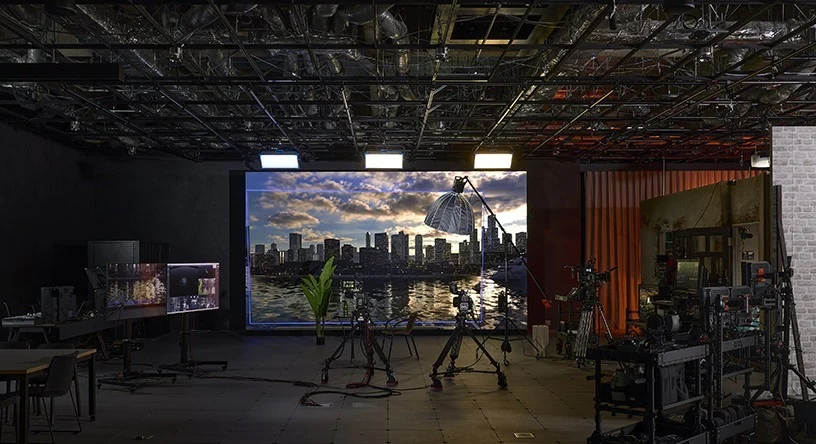
Sony has officially opened its new Digital Media Production Center (DMPC) Japan, a major facility designed to advance spatial content creation and virtual production workflows. Located at the Sony Group headquarters in Minato-ku, Tokyo, DMPC Japan brings together cutting-edge filmmaking equipment, XR solutions, and post-production resources under one roof, providing professional creators with access to the latest technologies and production environments.
This new center is Sony’s third global production hub, complementing existing DMPC locations in the United States and the United Kingdom. According to Sony, the Tokyo facility is intended to serve as a collaborative base for media production, supporting both established professionals and, in the future, the next generation of creators focused on spatial content. By integrating physical and virtual production capabilities, Sony aims to expand creative possibilities and foster new forms of entertainment experiences.
DMPC Japan is equipped with a comprehensive suite of Sony’s production tools. Key features include the flagship CineAlta VENICE 2 camera, the Cinema Line camera lineup, advanced lighting equipment, and a production design set for practical test shoots. The facility also houses a virtual production studio, post-production suites, and Sony’s XYN solution suite. This includes the XYN Spatial capture solution (beta) for 3D computer graphics production, motion capture technology via XYN Motion Studio and mocopi Professional mode, and glasses-free 3D viewing with Sony Spatial Reality displays. Color grading and evaluation are supported by the BVM-HX3110 reference monitor, while a BRAVIA 9 display is available for client review. The center’s integrated approach allows for efficient end-to-end workflow testing, from shooting to final post-production.
One of the standout features is the In-Camera VFX studio, which utilizes a Crystal LED wall (VERONA), the OCELLUS camera-tracking system, and Sony’s Virtual Production Tool Set. This setup enables the verification and refinement of advanced virtual production workflows, including multi-camera live switching for broadcast applications. By collaborating with its U.S. and U.K. counterparts, DMPC Japan will also facilitate the global exchange of production techniques, expertise, and success stories, further strengthening Sony’s international media production ecosystem.
Initially, DMPC Japan will cater to professional creators, but Sony has stated plans to expand its role in nurturing emerging talent, particularly in the realm of spatial content creation. This strategic investment underscores Sony’s commitment to driving innovation in XR and virtual production, offering industry professionals a state-of-the-art environment to experiment, collaborate, and push the boundaries of immersive media.
Source: Auganix
Sandbox VR Expands Canadian Presence With Surrey Launch
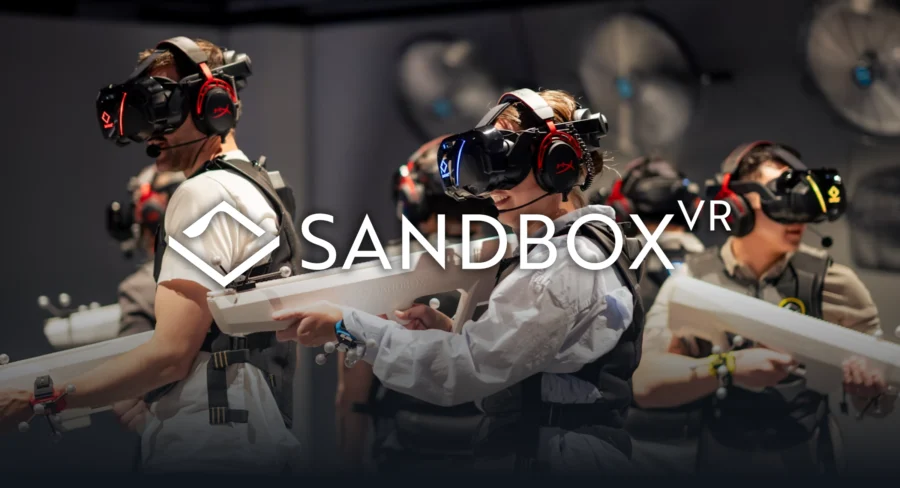
Sandbox VR is set to open its seventh Canadian location in Surrey, British Columbia, expanding its footprint in the fast-growing sector of location-based virtual reality entertainment. The new venue, located in the King George Hub, is scheduled to open its doors on February 13 and will bring Sandbox VR’s signature high-end, group-focused VR experiences to one of Canada’s most rapidly developing cities.
The Surrey venue spans 3,973 square feet and features three private rooms, each accommodating groups of up to six guests. Utilizing a combination of VR headsets, haptic vests, and motion sensors, the facility offers players a fully immersive, full-body experience where they can see and interact with each other within the virtual environment. After each session, guests receive personalized highlight videos, adding a social and shareable element to the experience.
Sandbox VR’s content library for the Surrey location includes ten exclusive, proprietary titles developed by an in-house team with backgrounds at EA, Sony, and Ubisoft. Among the offerings are experiences based on popular franchises and original IP, such as Stranger Things: Catalyst, Rebel Moon: The Descent, Deadwood PHOBIA, Deadwood Valley, Deadwood Mansion, Squid Game Virtuals, Seekers of the Shard: Dragonfire, Curse of Davy Jones, Amber Sky 2088, and UFL: Unbound Fighting League. This lineup positions Sandbox VR as a leader in delivering exclusive, cinematic VR content, including titles backed by Netflix.
Steve Zhao, CEO and Founder of Sandbox VR, emphasized the company’s commitment to meeting the growing demand for immersive, social entertainment experiences. Jebin Mathew, franchise owner of the Surrey venue, highlighted the strategic location within the King George Hub—a vibrant area for transit, dining, and entertainment—suggesting the venue will become a new social destination for both residents and visitors. Sandbox VR already operates in Toronto, Vancouver, Ottawa, Vaughan, and two Montreal locations, and reports nearly 150,000 monthly players globally. To mark the Surrey launch, the company is offering a 30% presale discount with a promotional code valid through February 12, providing an incentive for early adopters in the region.
For industry professionals, Sandbox VR’s continued expansion underscores the rising popularity and commercial viability of location-based VR, especially in urban centers seeking new forms of group entertainment. The company’s focus on exclusive content, group interactivity, and post-session media highlights reflects evolving consumer expectations for immersive experiences that blend technology, storytelling, and social engagement.
Source: Auganix
Ray-Ban Smart Glasses Sales Surge Amid New Models and Medtech Push

EssilorLuxottica, the French-Italian eyewear giant, has reported a dramatic surge in smart glasses sales, revealing that over seven million units were sold in 2025. This impressive figure, disclosed in the company’s Q4 2025 financial results, marks a more than threefold increase over previous years and highlights the growing appetite for wearable technology. The company’s partnership with Meta, which began with the original Ray-Ban Stories in 2021, has clearly paid dividends as the market for smart eyewear continues to expand.
According to EssilorLuxottica, the launch of several new models in 2025 played a pivotal role in driving this growth. Notably, the company introduced a hardware refresh of the Ray-Ban Meta smart glasses, alongside the Oakley Meta HSTN, Oakley Meta Vanguard, and the premium $800 Meta Ray-Ban Display glasses. The latter is particularly significant as it represents the company’s first foray into smart glasses equipped with a heads-up display, signaling a step toward more immersive and functional wearable experiences. Earlier in February 2025, the company had already announced sales of two million Ray-Ban (Gen 1) smart glasses since their late 2023 release, indicating a rapid acceleration in adoption as the product line expanded.
Beyond hardware, EssilorLuxottica emphasized its broader transformation from a traditional optical company to a leader in medtech and big data. The company reported further momentum in its Nuance Audio hearing-aid glasses and its AI-driven healthcare platform, reflecting a strategic shift toward integrating health and technology. This evolution positions EssilorLuxottica and Meta at the forefront of the smart glasses sector, but the competition is intensifying. Industry observers note that while Meta and EssilorLuxottica currently lead the market, the race to develop all-day AR glasses is just beginning, with major technology players like Google, Samsung, and reportedly Apple preparing to enter the fray.
For professionals in the XR and smart wearables industry, these developments underscore a rapidly maturing market and growing consumer acceptance of smart eyewear. The introduction of advanced features such as heads-up displays and AI-powered health integrations is likely to set new benchmarks for competitors. As the ecosystem evolves, companies will need to innovate not just on hardware, but also on the integration of software and health-focused services to maintain their edge.
Source: Road to VR.
Virtuix Expands Omni One Core VR Treadmill to Europe
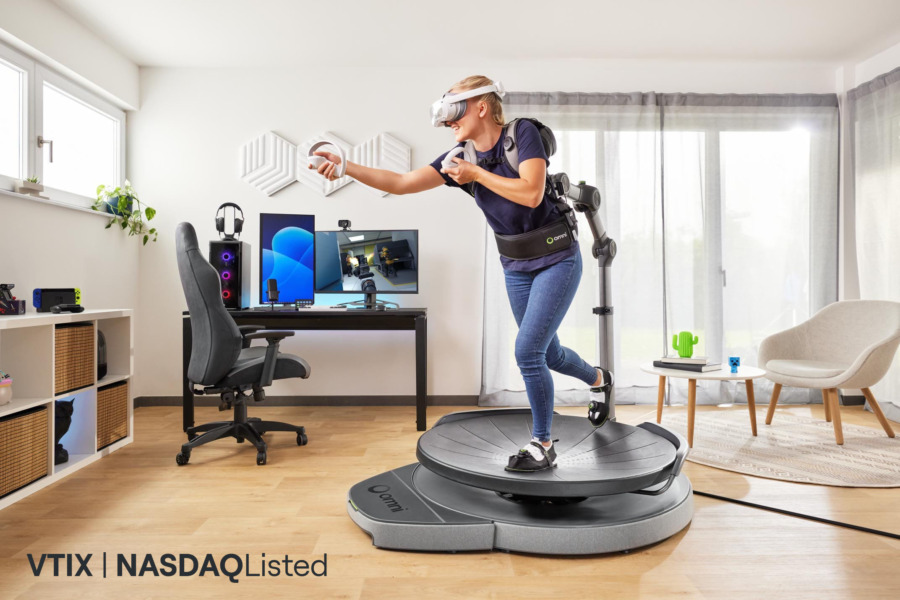
Virtuix has officially launched its Omni One Core VR treadmill in Europe, opening up orders for customers across the UK and EU, with initial deliveries scheduled between April 13 and April 24, 2026. This move marks a significant expansion for Virtuix, a company known for its full-body VR systems, as it brings its PC-connected consumer treadmill to one of the world's most active PC gaming markets. The Omni One Core is designed to integrate with SteamVR and is compatible with existing PC VR headsets, offering European gamers access to a dedicated 360-degree locomotion platform for immersive virtual experiences.
The Omni One Core allows users to walk, run, crouch, and strafe within virtual environments, translating real-world movement into VR gameplay. The system is priced at €2,995 (including VAT) for EU customers and £2,795 for those in the UK. This pricing positions the device as a premium accessory for serious VR enthusiasts and gaming centers looking to enhance the physicality and immersion of VR gaming. Virtuix claims that users can burn up to 700 calories per hour, depending on the intensity of gameplay, highlighting the treadmill's potential as both an entertainment and fitness device.
To support its European rollout, Virtuix has partnered with Unbound XR, a regional XR equipment retailer, to manage logistics and fulfillment from a dedicated warehouse in the Netherlands. This partnership is aimed at streamlining delivery and support for customers in Germany, France, the UK, and other EU countries. The expansion comes on the heels of Virtuix's recent public listing on the Nasdaq Stock Market under the ticker VTIX and an $11 million investment round intended to boost sales, marketing, and product development. The company has reported strong momentum, with 138% year-over-year revenue growth for the six months ending September 30, 2025, and a production capacity of up to 3,000 units per month.
For industry professionals, Virtuix’s European entry signals growing international demand for advanced VR locomotion hardware and the continued maturation of the consumer VR ecosystem. The integration with SteamVR and compatibility with existing headsets make the Omni One Core a flexible addition to both home and commercial VR setups. As physical movement becomes a greater focus in immersive gaming, Virtuix’s treadmill could set a new standard for active VR experiences in the region.
Source: Auganix.org
Essential Meta Quest Tips and Tricks for Users
Meta Quest users looking to get more out of their headset can benefit from a range of useful hacks and shortcuts. From optimizing comfort to enhancing performance, these tips can help users personalize their VR experience and make the most of the device’s features.
While many features are accessible out of the box, learning a few insider tricks can streamline navigation, improve battery life, and unlock hidden capabilities. These hacks are especially valuable for both new and seasoned Quest owners aiming to maximize their time in virtual reality.
For a comprehensive list of practical Meta Quest hacks, refer to the coverage by Lifehacker and The Gadgeteer.
Source: Lifehacker, The Gadgeteer.
Bell unveils VR Bell 505 simulator at Singapore Airshow
Bell has introduced the TRU Simulation’s Veris virtual reality Bell 505 flight simulator at the Singapore Airshow. This marks a significant step in the adoption of VR technology for aviation training, showcasing the capabilities of immersive simulation for helicopter pilots.
The debut highlights growing industry interest in leveraging virtual reality to enhance pilot training and safety. By using VR, flight simulators can offer realistic scenarios and hands-on experience without the risks or costs associated with actual flight.
Source: Vertical Magazine
Cognitive3D Debuts MCP Server for AI-Powered Spatial Analytics

Cognitive3D has introduced its MCP (Model Context Protocol) Server, a new infrastructure designed to make XR spatial analytics data accessible through natural language queries with AI assistants. This launch, announced on February 27, 2026, aims to bridge the gap between complex immersive analytics and everyday business users, allowing organizations to interpret and analyze AR and VR data without relying on dashboards, reports, or engineering expertise.
The MCP Server connects AI assistants to the Cognitive3D API, translating user questions into structured API requests. This enables conversational analysis of XR training and simulation data, so users can instantly identify trends and performance metrics. The solution is compatible with leading AI platforms such as ChatGPT, Claude, Cursor, and GitHub Copilot, and is intended for use by both technical and non-technical staff across organizations. By leveraging large language models (LLMs), the system allows anyone within an enterprise to explore immersive analytics simply by asking questions in natural language.
Matt Manuel, VP of Engineering at Cognitive3D, emphasized that the true innovation lies in democratizing access to immersive analytics. According to Manuel, the MCP Server empowers anyone in an organization—not just engineers—to investigate and interpret spatial data, limited only by the creativity of their questions. This marks a significant shift from traditional analytics approaches, which often require specialized skills or resources to extract actionable insights from XR environments.
Security and privacy are also central to the MCP Server’s design. The system operates within an organization’s own data environment and uses a private API key for authentication. Cognitive3D has stated that the server enforces SOC 2 Type 2 compliance and existing access controls, ensuring that data remains protected and that there is no risk of cross-organization data exposure. The MCP Server is now available alongside Cognitive3D’s existing spatial analytics services, offering a new way for enterprises to integrate immersive data into their standard AI workflows and enterprise environments.
For professionals in the XR industry, this development could streamline the process of deriving business value from immersive analytics, making it easier to justify and optimize XR investments. By lowering the technical barrier to entry, Cognitive3D’s MCP Server may encourage broader adoption of spatial analytics across sectors that rely on AR and VR for training, simulation, and performance measurement.
Source: Auganix
VITURE Secures $100M More, Total Funding Surges Past $200M

VITURE, a company specializing in XR glasses, has announced the completion of a new $100 million financing round, coming on the heels of its $100 million Series B secured in September 2025. This latest round was led by Legend Capital, an investment arm affiliated with Lenovo based in Beijing, and included participation from several strategic investors such as Bertelsmann Group, a previous backer. According to Crunch Base data cited in the announcement, VITURE's total funding now stands at $221.5 million, with $200 million raised in less than six months.
Since its Series B, VITURE has been active in expanding its product lineup and market reach. The company launched the Luma series and Beast XR glasses, both of which are tethered to phones or PCs and utilize bird bath-style optics. In December, VITURE collaborated with CD Projekt RED to launch a limited-edition Cyberpunk 2077 version of its Luma series glasses, tapping into the gaming market. The company has also broadened its retail presence across North America, including in-store demo placements at Best Buy, signaling a push toward mainstream consumer adoption and greater visibility in the competitive XR landscape.
However, VITURE's rapid ascent has not been without challenges. In January, XREAL, a Google-backed competitor, filed a patent lawsuit against VITURE in the US. The lawsuit alleges that several VITURE products, including the Viture Pro, Luma Pro, and Luma Ultra, infringe on XREAL's foundational patents and have been imported or sold in the United States. In response, VITURE has characterized XREAL's actions as "patent-troll-style" behavior and has initiated its own infringement proceedings against XREAL in China. Additionally, VITURE is pursuing separate legal actions to address what it describes as false and harmful statements made by XREAL about VITURE and its products.
VITURE has stated that while it did not wish to be drawn into litigation, it intends to vigorously defend its rights and pursue all available legal remedies. The company further noted that if the court rules in its favor, it may seek injunctive relief to restrict the manufacturing and export of all XREAL products that utilize electrochromic film technology, as well as other corrective actions as permitted by law. This legal battle underscores the increasingly high-stakes environment in the XR hardware sector, where rapid innovation is often accompanied by intense competition and intellectual property disputes.
Source: Road to VR
Passthrough AR Drives Evolution in Adult Content

The adult entertainment industry has long played a pivotal role in accelerating the adoption of new technologies, and the evolution of augmented reality (AR) and mixed reality (MR) is proving no exception. While much of the mainstream conversation around spatial computing focuses on sectors like enterprise or gaming, adult content creators have been quietly pushing the boundaries of what AR can achieve, particularly through passthrough capabilities. This shift from experimental demos to a viable, repeatable medium is offering insights into how immersive formats mature and become commercially sustainable.
According to Ash, founder of ARPornTube, the journey of AR in adult entertainment began with fragmented mobile experiences. Early efforts, utilizing frameworks such as ARKit and ARCore, produced short 3D animations that users could place in their environment via smartphones. However, these initial experiments were hampered by technical limitations: unstable tracking, poor occlusion, inconsistent lighting, and awkward user interaction. Engagement was brief, monetization models were lacking, and the experience often felt disconnected from reality. As a result, studios found little incentive to invest heavily in the format.
The turning point came with the rise of consumer headsets offering reliable, full-color passthrough. This technological leap enabled the creation of purpose-built AR adult content, moving beyond simple adaptations of VR scenes. Studios began to design productions specifically for passthrough, optimizing staging, interaction, and environmental integration. This infrastructural shift allowed for more stable workflows and predictable user experiences, transforming AR adult content from a novelty into a distinct, maturing format. Notably, the ability to layer digital performers onto real-world environments—rather than fully replacing reality as in VR—addressed the isolating nature of traditional immersive experiences and kept viewers grounded in their physical surroundings.
The progression of AR in adult entertainment mirrors broader trends in spatial computing: formats succeed not just on conceptual promise, but when technical capability, user demand, and production feasibility align. The adult industry’s early and pragmatic engagement with AR serves as a real-world stress test for new media, revealing which approaches are sustainable and scalable. As passthrough AR content continues to develop its own production techniques, audience expectations, and commercial logic, it offers valuable lessons for anyone working in immersive media—demonstrating how experimentation, infrastructure, and ecosystem stability collectively drive a format’s transition from novelty to mainstream medium.
Source: Skarredghost.
Spotted something wrong in this issue? Report it.