Meta Shutters VR Headset as Sony and Kendrick Lamar Signal XR Shifts
This issue covers Meta discontinuing a VR headset, Sony’s new XR tease, Kendrick Lamar’s Vision Pro debut, Canon’s 3D lens, Google’s HTC XR acquisition, and more.

Meta Ends VR Headset, Sony Teases XR Device, Kendrick Lamar Hits Vision Pro
This week in XR, the industry saw significant developments from major players Meta and Sony, while a much-anticipated VR music experience was announced for Apple Vision Pro users.
Meta has officially discontinued one of its VR headsets, marking a notable shift in its hardware strategy. While specifics on which device was sunset and the reasoning behind the decision were not detailed in the reporting, the move signals Meta’s ongoing evolution in the competitive VR hardware market. For industry professionals, this discontinuation could have implications for software support, developer focus, and the broader ecosystem, especially as Meta continues to refine its product lineup to better align with user demand and market trends.
Sony, meanwhile, made headlines by showcasing a new XR headset. Although detailed specifications, launch dates, and pricing were not included in the available coverage, the reveal itself underscores Sony’s commitment to advancing its presence in the mixed reality space. This development is particularly relevant for developers and content creators, as it suggests new opportunities for platform-specific experiences and potentially new hardware capabilities to leverage. Sony’s continued investment in XR hardware could also influence the competitive landscape, encouraging innovation and possibly driving further adoption of immersive technologies.
On the content side, Kluge Interactive announced a new Synth Riders Experience featuring superstar Kendrick Lamar. This immersive, spatial-musical journey draws inspiration from Kendrick Lamar’s “HUMBLE.” music video and is set to debut exclusively for Apple Vision Pro users via Apple Arcade. The experience will be available starting February 6, 2025, and will be accessible to all Apple Arcade subscribers on the Vision Pro platform. This collaboration highlights the growing intersection of music, spatial computing, and immersive entertainment, offering a unique draw for both fans of the artist and VR enthusiasts. For industry stakeholders, such exclusive content partnerships can drive hardware adoption and set new standards for interactive media experiences.
With major hardware moves from Meta and Sony and high-profile content arriving for Apple Vision Pro, the XR industry continues to evolve rapidly. Developers, hardware manufacturers, and content creators will want to monitor these shifts closely to stay ahead in a market defined by innovation and changing consumer expectations.
Source: MIXED
Canon's RF-S 7.8mm Lens Targets 3D VR Close-Up Content Creation
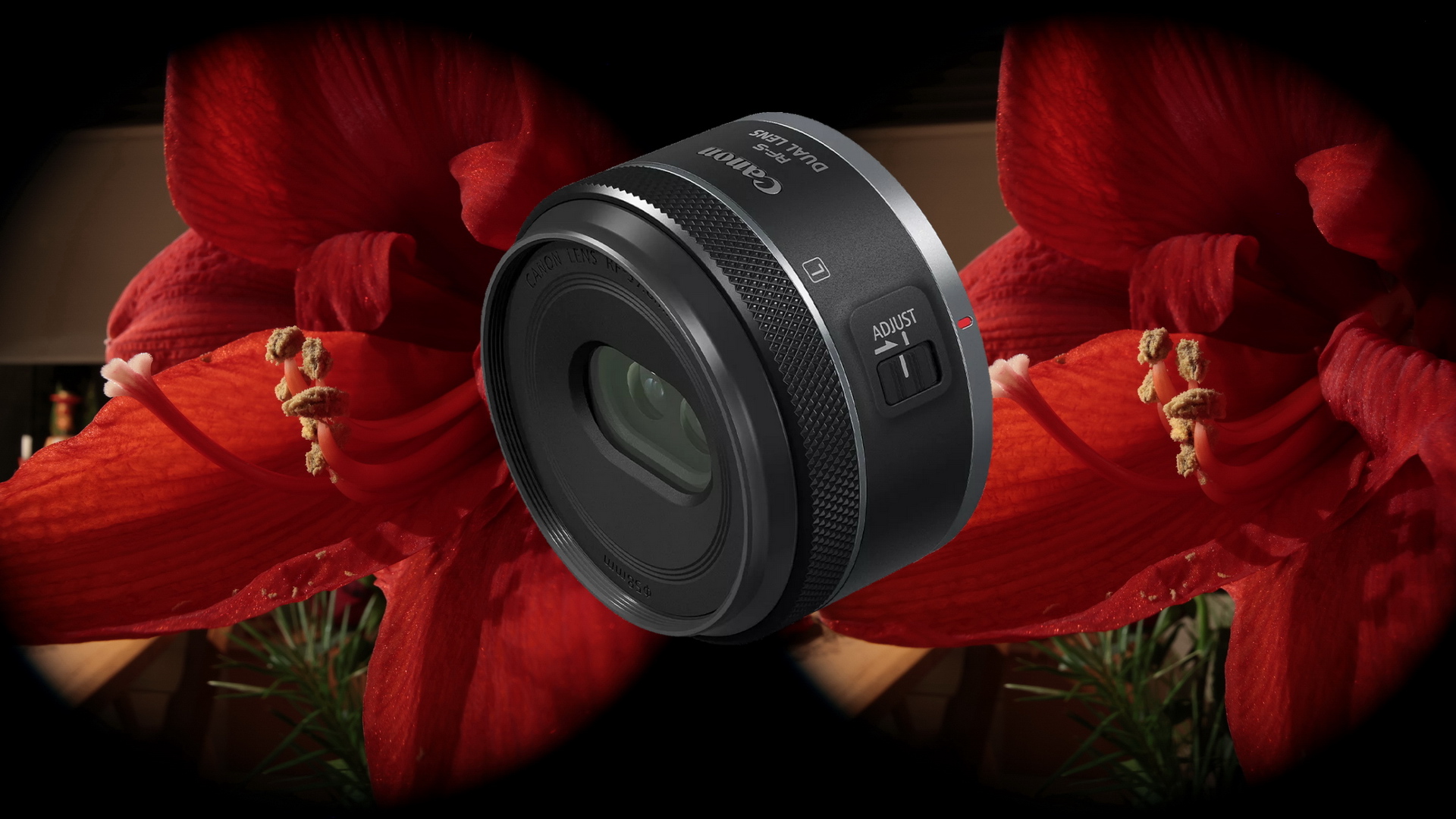
The landscape of 3D content creation for virtual reality is rapidly evolving, with new cameras and lenses pushing the boundaries of immersion. Canon has entered a niche segment with its RF-S 7.8mm lens, designed exclusively for the EOS R7 camera. This lens is tailored for 3D close-up photography, a field that remains largely unexplored compared to the broader 180° 3D or traditional 3D formats. Canon's move comes at a time when devices like Apple's iPhone, the XREAL Beam Pro, and Acer's SpatialLabs Camera Eyes are making 3D capture more accessible, but typically focus on regular 3D or wider-angle VR content.
What sets the Canon RF-S 7.8mm apart is its extremely narrow lens separation of just 11.8 mm, compared to the more typical 50–63 mm found in other 3D cameras. This small inter-lens distance is crucial for capturing effective 3D close-ups, requiring subjects to be positioned between 0.15 and 0.5 meters from the lens. As with Canon’s other 3D lenses, both left and right images are projected onto the same sensor, ensuring perfect synchronization and color consistency. However, this specialized design means the lens is best suited for creators focused on macro or close-up 3D work, rather than general-purpose VR content.
Canon’s EOS VR Utility software supports the lens, offering export options for 3D Theater 8:9, 16:9, and equirectangular 180° formats. Still, the software currently limits equirectangular exports to 8192×4096 pixels, which can result in a noticeable loss of detail compared to the original image files. This limitation could become more pronounced as higher-resolution VR headsets become mainstream, making it advisable for creators to retain their original files for future-proofing. Additionally, the software’s handling of 180° 3D exports lacks subpixel precision at the circle edges, leading to visible steps and reduced immersion in VR viewing—a detail that may require a future software update to address.
From a workflow perspective, the lens demands careful composition to avoid common issues such as misalignment between the left and right images, which can cause eye strain or unnatural perception in VR. While tools like Stereo Photo Maker Pro can assist with alignment, results may vary, and some images may require manual adjustment or cropping. Compared to more forgiving point-and-shoot 3D cameras, the RF-S 7.8mm lens has a steeper learning curve but offers unique creative opportunities for those willing to master its quirks. For VR industry professionals and content creators, Canon’s latest lens represents a significant step toward expanding the creative toolkit for immersive close-up storytelling, even as software and workflow challenges remain to be addressed.
Source: MIXED
Google Acquires HTC XR Talent and IP License for $250M

Google has entered into a definitive agreement with HTC, a leading provider of virtual and extended reality (VR/XR) solutions, to acquire select XR talent and a non-exclusive license to HTC’s XR intellectual property for USD $250 million in cash. The deal, announced on January 23, 2025, will see certain members of HTC’s XR team transition to Google. This move is expected to bolster Google’s capabilities in the XR space and further its ambitions in the Android XR platform, particularly as the company seeks to re-establish itself within the growing headset and smart glasses ecosystem.
Under the terms of the agreement, Google will not receive exclusive rights to HTC’s XR IP, but will gain access through a non-exclusive license. This arrangement allows HTC to continue developing its own XR products and platforms, while also enabling Google to leverage HTC’s technical expertise and innovations. Both companies have indicated that they will explore opportunities for future collaboration following the completion of the transaction. HTC emphasized that this agreement supports its ongoing strategy to streamline its product portfolio, enhance operational efficiency, and increase financial flexibility, all while maintaining its commitment to the VIVE XR product line, including the recently launched VIVE Focus Vision. HTC reassured customers and partners that its existing XR solutions will continue to be supported and developed without interruption.
For Google, the acquisition of HTC’s XR talent and IP license is a strategic step aimed at accelerating the development and adoption of the Android XR platform. The company has signaled its intent to strengthen its position in the XR industry, and the addition of a “strong technical team with a proven track record in the VR/XR space” is expected to be a significant asset. The transaction also builds on Google’s ongoing investment in Taiwan as a center for innovation and technology development. The deal is subject to customary closing conditions and is expected to close in the first quarter of 2025. Evercore acted as HTC’s financial advisor, with Gibson Dunn and Tsar & Tsai providing legal counsel.
This agreement marks a notable development in the XR industry, as it brings together Google’s platform ambitions and HTC’s hardware and technical expertise. For industry professionals, the move could signal increased competition and innovation in the XR hardware and software landscape, as well as potential new partnerships and products emerging from the collaboration between the two companies. The non-exclusive nature of the IP license also means HTC remains an independent player, continuing to push forward with its own XR solutions while benefiting from the financial and strategic advantages of the deal.
Source: Auganix.org
Vivo Eyes Mixed Reality, Meta Readies AR Glasses, Steam VR Grows

This week in XR, several notable developments signal a dynamic start to 2025 for the industry. Vivo is reportedly preparing to enter the mixed reality (MR) headset market, a move that could add a major new player to the competitive landscape. Meanwhile, new data suggests that VR usage on Steam continues to rise, reflecting steady growth in consumer adoption of virtual reality gaming and experiences. In parallel, Meta’s wearables roadmap has come into sharper focus, with Bloomberg reporting on a series of new devices planned for the coming years.
According to Bloomberg’s Mark Gurman, Meta is planning to launch Oakley-branded smart glasses and heads-up display (HUD) glasses in 2025. These devices are expected to build on Meta’s existing efforts in the smart eyewear space, potentially offering enhanced features for both everyday users and professionals interested in spatial computing. The roadmap also includes the release of full-fledged AR glasses in 2027, suggesting Meta is committed to a long-term vision for augmented reality hardware. However, the report does not mention any updates regarding Meta Quest-branded headsets, leaving the future of Meta’s VR headset line open to speculation.
The entry of Vivo into the MR headset market could have significant implications for the industry. While details on the device’s specifications, pricing, and release date have not been disclosed in the available reporting, Vivo’s established presence in consumer electronics and mobile devices positions it as a potentially formidable competitor. For developers and businesses working in XR, the arrival of another major hardware vendor could mean new opportunities for content partnerships, platform integrations, and expanded market reach.
On the software side, the continued growth of VR usage on Steam highlights the increasing mainstream acceptance of virtual reality, especially among PC gamers. This trend is likely to encourage further investment in VR content and experiences, as well as drive innovation in hardware and software solutions tailored to the needs of this expanding user base. For industry professionals, these developments underscore the importance of staying agile and informed as new players and products reshape the XR landscape.
Source: MIXED
Palmer Luckey Teases Imminent VR Comeback Announcement

Palmer Luckey, the founder of Oculus and a pivotal figure in the modern VR industry, has hinted at a major upcoming announcement that could mark his return to the virtual reality spotlight. Over the weekend, Luckey responded to a VR developer's concerns about the industry's future—specifically the absence of visionaries like John Carmack and himself—by stating, "Wait till you see what I am announcing in a few weeks and see if you still think I am out of the game." This statement, shared on social media, has sparked widespread speculation about what Luckey could be planning and how it might impact the VR landscape.
Luckey has previously confirmed that he is working on a new headset. During a panel at Augmented World Expo 2024, he revealed, "I'm still very much in the hardware space. I'm actually building a new headset right now. It's driven by military requirements, but it's also going to be used for non-military stuff, and it's really cool. It's really something." While details remain scarce, the headset is reportedly influenced by military needs, suggesting it could be designed for applications such as military simulators, 3D battlefield visualization, or FPV drone operations. However, Luckey did not specify whether this project is a personal endeavor or one led by his defense technology company, Anduril Industries.
Given the military focus, it appears likely that the device will not be a consumer product, but rather a specialized tool for professional or defense-related use. There is also the possibility that Luckey's upcoming announcement could pertain to a different project altogether, as he has not always followed through on teased VR announcements in the past. Additionally, with Luckey and Meta recently reconciling, industry watchers are considering whether a collaboration with Meta could be in the works, though nothing has been confirmed.
Luckey's journey in the VR sector began with the founding of Oculus in 2012, which was acquired by Facebook just two years later. After his departure from Facebook in 2017, he established Anduril Industries, now valued at $14 billion, focusing on defense technology. As the VR community awaits further details, Luckey's announcement is poised to generate significant interest, particularly among professionals eager to see how his innovations might shape the future of spatial computing and immersive hardware.
Source: MIXED
Pimax Unveils Dream Air VR Headset and Secures $13M Funding
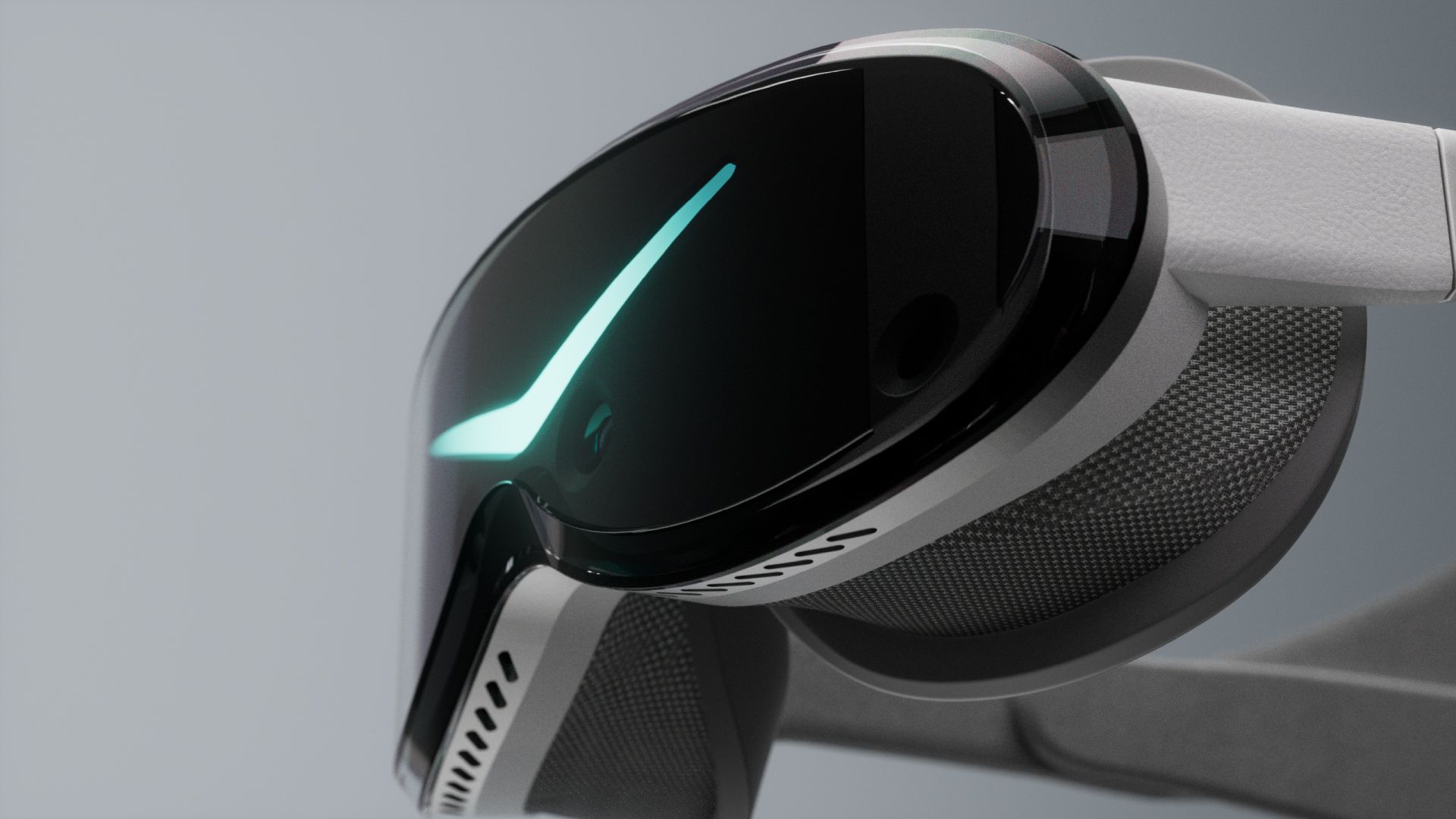
Pimax, a well-known name in the virtual reality hardware sector, has announced a significant step forward in both its business and product roadmap. The company recently raised approximately $13.6 million in a funding round led by Zhuji Jingkai Capital Investment, with ongoing support from existing investor Ivy Capital. This financing marks one of the largest investments received by a Chinese VR headset manufacturer since 2023, and underlines growing confidence in the global high-end VR market.
Pimax, operating under the parent company Xiaopai Technology, has demonstrated robust growth, reporting nearly doubled revenues each year for the past three years. The company’s international reach is expanding rapidly, with 80 percent of its user base now located outside China. Founder Weng Zhibin credits this success to Pimax’s sustained investment in research and development, which has enabled the company to establish a strong technological foundation in areas such as display technology, lenses, and computing power. Pimax’s history includes pioneering VR headsets with 4K, 8K, and Retina resolutions, and its portfolio features numerous patents for innovations like high refresh rate displays and specialized optical solutions.
The newly raised funds are earmarked for further expansion of Pimax’s R&D activities, particularly with plans to bolster its team in the United States and establish a new development platform in Europe. These moves are intended to accelerate global innovation and enhance the company’s capabilities in XR technology, applications, and sales. The funding also coincides with the announcement of the Dream Air, a new high-end PC VR headset aimed at the premium segment. The Dream Air is designed to be slim and lightweight, weighing under 500 grams, and features a 27 million pixel resolution, micro OLED panels, and pancake lenses—the same high-quality components found in the flagship Crystal Super model.
- Key features of the Dream Air include integrated eye tracking with automatic pupil distance adjustment, inside-out tracking that does not require base stations, hand and head tracking, surround sound, a DisplayPort connection, and support for accessories such as corrective lenses.
- The headset is also notable for its ring-free controllers and the inclusion of hand tracking, enhancing user interaction and immersion.
- Pimax plans to launch the Dream Air at a starting price of $1,895, with availability expected in May 2025.
For professionals in the VR industry, Pimax’s latest moves signal both the increasing competitiveness of the high-end headset market and the growing importance of international expansion and R&D investment. The Dream Air’s combination of advanced optics, tracking, and lightweight design positions it as a contender for demanding PC VR applications, while the company’s financial backing and global ambitions suggest continued innovation ahead.
Source: MIXED
Three Free Meta Quest VR Games to Start the Year

As the new year begins, Meta Quest users have a fresh slate of VR titles to look forward to, with several promising games launching across major platforms in February. This month’s lineup highlights a diverse mix of genres, from action shooters to sandbox experiences and immersive board game simulators, each offering new ways for VR enthusiasts and industry professionals to engage with virtual reality technology.
Among the most anticipated releases is Cold VR, which was originally slated for a January debut but has now been pushed to February. Drawing inspiration from the VR classic Superhot VR, Cold VR introduces a twist: time only stands still as long as you move, challenging players to rethink their strategies. The game will be available on the Horizon Store and Steam, with a PlayStation VR 2 version planned for later. Another title, Chronostrike, set in a dystopian 2035, puts players in the role of an agent fighting against a dominant tech corporation. Developed by Green Sky Games, known for Swarm 1 & 2, Chronostrike stands out by offering a cooperative mode, differentiating itself from other Superhot VR-inspired games.
For those seeking a more creative or social experience, Voxel Project delivers a fully destructible voxel sandbox world filled with vehicles, enemy NPCs, and weapon customization. Meanwhile, All on Board aims to revolutionize VR board gaming by simulating classic and modern board games, including licensed titles like The Hunger and Terraforming Mars. The game will support both cooperative and competitive multiplayer, as well as solo play, making it accessible to a broad audience. This approach could be particularly relevant for developers and studios exploring social VR and digital tabletop experiences.
Other notable releases include Crystal Commanders, a real-time strategy game with a fully voiced campaign and adaptive room-scale gameplay, and Detective VR, a mystery adventure utilizing hand tracking and mixed reality to immerse players in time-manipulating investigations. For simulation fans, Farming Simulator VR offers the chance to operate authentic agricultural machinery and manage crops in VR, while Alien: Rogue Incursion brings the iconic Alien franchise to VR with a new story and gameplay designed specifically for the medium. These titles reflect the growing diversity and ambition within the VR industry, providing both consumers and professionals with fresh opportunities to explore new mechanics, genres, and user experiences.
For a full overview of the most promising VR releases this February, including details on platform availability and pre-orders, visit MIXED.
Source: MIXED
Meta's Oakley XR Plans, Google Hires HTC Vive Team, Luckey Teases VR Return
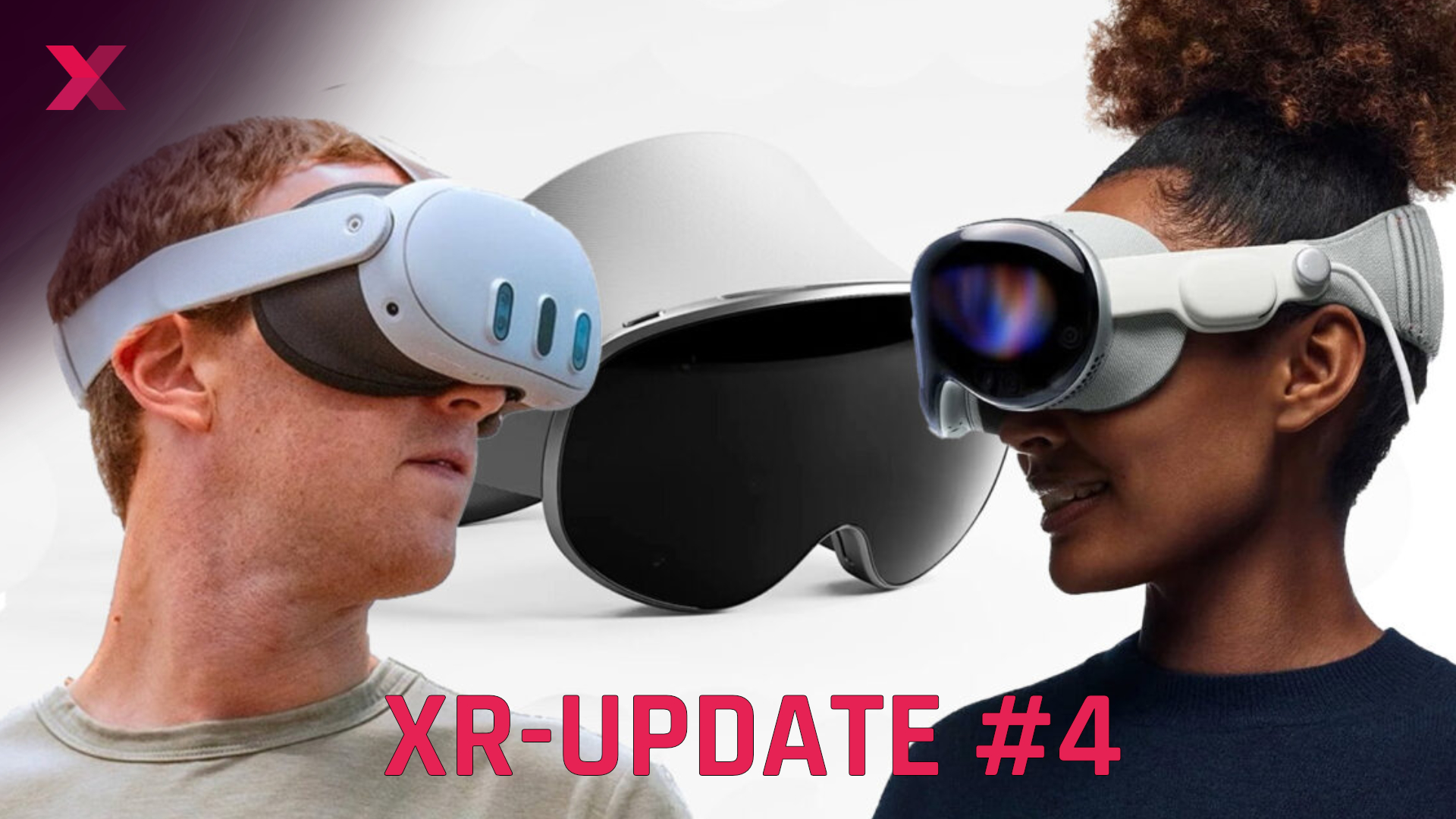
This week in XR saw several significant developments across the industry, with major moves from Meta, Google, and the original Oculus founder Palmer Luckey. The round-up highlights Meta’s ambitious roadmap, Google’s acquisition of key HTC Vive talent, and fresh signals of a VR hardware comeback from Luckey, alongside updates from Sony, Canon, and the modding community.
Meta’s XR strategy is reportedly expanding with plans for Oakley-branded smart glasses expected in 2025, alongside HUD glasses codenamed Hypernova for the same year, and a full-fledged AR headset targeting 2027. These devices are part of a broader push that also includes a smartwatch and an AirPods competitor. According to a Bloomberg report, these moves reflect Meta’s ongoing commitment to dominate the XR hardware space, following its current leadership with the Meta Quest platform. The latest GDC survey underscores this dominance, showing that 59% of VR/AR developers are building for Meta Quest, with other platforms like SteamVR, PSVR 2, and Apple Vision Pro trailing behind.
Google is making a notable return to XR hardware by acquiring parts of the technical team responsible for HTC Vive products for $250 million. This strategic move is aimed at accelerating the development of the Android XR platform, positioning Google to compete more directly in the spatial computing space. The acquisition could signal renewed competition and innovation in the sector, especially as Google looks to leverage its Android ecosystem for XR experiences.
Palmer Luckey, founder of Oculus and now head of defense company Anduril Industries, has announced he will soon unveil a new product that will mark his return to the VR spotlight. While details remain under wraps, it is widely anticipated to be a new VR headset, potentially bringing fresh hardware innovation and competition to the market.
Other notable updates include Sony discontinuing several live service games, which, according to guest author Jamie Feltham, has contributed to the PSVR 2’s struggle to expand its user base. Still, there are positive signs for PSVR 2 among core gamers. Canon has introduced a specialized RF-S 7.8mm lens for 3D close-up photography, designed for the EOS R7, enabling high-quality 3D content creation. Streaming service GeForce Now is now available on Meta Quest 3 and other headsets, offering good latency and image quality, though currently limited to Xbox controller support. In the modding scene, Luke Ross is developing a VR mod for "Indiana Jones and the Great Circle," with promising early gameplay footage for high-end GPUs.
For industry professionals, these developments signal a period of renewed competition and rapid innovation across hardware, software, and content. Meta’s aggressive roadmap, Google’s talent acquisition, and Luckey’s re-entry all suggest the XR landscape will continue to evolve quickly, with new opportunities and challenges for developers, hardware makers, and content creators alike.
Source: MIXED
Roto VR Chair Adds Automatic Rotation for Immersive VR

At CES 2025, Roto VR showcased its Explorer chair, a motorized seat designed to enhance virtual reality experiences by automatically rotating in sync with the user's head movements. Unlike a standard swivel chair, the Roto VR Explorer uses a tracking puck attached to the VR headset to detect head rotation. When the user turns their head, the chair physically rotates to match, aligning the entire body with the direction of gaze. This feature aims to address both comfort and motion sickness issues commonly associated with VR navigation.
One of the key advantages highlighted in hands-on impressions is the reduction of motion sickness. By aligning the body with the head’s rotation, the chair helps the brain process movement more naturally, which can be more comfortable than using controller thumbsticks for smooth rotation. This physical alignment not only improves comfort during long VR sessions but also means users do not have to push themselves around with their feet as they would with a conventional chair. The Roto VR system is also being positioned for productivity scenarios: with the Pro Desktop upgrade, users can attach a small table and Bluetooth keyboard, allowing them to seamlessly switch between virtual monitors simply by looking at them, with the chair rotating to keep the keyboard in front at all times.
The Roto VR Explorer chair is available on the company’s website for €963.95. Users can preorder the Pro Seat add-on for about €360, which promises increased comfort, while additional customization options—including those for productivity setups—are expected in the second half of 2025 at around €200. The onboarding process is straightforward: users sit in the chair, put on the headset with the puck installed, and the system works out of the box. In a demo using Ironman VR on Quest 3, the chair allowed the user to look and fly in any direction, with the body always aligning to the head’s orientation, reducing neck strain and enhancing comfort during relaxed navigation.
However, the experience is not without flaws. The chair always assumes the user wants to rotate in the direction they are looking, which can be problematic in scenarios where head movement is not intended as a navigation command—such as looking around while moving forward. There is also a slight lag between head rotation and chair movement, and rapid, alternating movements can make the rotation feel abrupt or uncomfortable, potentially causing neck strain. These issues suggest that the Roto VR Explorer may require users to adapt their play style, and that further refinement is needed to filter out unintended commands and improve responsiveness.
Despite these challenges, the Roto VR Explorer represents a significant step in making VR navigation more intuitive and comfortable, particularly for relaxed or productivity-focused use cases. Industry professionals interested in reducing motion sickness and enhancing ergonomic comfort in VR environments may find the Roto VR system a compelling accessory, though it may not yet be ideal for fast-paced or highly dynamic VR experiences.
Source: Skarredghost
Alcove Sanctuary Launches Nova, an AI Guide for VR Accessibility
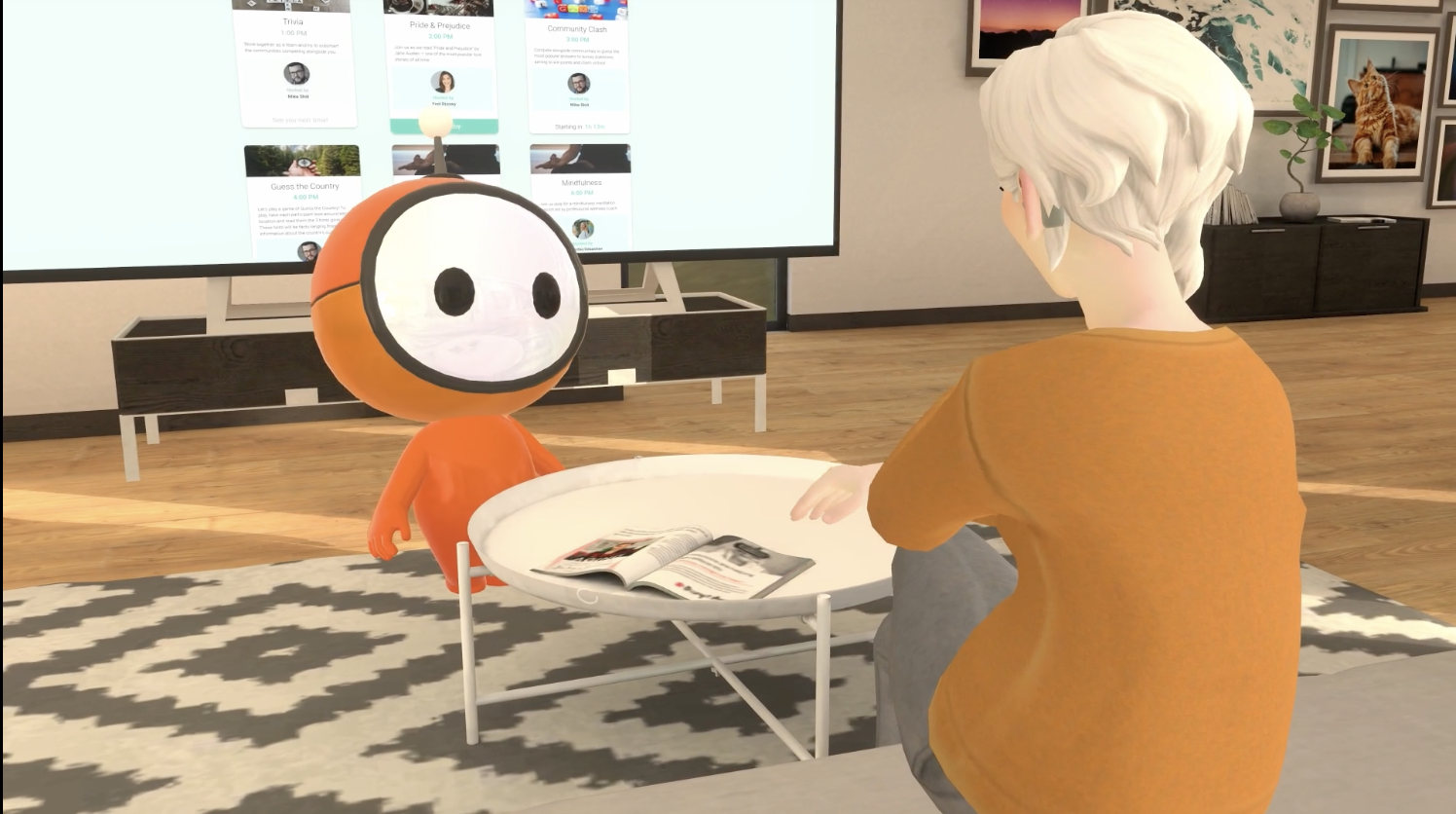
Rendever has introduced Alcove Sanctuary, a new virtual reality (VR) application designed to bridge generational gaps with the help of an AI-powered companion named Nova. The app aims to make VR more accessible, particularly for older adults, by leveraging natural language understanding and intuitive guidance. Nova allows users to interact with VR environments without the need for controllers or navigating complex menus, lowering the barrier to entry for those less familiar with technology.
Nova serves as a virtual assistant within Alcove Sanctuary, offering a range of features tailored to user interests. The AI companion can guide users on digital tours around the world, create custom artwork for virtual home spaces, and generate 3D models to personalize rooms. Nova also adapts to individual preferences over time, providing a more personalized experience. One notable feature is Nova’s ability to recognize emotionally significant moments, which are then saved in a shared "memory box" accessible to the entire family, fostering connection and shared reminiscence.
The Alcove Sanctuary subscription is priced at $12.99 per month. This package includes not only access to Nova but also RendeverLive, which offers more than 40 hours of guided virtual tours each week. Subscribers also receive a companion app for smartphones and tablets, expanding access beyond the VR headset itself. This comprehensive approach is designed to encourage family engagement and make immersive experiences available to a wider audience.
Rendever’s technology has already seen adoption in retirement homes and healthcare settings, where it is used to combat depression and loneliness through shared virtual experiences. Organizations such as Revera, Benchmark, and the Cleveland Clinic are among those utilizing Rendever’s VR solutions. Alcove originally debuted as a free virtual home for Oculus Go, featuring areas for entertainment, family photo displays, virtual travel, and relaxation. With the launch of Alcove Sanctuary and the integration of Nova, Rendever is significantly expanding on this foundation, aiming to further enhance accessibility and personalization in VR environments.
Source: MIXED Reality News
Sandbox VR Debuts Rebel Moon Experience in Global Arcades

Sandbox VR, the international VR arcade chain, has launched a new immersive experience titled "Rebel Moon: The Descent" at all of its locations worldwide. This new adventure is based on Zack Snyder's Netflix film "Rebel Moon," marking the second collaboration between Sandbox VR and Netflix after the notable success of "Squid Game Virtuals." The partnership signals a growing trend of location-based VR experiences built on popular entertainment franchises, aiming to attract both fans of the films and VR enthusiasts alike.
In "Rebel Moon: The Descent," players join the resistance in a battle against the forces of "Motherworld" on the planet Daggus. The experience promises action-packed gameplay, transporting participants through environments such as towering skyscrapers, bustling city streets, and subterranean mines. Players will face off against enemy soldiers and spaceships, leveraging Sandbox VR's full-body tracking and haptic feedback to deliver a cinematic, interactive adventure. This release is the tenth VR experience developed by Sandbox VR, reflecting the company’s commitment to expanding its content library with high-profile IPs.
The new launch follows the record-breaking performance of "Squid Game Virtuals," Sandbox VR's first Netflix collaboration. That experience generated $4.56 million in revenue within its first two months, with more than 10.1 million gamers having been "eliminated" in the game, 1.8 million falling from the glass bridge, and 2.2 million caught by the infamous puppet in "Red Light, Green Light." According to CEO Steve Zhao, leveraging Netflix’s popular brands is central to Sandbox VR’s long-term growth strategy, and further collaborations are already in development. This approach not only draws in fans of blockbuster franchises but also helps VR arcades differentiate themselves in a competitive market.
Sandbox VR currently operates 55 locations globally, welcoming over 100,000 visitors each month. The company has seen significant growth, with a 60% increase in franchise agreements in the second quarter of 2024 and plans to open 280 new locations over the next four years. Its 37 company-owned venues each generate an average annual revenue of $1.9 million. Founded in Hong Kong in 2017, Sandbox VR has raised more than $37 million from investors such as Andreessen Horowitz and Alibaba Entrepreneurs Fund, as well as celebrity backers including Justin Timberlake, Katy Perry, Kevin Durant, and Will Smith. For industry professionals, Sandbox VR’s strategy demonstrates the commercial potential of location-based VR tied to major entertainment IP, and the importance of ongoing innovation in content to sustain consumer interest and business growth.
Source: MIXED
The Uncertain Future of SteamVR Tracking
The future of SteamVR tracking is a topic of ongoing discussion within the virtual reality industry. As the landscape of VR hardware and tracking solutions continues to evolve, questions remain about how Valve's SteamVR tracking technology will adapt to new trends and user needs.
Developers and hardware manufacturers are closely watching for updates and innovations that could shape the next generation of tracking systems. The direction Valve takes with SteamVR tracking could have significant implications for device compatibility, user experience, and the broader VR ecosystem.
Source: The Ghost Howls
VR Expands CNA Training Access for Rural High Schools
Virtual reality is being used to provide Certified Nursing Assistant (CNA) training to high school students in rural areas. This approach aims to expand access to healthcare education for students who may not have traditional training resources available locally.
Batman: Arkham Shadow Adds New Game+ and More in Major Update

Batman: Arkham Shadow, the virtual reality entry in the acclaimed Arkham series, has received its third major update, bringing significant new features and improvements for VR gamers. Developed by Camouflaj, Meta's first-party VR studio known for Marvel's Iron Man VR, the game continues to expand its content and refine the player experience since its launch. The latest update, released in February, introduces several new gameplay modes and enhancements that are likely to appeal to both new and returning players.
Among the headline additions is the new Game+ mode, which comes with a fresh post-credits scene and two endless challenge modes for both Combat and Predator scenarios. This update builds on previous releases: Update 1.1 implemented over 1,300 changes, including memory optimizations, fixes for progress blockers, quality of life improvements, and reduced crash errors. Update 1.2 followed with a character view, four new challenge maps, expanded voice acting in several languages, and a range of audio, haptic, cutscene, gameplay, and UI improvements.
The newly announced "Game of the Year" update, set to land in late February, will further expand Batman: Arkham Shadow's content. Players can expect three new Predator maps inspired by classic Arkham gameplay, a new Extreme difficulty level, and an "I Am the Knight" mode. While details remain unconfirmed, this last mode is speculated to be a New Game+ variant featuring permadeath, adding a new layer of challenge for dedicated fans. Camouflaj has also teased that additional features are in development, signaling ongoing support for the title.
Batman: Arkham Shadow is being recognized as one of the standout VR games of 2024 and is included free with every new Quest 3S or Quest 3 headset purchased until the end of April 2025. The game has been praised for its smooth blend of action, exploration, and detective puzzles, as well as its successful adaptation of the series' signature free-flowing combat to the VR format. With each update, Camouflaj continues to refine the experience, introducing new moves and enemy types to keep gameplay fresh and engaging, even as some players note the intensity can be physically demanding in longer sessions.
For industry professionals, Batman: Arkham Shadow's ongoing updates demonstrate Meta's commitment to supporting first-party VR content with regular enhancements and new features. The game's evolving feature set and bundled availability with new hardware underscore its role as a flagship title for the Quest platform, setting a high bar for future VR action-adventure releases.
Source: MIXED
VR Games Showcase 2025 Promises Its Largest Line-up Yet

The VR Games Showcase is set to return in March 2025, with organizers promising the event's "biggest line-up yet." This annual showcase, established as a significant platform for virtual and mixed reality gaming, will once again be broadcast on its official YouTube channel, continuing its tradition of delivering major announcements and exclusive updates from leading VR studios.
The VR Games Showcase was founded by VR industry veterans Jamie Feltham and Zeena Al-Obaidi. Their vision has been to provide a curated stage for the future of VR and MR gaming, featuring carefully selected titles and updates from prominent developers. The inaugural event took place in August 2024, drawing over 200,000 viewers worldwide and featuring more than 15 announcements from notable studios such as Fast Travel Games, nDreams, and Vertigo Games. This strong debut established the Showcase as a key date on the VR industry calendar, offering a glimpse into upcoming titles and technological advancements.
In addition to the main showcase, Feltham and Al-Obaidi also organize the XR Indies & Friends digital event, which debuted in September 2024 just ahead of Meta Connect. This companion event focuses on smaller XR studios, providing them with a platform to present their VR and MR projects to a wider audience. The dual approach of spotlighting both major and indie developers reflects the organizers' commitment to fostering a diverse and innovative ecosystem within the immersive technology space.
For professionals in the VR industry, the VR Games Showcase serves as both a barometer of current trends and a launchpad for new projects. The promise of an even larger line-up in 2025 suggests that the event will feature more content, broader participation, and potentially more significant announcements than in previous years. As the VR and MR landscape continues to evolve rapidly, the Showcase remains an essential venue for networking, discovery, and industry insight. With details about the 2025 event still to come, industry stakeholders and enthusiasts alike will be watching closely for further updates and the reveal of the participating studios and titles.
Source: MIXED
Spotted something wrong in this issue? Report it.