Meta Quest 3S Review: Mixed Reality at a Breakthrough Price
This issue reviews the Meta Quest 3S, covers new cloud rendering, enterprise XR events, VR in healthcare, top free Quest 3S games, and more.

Meta Quest 3S Review: Affordable Mixed Reality for the Masses
The Meta Quest 3S has arrived as Meta’s latest attempt to bring mixed reality to a broader audience, positioning itself as a more accessible alternative to the higher-priced Quest 3. While the Quest 3 is considered the true successor to the Quest 2, its $500 price tag can be a barrier for mainstream consumers. The Quest 3S, by contrast, blends elements from both the Quest 2 and Quest 3, using the older display and lenses from the Quest 2 but incorporating the new chipset and mixed reality capabilities found in the Quest 3. This combination enables the Quest 3S to support the latest VR and MR games, while keeping the price down to $300—a move Meta hopes will democratize mixed reality technology.
The unboxing experience for the Quest 3S marks a return to the high standards set by earlier Oculus products, with a well-designed package that opens like a gift and includes a clear quick-start guide. The headset itself maintains the robust build quality expected from Meta, featuring a white-and-black color scheme that stands out from previous all-black models. While the physical design is described as a blend of the Go, Quest 2, and Quest 3, the larger, boxier shape and the six front-facing cameras may not appeal to everyone, especially compared to the sleeker Quest 3.
In terms of hardware, the Quest 3S offers RGB cameras for passthrough, tracking cameras, IR illuminators, and integrated speakers. Notably, it lacks a 3.5mm headphone jack and a proximity sensor to detect when the headset is worn. The display delivers 1,832 × 1,920 pixels per eye—about 30% less than the Quest 3’s resolution—and uses Fresnel lenses rather than the more advanced pancake lenses. This results in visible godrays, glares, and some chromatic and spherical aberrations, especially noticeable to users accustomed to newer headsets. However, for newcomers or those upgrading from the Quest 1 or 2, the visuals are still quite good, with minimal screen door effect and a satisfactory field of view of 96° x 90°.
Comfort is similar to previous Meta headsets, with an elastic headband and fabric facemask. While the headset is comfortable for short sessions and suitable for lying down, its front-heavy design can cause discomfort after extended use. The IPD adjustment is manual with only three settings, and there’s no eye relief mechanism, though a glass spacer is included for glasses wearers. Despite these compromises, the Quest 3S delivers a solid experience for its price, making it a compelling option for consumers looking to enter the world of mixed reality without a significant financial commitment.
Source: skarredghost.com
Meta Avalanche Cloud Rendering Surfaces, Cheaper Vision Pro Rumored

This week in XR brought several significant developments, with Meta's Avalanche cloud rendering service quietly appearing on the Horizon Store, fresh details about Apple's plans for a more affordable Vision Pro, and new insights into Meta's hardware roadmap and the technical hurdles facing next-generation AR glasses.
The most eye-catching news was the discovery of Meta's Avalanche app on the Horizon Store. While the app cannot be downloaded and its listing provides only a basic poster and a short description—"Download to test out the latest cloud streamed titles on Avalanche"—its presence confirms months of speculation about Meta's internal cloud rendering initiative. Avalanche is reportedly already powering applications like Hyperscape behind the scenes. If Meta can bring robust cloud rendering to Quest users, it could unlock graphically intensive VR experiences previously impossible on standalone devices. However, there are significant challenges: cloud rendering demands high-speed, low-latency networks and edge servers close to users, infrastructure that is not yet widely available. Additionally, the cost of streaming high-end content is substantial, making it unlikely Meta could offer this service free to all users. Monetization models might include subscriptions or pay-per-use tokens. The appearance of Avalanche on the store may have been accidental, possibly due to changes in how App Lab and Horizon Store listings are managed, but it signals Meta's ongoing investment in cloud-powered XR.
Meanwhile, Apple is reportedly developing a less expensive version of its Vision Pro headset. According to Marc Gurman, the device may use more affordable materials, swap in an A-series chipset, and drop the EyeSight display, with a target price around $2000. While this would be a notable reduction from the current Vision Pro's price, it remains a premium product, and Apple is said to have realistic sales expectations—aiming for double the sales of the current model. Industry observers note that for broader adoption, Apple will need to address comfort issues, improve software functionality, and expand the app ecosystem.
Meta's hardware ambitions were also in the spotlight. Andrew Bosworth confirmed the cancellation of the Quest Pro 2 project (codenamed La Jolla) and discussed the development process for new devices, including a lightweight mixed reality headset (codenamed Puffin) that has advanced to an early prototype stage. Details about Meta's Orion AR glasses continue to emerge, including technical specs such as a 70-degree field of view, display brightness, and battery life. However, challenges remain: the current Orion computational unit is reportedly far less powerful than Quest, complicating content porting and necessitating significant optimization. Notably, experts like Karl Guttag have raised concerns about the long-term suitability of Silicon Carbide waveguides used in Orion, suggesting that current prototypes may not reflect the final direction for consumer AR hardware.
Finally, Epic Games CEO Tim Sweeney shared that Unreal Engine 6 is in development, aiming to combine the power of UE5 with the accessibility of Unreal Engine for Fortnite, and to enable seamless deployment of content across platforms, including user-generated content environments like Fortnite and Disney's platform. Sweeney remains optimistic about the metaverse and is focused on interoperability between platforms.
Source: Skarredghost
Enterprise XR Leaders Gather in Dallas for Augmented Enterprise Summit
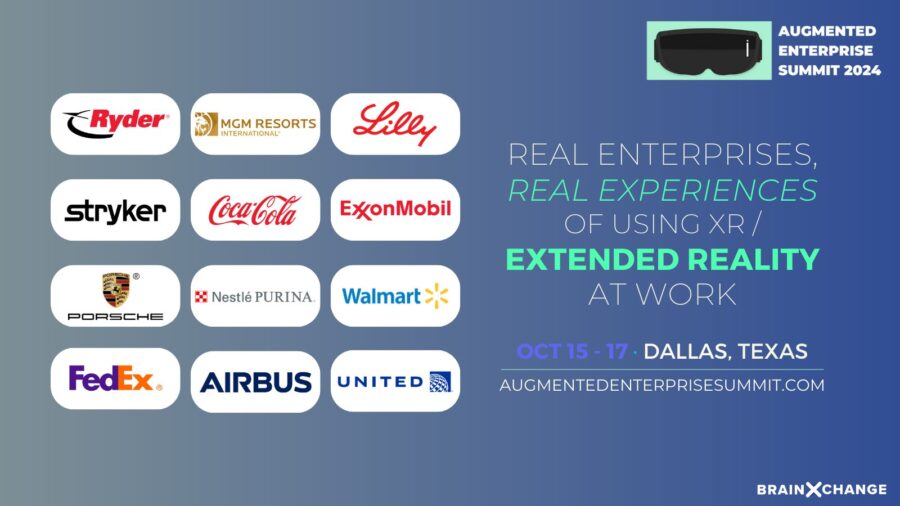
The Augmented Enterprise Summit is set to convene this week in Dallas, Texas, bringing together a diverse group of enterprise XR leaders, technology experts, and industry professionals for three days of immersive discussions and hands-on product demonstrations. Now in its 11th year, the event has established itself as a leading platform for exploring the business applications of extended reality (XR), spanning augmented, virtual, and mixed reality, as well as digital twins, artificial intelligence (AI), and spatial computing.
This year’s summit, organized by BrainXchange, is expected to attract approximately 1,300 attendees, with more than 75% representing enterprises—including Fortune 1000 companies that are actively evaluating or deploying XR solutions. The agenda features speakers from a range of verticals, including healthcare, automotive, manufacturing, retail, and energy, all sharing their experiences and insights on adopting and scaling XR technologies within their organizations.
The expo floor will showcase over 75 exhibitors, highlighting both established industry players such as Meta and HTC, as well as innovative startups offering enterprise-ready XR hardware and software. Major corporations like Walmart, FedEx, American Airlines, and AstraZeneca are also participating, providing practical perspectives on the deployment and challenges of augmented, virtual, and mixed reality in real-world business contexts.
The three-day program is structured to address the full spectrum of XR adoption. The first day focuses on getting started with XR, offering foundational knowledge and strategies. The second day delves into scaling XR solutions across the enterprise, while the third day looks ahead to future applications and trends in the field. A new addition this year is a series of hour-long informal industry meetups at the end of Day 2, designed to foster connections among attendees with shared roles and challenges in smaller, focused groups.
What distinguishes the Augmented Enterprise Summit is its exclusive focus on real-world enterprise XR applications. The event aims to provide attendees with actionable insights into project deployment, device management, and scaling, spotlighting companies that have already achieved cost savings and operational efficiencies through XR. For industry professionals, the summit offers valuable benchmarks and practical strategies to move beyond pilot programs and achieve full-scale rollouts of spatial computing technologies.
The Augmented Enterprise Summit runs from October 15-17 in Dallas. For more information on tickets, speakers, exhibitors, and the event schedule, visit the official Augmented Enterprise Summit website.
Source: Auganix.org
MeganeX Superlight 8K: Stunning Resolution, High Price at AWE EU

At AWE Europe, Shiftall unveiled its latest VR headset, the MeganeX Superlight 8K, drawing attention for its compact design and exceptionally high resolution. The device, a successor to earlier MeganeX models that never saw international release, was demonstrated at the Panasonic booth, reflecting Shiftall's ongoing connection to its parent company. Now under the ownership of Creek & River Co., Shiftall continues to push the boundaries of display technology in VR, but not without some notable trade-offs.
The MeganeX Superlight 8K stands out for its extremely lightweight and small form factor, living up to its "Superlight" name. The headset features OLED displays with a resolution of 3552 x 3840 pixels per eye, significantly surpassing competitors like the Bigscreen Beyond, which offers 2560 x 2560 pixels per eye. During hands-on demos, the visual clarity and color vibrancy were described as outstanding, with no visible screen door effect and true blacks thanks to the OLED panels. This makes the MeganeX Superlight 8K an attractive option for users prioritizing resolution and image quality in a compact package.
However, the impressive visuals come with several caveats. The unique flip-up halo headband design, intended to minimize facial pressure, proved problematic during the demo due to a loose hinge, forcing the tester to hold the headset in place, which in turn interfered with SteamVR tracking. The headset's compactness also means fewer reference points for tracking, making it more susceptible to occlusion issues. Users can adjust focus for each eye via dials on the bottom of the headset, but the periphery of the lenses showed noticeable aberrations, particularly spherical and some chromatic, and a persistent barrel distortion was observed in certain demos. The field of view appeared smaller than that of the Quest 3, and the headset lacks integrated audio, requiring users to connect their own headphones via USB-C.
Performance-wise, the MeganeX Superlight 8K demands significant computing power, with a minimum requirement of an NVIDIA RTX 3070 GPU. During the demonstration, a laptop with a 4080 card struggled with stuttering and low framerates, attributed to the lack of foveated rendering and the absence of eye tracking. The headset is available for order at $1,899, with shipping expected in February-March 2025. Notably, orders are non-refundable, and the price does not include essential accessories like SteamVR base stations, controllers, or headphones. For industry professionals, the MeganeX Superlight 8K represents a bold step forward in display technology and form factor, but its high price, demanding requirements, and design compromises may limit its appeal beyond niche use cases or public installations where hygiene and quick viewing are priorities.
Source: Skarredghost
Maestro Delivers a Fresh Take on VR Rhythm Gaming

Maestro, developed by French studio Double Jack, is making waves in the VR rhythm game scene, earning praise for its innovative approach to the genre. Unlike most rhythm games that focus on simulating a single instrument, Maestro places players in the role of an orchestra conductor, offering a more complex and immersive experience. The game stands out by having players use their right hand as a baton to keep time, while the left hand manages different sections of the orchestra—adjusting volume, cueing entries, and accenting notes. This dual-handed gameplay brings a sense of power and elegance that sets Maestro apart from more traditional rhythm titles.
The review from Auganix highlights that Maestro’s complexity is both its greatest strength and a potential barrier. While most rhythm games allow players to naturally lock into a single part of the music, Maestro requires constant attention to multiple sections, challenging players to shift focus between melodies and rhythms. This can disrupt the typical flow state rhythm game fans enjoy, but it also provides a unique and rewarding challenge that simulates the real demands of conducting. The reviewer notes that, despite this learning curve, the game’s depth and immersive mechanics make it highly recommendable—even to those who don’t typically play rhythm games.
Hand tracking is a key feature of Maestro, especially on the Meta Quest 3. The game encourages playing without controllers for a more authentic conducting experience, and the hand tracking is described as "as good as it gets" for the hardware. However, it’s not flawless—players need to keep their hands apart and within view of the cameras to avoid tracking issues. For those aiming for high scores or more precise gameplay, controllers may still be preferable, but hand tracking adds a richness to the experience that’s hard to match.
Visually, Maestro impresses with clean graphics, excellent lighting, and engaging particle effects that help guide the player’s attention. The voice acting adds charm, and interactive elements like roses or tomatoes thrown at the conductor add a playful touch. Customization options for batons and musicians’ outfits allow for personal flair, though the character models’ attempt at realism can feel unsettling. While the game’s focus on orchestral and big band music may limit its appeal compared to genre giants like Beat Saber, Maestro’s innovative gameplay and immersive design make it a standout title for both rhythm game veterans and newcomers alike.
Source: Auganix
CAE Launches VR-Based Flight Training Platform
CAE has introduced a new immersive flight training solution that leverages virtual reality technology. The system is designed to enhance pilot training by providing a more engaging and realistic simulation environment.
This development reflects a growing trend toward the adoption of VR in aviation training, aiming to improve learning outcomes and operational efficiency. By integrating virtual reality, CAE is seeking to offer pilots a more interactive and practical experience compared to traditional training methods.
The move underscores the increasing importance of advanced simulation technologies in the aviation industry, as companies look for innovative ways to train the next generation of pilots.
Source: Simple Flying
Top Free Games to Try on Quest 3S and Quest 3
Looking for the best free games to play on your Quest 3S or Quest 3? Several outlets have highlighted top picks that offer immersive experiences without any cost, making them great starting points for new and seasoned VR users alike.
Whether you’re interested in action, puzzle-solving, or social VR, the Quest platform offers a variety of free titles to explore. These games showcase the capabilities of the Quest 3S and Quest 3, providing hours of entertainment and a glimpse into the possibilities of standalone VR.
Source: UploadVR
Luminous XR Unveils FLOW for Easier XR Training Content Creation
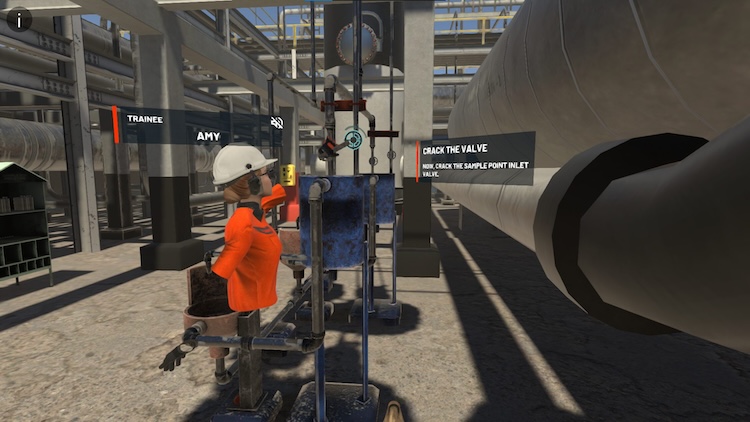
Luminous XR has introduced its latest product, FLOW, a content creation tool designed to simplify the process of building training modules in virtual, augmented, and mixed reality (XR). Announced at AWE EU 2024, FLOW aims to make immersive training content more accessible to creators, developers, and enterprises by offering a drag-and-drop interface that minimizes the need for advanced coding skills. The platform is built on Unity and provides pre-designed templates, customizable 3D assets, and a broad library of interaction nodes, all intended to reduce both the time and cost typically associated with developing XR training experiences.
FLOW is structured to support a range of training needs across industries through its three-tiered approach: Assisted Learning, Practice Mode, and Assessment Mode. These modes allow for a progression from guided, step-by-step instruction with visual and audio cues, to unassisted practice, and finally to performance-based assessment. This modular approach is particularly suited for onboarding, safety training, technical procedures, and collaborative exercises, providing enterprises with flexible options for upskilling and workforce development. Luminous XR has emphasized that these features help deliver engaging, hands-on learning environments that go beyond traditional methods.
One of the key technical advantages of FLOW is its use of the OpenXR standard, ensuring compatibility with a wide array of headsets and devices that support OpenXR. The platform also supports multi-language functionality and multi-user scenarios, enabling both trainees and instructors to interact in shared VR or desktop environments. For enterprise customers, FLOW includes industrial-grade 3D assets, avatars, and environment templates, offering ready-made solutions for manufacturing, troubleshooting, and collaborative training scenarios. These features are designed to help organizations quickly deploy effective XR training without the need for extensive in-house development resources.
FLOW builds on Luminous XR’s previous offering, PORTAL, which is an immersive learning management system focused on data-driven analysis of XR training programs. Together, FLOW and PORTAL provide a comprehensive, end-to-end solution for creating, managing, and assessing XR training content. Luminous XR has a track record of working with large enterprises to deliver customized, interactive training experiences, and FLOW represents a significant step forward in making XR content creation more accessible and scalable. The tool is available now, and more information can be found on the company’s website.
Source: Auganix
AtkinsRéalis Hosts Hackathon to Recruit Digital Talent in Manchester

AtkinsRéalis, a company known for its engineering services and nuclear expertise, has announced the launch of its #HackaFuture hackathon in Manchester as part of a major recruitment drive for digital talent. The event, set for February 8–9, 2025, will coincide with Manchester’s Digital Skills Festival, where AtkinsRéalis is serving as a Headline Sponsor. The hackathon is designed to attract individuals with a range of digital and creative skills, offering a unique alternative to traditional hiring processes by focusing on creativity, problem-solving, and attitude over formal qualifications and experience.
The #HackaFuture event is open to participants from diverse backgrounds, including gamers, software developers, and data scientists. Entrants will be tasked with developing prototype solutions to real-world challenges using advanced technologies such as robotics, augmented reality (AR), gaming engines, and drones. AtkinsRéalis emphasizes that no specific qualifications or prior experience are required, and teams of up to five can register. Individual applicants will be matched with others to ensure teams have a balanced mix of skills and strengths. The deadline for entry is November 30.
Sam Stephens, Head of Digital for AtkinsRéalis’ nuclear business, highlighted the company’s commitment to innovation, noting that their digital teams operate in fast-paced environments and have already developed over 500 patented solutions for UK and global clients. The hackathon winners will each be offered a permanent position as a Digital & Technology Specialist at the company’s central Manchester office. Beyond the winning team, all participants will be considered for current and future digital roles at AtkinsRéalis and will gain access to career mentors, broadening opportunities for those who take part.
Katie Gallagher, Managing Director of Manchester Digital, which organizes the Digital Skills Festival, praised the hackathon as a dynamic way to engage the region’s tech talent. She emphasized that the event aligns with the festival’s mission to foster growth in Manchester’s tech sector and invest in early career talent. By focusing on creativity and digital problem-solving, AtkinsRéalis aims to challenge the notion that only those with engineering degrees can succeed in the industry, and to tap into the innovative spirit of Greater Manchester’s technology ecosystem.
For those in the XR, AR, and broader digital industries, this initiative signals a growing trend among large engineering firms to seek out non-traditional talent and leverage emerging technologies for sustainable infrastructure and clean energy solutions. The hackathon format not only accelerates recruitment but also provides a platform for showcasing practical skills and innovative thinking, which are increasingly valued in the evolving tech landscape.
Source: Auganix
Niantic Studio Integrates VPS for Advanced Location-Based WebAR
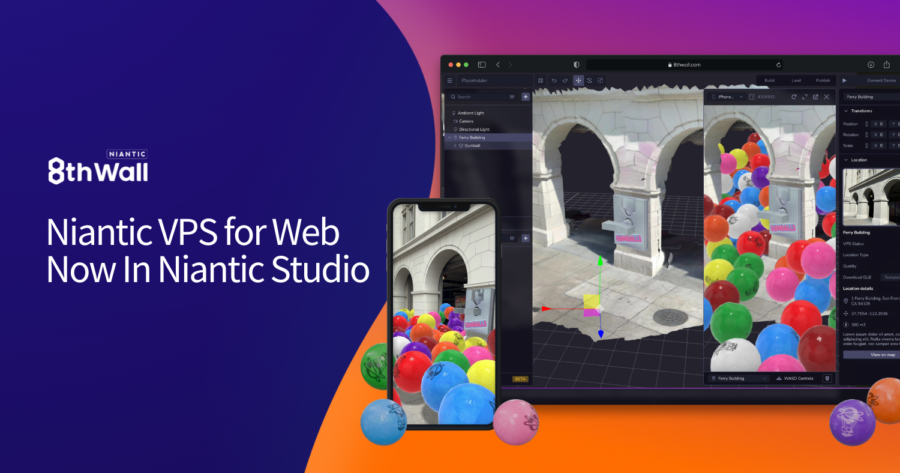
Niantic, known for its work in augmented reality (AR) and as the creator of Pokémon GO, has announced a major update to its development platform: Niantic VPS for Web is now fully integrated into Niantic Studio. This integration provides developers with a streamlined way to build, test, and deploy location-based WebAR experiences, leveraging the company’s Visual Positioning System (VPS) within the intuitive Niantic Studio editor.
Niantic’s VPS is a core AR technology that enables precise localization and anchoring of digital content in the physical world, reportedly achieving centimeter-level accuracy. This ensures that AR elements remain stable and correctly aligned with real-world objects and locations. By bringing VPS into Niantic Studio, developers can now use a visual interface to create immersive WebAR content that interacts seamlessly with real-world environments. The platform supports a wide range of use cases, from murals and sculptures that come alive at specific sites to interactive art installations and persistent AR gameplay in urban settings.
Niantic Studio, designed for developers working with the Niantic 8th Wall platform, features a Geospatial Browser (GSB) that lets users explore over 600,000 VPS-activated locations or add their own. These locations are generated from millions of community-submitted scans, with 50,000 new sites added each week. Each VPS mesh is built from multiple scans using the Scaniverse for Developers app, producing a detailed 3D model that forms the foundation for accurate AR placement. Developers can select a location, import its mesh into the Studio Viewport, and position digital content in real time. The Studio also offers a Simulator tool that allows remote testing of experiences, letting creators emulate movement within a scene using simple controls, so they can verify AR interactions without physically visiting the site.
The integration also supports Gaussian splats, enabling multi-modal gameplay that works both on-site at VPS-activated locations and remotely in WebXR. Developers can capture both a VPS mesh and a splat using Scaniverse, then transform these into persistent, location-based experiences accessible via the web. Niantic Studio’s web gaming engine ensures that AR objects remain anchored across sessions, allowing players to return to the same location and continue their experience over time.
Access to Niantic VPS in Studio is available for both Basic and Pro users. The free tier provides up to 25,000 monthly VPS server calls, with charges applying only when this threshold is exceeded. This makes it accessible for creators to experiment and build without upfront costs. For industry professionals, this integration represents a significant step forward in developing robust, scalable, and deeply interactive location-based WebAR experiences, setting a new benchmark for what’s possible in AR content creation and deployment.
Source: Auganix
HTC VIVE and Virtualware Partner to Expand Enterprise XR in Americas
HTC VIVE and Virtualware have announced a new strategic partnership aimed at accelerating the adoption of enterprise XR solutions throughout the Americas. Under this agreement, HTC VIVE will become an official distributor of Virtualware’s VIROO Enterprise XR Software Platform and related applications in North America. The arrangement enables HTC VIVE to sell VIROO both directly and through its established value-added reseller network, expanding the reach and accessibility of Virtualware’s enterprise XR offerings.
VIROO is designed to provide secure, scalable access to immersive technologies for businesses and institutions. The platform can be deployed via public or private cloud services, or through on-premises server infrastructure, catering to organizations with varying security and operational requirements. VIROO offers a suite of ready-to-use applications and developer tools, allowing companies to create, manage, and distribute custom multi-user XR simulations and digital twin applications. This flexibility is particularly appealing for industries with complex training, collaboration, and design needs.
Security and privacy are central to the partnership, reflecting the increasing emphasis on data protection among enterprise XR adopters. Virtualware’s client base already includes sectors like nuclear power, where stringent data security is paramount. The company holds ISO27001 certification for information security and ISO9001:2015 for quality management. HTC VIVE also maintains a global privacy compliance program, which is regularly updated to meet standards such as ISO27001, ISO27701, SOC, and open frameworks like BSIMM. These credentials are significant for organizations considering XR for sensitive applications, including engineering design, digital twins of restricted sites, and training simulations.
The importance of XR in enterprise settings is underscored by a recent survey from the United States Government Accountability Office, which found that 17 out of 23 federal civilian agencies used immersive technology in fiscal year 2023. As adoption rates climb, the partnership between HTC VIVE and Virtualware positions both companies to serve a growing market of organizations seeking robust, secure, and scalable XR solutions. John A. Cunningham, President of Virtualware USA, highlighted that the companies’ platforms are already in use by large organizations like GE Vernova, which utilizes them for training nuclear power plant operations across the US and Canada. The expanded distribution agreement is expected to make proven XR technologies more accessible to the broader ecosystem of enterprise developers and end users.
Source: Auganix
Arvizio Launches Custom AR/VR Solutions for Enterprise
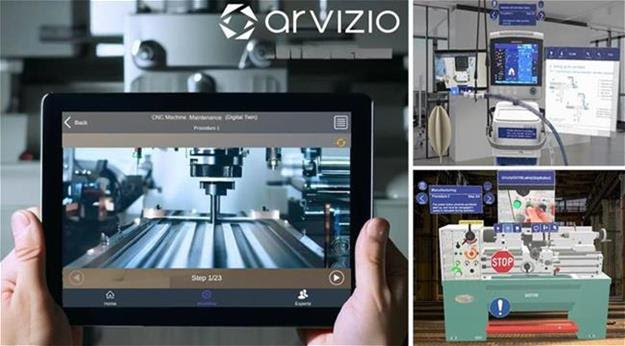
Arvizio, a company specializing in augmented and virtual reality (AR/VR) visualization and instructional technology for enterprise clients, has announced a significant expansion of its service offering. The company now provides custom digital transformation solutions that harness its AI, AR/VR, and digital workflow technologies to address the unique operational needs of enterprise customers. This move marks a strategic shift from providing only standalone products to delivering fully customized applications built on Arvizio’s modular technology blocks.
Previously, Arvizio’s portfolio included products like Arvizio Instructor and AI Validator, which allowed for some degree of customization through workflow and media integration. With the new approach, enterprises can request bespoke applications that utilize any combination of Arvizio’s core technology modules. These modules include Cloud Frameworks, 3D Model Visualization, Remote Expert, and AI-powered Validator and Object Detection. For example, a client can now commission a solution that leverages only the Remote Expert or AI Validator modules, without relying on the Instructor platform, enabling more targeted and efficient deployments for specific business challenges such as remote training, process guidance, or IoT-connected operations.
The expanded offering is designed to help enterprises address a range of operational hurdles. By customizing these technology blocks, Arvizio enables clients to use AI for real-time inspections, optimize field operations with data overlays, integrate IoT data with digital twins, and build immersive training programs. The company highlights that its AI Validator module, for instance, can be deployed as a standalone system in sectors like automotive, industrial manufacturing, and energy, where it supports advanced quality assurance and process validation. This flexibility is intended to help organizations enhance efficiency, reduce costs, and solve critical issues specific to their industries.
Arvizio’s CEO, Taimoor Nawab, emphasized the importance of this shift, stating that many customers face challenges that cannot be met with off-the-shelf solutions. By offering custom-designed applications, Arvizio aims to empower clients to address their unique operational problems and fully leverage the capabilities of AI and AR/VR technologies. Nawab described the expanded direction as a reflection of the company’s commitment to delivering flexible, high-impact solutions that can transform organizational workflows and outcomes.
For industry professionals, Arvizio’s move signals a growing trend toward modular, customizable AR/VR solutions tailored to the specific needs of enterprise clients. This approach may set a precedent for other technology providers looking to offer more adaptable and impactful digital transformation tools in the AR/VR space.
Source: Auganix
Cognitive3D Rolls Out Custom Dashboards for XR Analytics
Cognitive3D, a company specializing in 3D analytics for immersive technologies, has introduced a new Custom Dashboards feature to its analytics platform. Announced this week, the update aims to give users more control over how they view and interpret spatial data gathered from virtual and augmented reality (VR/AR) environments. This enhancement is designed to help organizations personalize metrics, layouts, and insights, making it easier to extract actionable conclusions from their XR data.
Cognitive3D’s platform is currently used by over 1,200 businesses seeking to optimize products, improve training, and better understand user interactions in virtual spaces. The company’s analytics tools are known for their ability to provide detailed measurements of human behavior within VR and AR experiences, including full 3D after-action reviews. These reviews allow companies to capture and analyze nuanced behaviors that traditional analytics platforms may miss, offering a more comprehensive understanding of user engagement and performance.
The platform’s applications span training simulations, consumer research, and VR gaming. Businesses use Cognitive3D to assess user performance, track progress over time, identify pain points in immersive training, and gather player data to refine VR games. Key features include the ability to measure eye tracking, evaluate situational awareness and focus, and pinpoint areas where users may struggle. The system also supports remote evaluation by enabling full 3D reconstructions of entire sessions, making it easier for evaluators to assess performance in detail.
With the launch of Custom Dashboards, Cognitive3D now offers greater flexibility and precision in data presentation. Users can create, edit, and share personalized dashboards that reflect the specific needs of different teams or projects. These dashboards allow for the tracking of standard metrics such as comfort and presence scores, as well as the integration of custom queries tailored to unique objectives. According to Tony Bevilacqua, Founder and CEO of Cognitive3D, this feature is a response to increasing demand for tailored data insights as the platform’s user base grows. The company has also integrated these dashboards with external visualization tools like Microsoft PowerBI, enabling organizations to share spatial insights with a broader audience and focus on metrics that directly impact efficiency and user experience.
The Custom Dashboards feature is now available as part of Cognitive3D’s broader analytics platform. For further details, interested parties can visit the company’s website.
Source: Auganix.org
Spotted something wrong in this issue? Report it.