Meta Reshapes Reality Labs as Metaverse Plans Evolve
This issue covers Meta’s Reality Labs restructuring, NBA’s Vision Pro schedule, Google’s XR hardware push, Samsung’s new headset, Snap’s AR focus, and more.

Meta Refocuses Reality Labs Amid Metaverse Strategy Shift
Meta’s Chief Technology Officer Andrew Bosworth has publicly acknowledged that the company’s recent shakeup at Reality Labs was driven by a lack of focus in its metaverse efforts, which ultimately impacted the user experience on Quest headsets. Speaking at the World Economic Forum in Davos, Bosworth detailed how Meta’s push to expand its metaverse vision—particularly through Horizon Worlds—created challenges that led to a significant reorganization of the company’s XR division.
One of the key issues Bosworth identified was the high cost and complexity of developing Horizon Worlds for both VR and mobile platforms. The 2023 launch of Horizon Worlds on Android and iOS extended the platform beyond Quest, but required the team to essentially build and maintain two separate versions. Bosworth described this as a “tremendous tax on the team,” noting that it increased both development costs and operational complexity. He emphasized that while Meta still aims to build a “rich version” of social presence akin to what people experience on smartphones, the company is now more selective about where it invests, with a focus on areas showing the most growth—namely, mobile.
Another challenge was Meta’s decision to deeply integrate Horizon Worlds with the Quest platform. Bosworth admitted that this approach did not cater to the diverse reasons users put on a VR headset, and that the lack of focus negatively affected user experience and development efficiency. As a result, Meta is now narrowing its strategy, doubling down on AI and smart glasses while scaling back its direct investment in VR and metaverse content. This pivot has led to layoffs affecting 10 percent of the Reality Labs XR team and the closure of three first-party VR studios, signaling a pullback from developing and funding Quest-exclusive content.
Despite these changes, Bosworth stated that Reality Labs is not downsizing overall. Instead, resources are being reallocated toward wearables, which he described as a rapidly growing segment for Meta. The company’s XR division, Reality Labs, has consistently incurred operating costs exceeding $4 billion per quarter since late 2021, with revenue peaking at around $1 billion in its best quarter. The industry will be watching closely for more details when Meta reports its Q4 2025 earnings.
Source: Road to VR
NBA Reveals Full Immersive Lakers Game Schedule for Vision Pro

The NBA has officially unveiled a full schedule of immersive Los Angeles Lakers games, set to be broadcast live for Apple Vision Pro users this season. Starting this month, fans with access to the Apple Vision Pro headset will be able to experience six Lakers games in a highly immersive 180-degree video format. These broadcasts are available through both the Spectrum SportsNet app and the NBA: Live Games & Scores app, specifically designed for the Vision Pro platform.
Each game will offer viewers seven distinct camera angles, providing an experience that closely mirrors courtside attendance. These include perspectives from the scorer’s table, beneath the basket, a high-and-wide arena view, the player tunnel, the broadcast booth, and a roaming courtside camera for interviews and commentary. The immersive broadcasts also feature enhanced elements such as special pre-game introductions, team huddles, in-arena entertainment, and real-time 3D graphics. These graphics include lower thirds, player rosters, game and shot clocks, and live scores, all designed to heighten the sense of presence for viewers.
However, access to live broadcasts will vary depending on location due to regional restrictions. In Southern California, Hawaii, and parts of Nevada, Spectrum Internet customers and subscribers with a package that includes Spectrum SportsNet can watch live games, full replays, and highlights by downloading the new Spectrum SportsNet app for Apple Vision Pro and authenticating their subscription. Additionally, users with a free NBA ID can access live games, replays, and highlights via the NBA app in these regions.
For users in the rest of the United States, Apple Vision Pro owners with a free NBA ID will be able to access full-game replays and highlights in the NBA app as soon as 24 hours after the game concludes. Spectrum Internet and TV subscribers outside the Lakers’ broadcast territory can also watch replays and highlights using the Spectrum SportsNet app. Internationally, Apple Vision Pro users in Japan, Singapore, and South Korea can access live games with a free NBA ID via the NBA app, while users in Australia, France, Germany, Japan, Singapore, South Korea, the UAE, and the UK will have access to full-game replays and highlights on demand within 24 hours of each game.
This initiative marks a significant step forward for immersive sports broadcasting, offering industry professionals a clear example of how spatial computing and mixed reality can transform fan engagement. The partnership between the NBA, Apple, and Spectrum SportsNet highlights the growing importance of exclusive content and regional licensing in the rollout of next-generation viewing experiences. For developers and content creators in the VR and spatial computing space, the Lakers’ immersive schedule on Apple Vision Pro sets a new benchmark for interactive, multi-angle sports coverage and could signal broader adoption of similar formats across other sports and platforms.
Source: Road to VR
Google Names XREAL Lead Android XR Hardware Partner
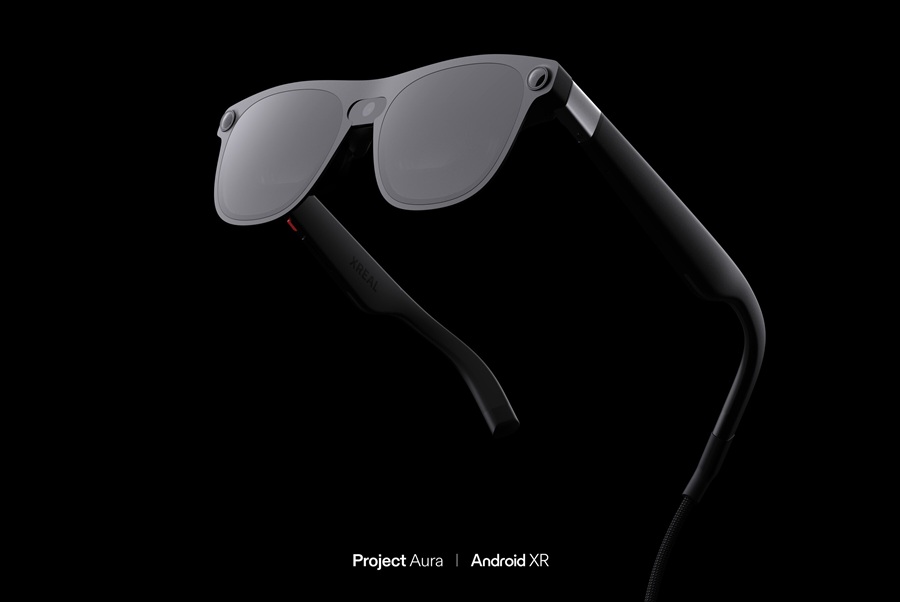
Google and XREAL have announced a significant extension of their partnership, with XREAL now officially recognized as a lead hardware partner for the Android XR ecosystem and the forthcoming Project Aura AR glasses. This multi-year agreement is set to deepen the integration between XREAL’s hardware and Google’s Android XR platform, with a particular focus on advancing optical see-through devices for both consumer and enterprise applications.
The collaboration is designed to align XREAL’s product roadmap with the Android XR platform, ensuring that developers have access to tools for building immersive XR experiences. A central element of this partnership is Project Aura, XREAL’s next-generation wired XR glasses, which are scheduled for a consumer launch in 2026. Project Aura will leverage XREAL’s proprietary X1S spatial computing chip in combination with a Qualcomm Snapdragon processor, utilizing a split-compute architecture. This design offloads the main compute and battery to a tethered puck, which also functions as a trackpad for mouse-like input, aiming to balance performance with portability.
According to XREAL, Project Aura will deliver a 70-degree field of view (FOV), the widest optical see-through display the company has produced to date. The glasses are intended to seamlessly layer digital content onto the physical world, supporting a range of applications such as virtual workspaces, media consumption, and hands-free control via voice and hand gestures. The device will also feature deep integration with Google’s Gemini AI, enabling adaptive assistance and access to millions of apps available on Google Play.
For developers, XREAL has already made tools available to begin building for the platform, with developer kits expected to roll out later this year ahead of the 2026 consumer launch. XREAL’s CEO and Co-Founder, Chi Xu, described Project Aura as an ideal platform for developers to shape the future of XR, emphasizing its potential to deliver high-performance experiences in a portable form factor. Further updates on the consumer launch are anticipated later this year, as both companies continue to position themselves at the forefront of the Android XR and spatial computing landscape.
Source: Auganix
Snap Creates Specs Inc to Focus on AR Glasses Launch

Snap, the company behind Snapchat, has established a new subsidiary called Specs Inc to oversee its augmented reality (AR) glasses business as it prepares for the public launch of its latest AR glasses later this year. The move is intended to provide greater operational focus and alignment for Snap’s AR efforts, while also enabling new partnerships and capital flexibility, including the possibility of minority investment. By creating Specs Inc as a wholly-owned entity, Snap aims to separate its AR hardware business from its core advertising operations, offering investors a clearer choice between the two areas.
Snap CEO Evan Spiegel previously described the company’s current phase as a “crucible moment” set to culminate in 2026, emphasizing the importance of Specs as a central part of Snap’s future. Spiegel’s vision is for Snap to prove that technology can succeed by deepening friendships and inspiring creativity, rather than following industry norms that may prioritize other values. While detailed information about the next-generation Specs has not been released, Snap has highlighted the device’s built-in AI, which is designed to assist users by understanding their context and needs while maintaining privacy. The company’s stated goal is to create a device that users rely on less frequently because it accomplishes more for them automatically.
The upcoming sixth-generation Spectacles will be the first AR glasses from Snap aimed directly at consumers, rather than being limited to developers and educational institutions as previous versions were. The formation of Specs Inc comes at a critical juncture, with Snap seeking to attract targeted investment and potentially insulate the parent company from the risks associated with launching a new hardware product in a competitive and capital-intensive market. Unlike its larger competitors—Meta, Apple, Google, and Microsoft—Snap’s resources are more limited. The company has invested $3 billion over 11 years in its AR platform, a figure that is notably less than what Meta spends on its XR Reality Labs division in just a single quarter.
The decision to create a separate legal entity for the AR business could serve multiple purposes: it may make it easier to attract external investment, allow Snap to manage risk more effectively, and provide a clear path for the company to pivot if the AR glasses fail to meet expectations. The risks are significant, with potential challenges including high costs, limited consumer appeal, and broader economic uncertainties. However, the legal separation means that if Specs Inc were to face difficulties, Snap could potentially limit the impact on its core business and continue to adapt its strategy in the evolving AR landscape.
Source: Road to VR
Gemini XR Promoted on Las Vegas Sphere via Android
Google promoted its Gemini AI on the Las Vegas Skyline Sphere, highlighting its integration with Android XR. The campaign brought attention to Gemini's capabilities and presence within the extended reality ecosystem.
This promotion demonstrates Google's ongoing efforts to position Gemini as a key player in the XR space, leveraging high-visibility venues and Android's platform reach.
Source: blog.google
Google's Project Genie Offers Glimpse at AI-Generated VR Worlds

Google's DeepMind division has unveiled Project Genie, an experimental prototype that brings the concept of real-time, AI-generated virtual worlds closer to reality. Building on last year's Genie 3 announcement, this new system lets users create, explore, and modify interactive environments through a web interface, offering a hands-on preview of where AI and VR could intersect in the future.
Unlike traditional image or video generators, Project Genie introduces a more nuanced approach with three prompt boxes: one for the environment, another for the character, and a third for modifying specific aspects before generating the world. This allows users to fine-tune their creations, such as adjusting object sizes or changing environmental details. However, the system is still in its early stages. According to Google, there are notable limitations: generated environments may not accurately reflect real-world physics or user prompts, character controls can be inconsistent, and each session is capped at 60 seconds. Furthermore, some previously teased features are not yet available, and users can currently only export a video of their experience, though remixing and exploring others' creations in a gallery is possible.
Project Genie is being rolled out to Google AI Ultra subscribers in the US who are 18 years or older, with plans for broader access in the future. While the technology is not yet capable of generating VR worlds on demand, its progress signals significant potential for the industry. For professionals in VR and spatial computing, the prospect of on-the-fly, AI-driven world creation could eventually transform content pipelines, prototyping, and user engagement. However, several technical hurdles remain. Chief among them is cloud streaming: current solutions for VR cloud gaming suffer from variable latency, which is particularly problematic given VR's strict requirements for low motion-to-photon latency (generally under 20ms to avoid discomfort). Additionally, rendering these worlds in stereoscopic 3D for VR headsets would require the system to generate two synchronized viewpoints, adding further complexity.
Another challenge is the probabilistic nature of the generated worlds. Objects and interactions may behave differently with each session, and the system currently supports only a few minutes of continuous interaction before drifting from the original prompts. This could limit the reliability and repeatability needed for many VR applications. There are also broader industry concerns: the rise of AI-generated content could flood the market with low-quality 'game slop' and raise new questions about copyright and the use of sampled digital assets, echoing debates already happening among digital artists.
Despite these limitations, Project Genie hints at a future where users could summon richly detailed, interactive environments on demand—a vision reminiscent of science fiction's Holodeck. For now, the technology remains experimental, but its trajectory suggests major implications for VR developers, educators, and content creators as AI continues to reshape the digital landscape.
Source: Road to VR
Evangelion VR Game Confirmed, Demo Set for 30th Anniversary

Pixelity, an indie studio based in Korea, has reaffirmed that its virtual reality adaptation of the iconic 1995 anime Neon Genesis Evangelion is still in active development. The studio recently released a teaser image for the project, which is titled EVANGELION: Δ CROSS REFLECTIONS. This update comes at a time when the VR industry has seen several high-profile game cancellations, including the planned sequel to Batman: Arkham Shadow and, reportedly, an official Harry Potter VR title. The confirmation of the Evangelion VR game’s ongoing development is likely to be welcomed by both fans and industry professionals eager for new, ambitious content based on major entertainment franchises.
Originally announced in February 2025, EVANGELION: Δ CROSS REFLECTIONS is described as a three-part experience that will follow the narrative arc of all 26 episodes of the original anime series. Pixelity has indicated that the first installment is expected to launch in 2026, though no specific release date has been set. Details about which VR platforms the game will support have not yet been disclosed, leaving open questions about its reach and technical requirements.
The teaser image shared by Pixelity hints at a different approach to the story’s iconic recruitment scene, depicting what appears to be a more peaceful introduction to NERV, the organization at the heart of the series. This contrasts with the anime’s original portrayal, where protagonist Shinji Ikari is reluctantly thrust into the role of pilot under dire circumstances. Such creative choices may influence how the game is received by long-time fans and could offer new perspectives on familiar characters and events.
Industry professionals should note that the first public hands-on demo of EVANGELION: Δ CROSS REFLECTIONS will be available at the "EVANGELION:30+; 30th ANNIVERSARY OF EVANGELION" event in Tokyo, scheduled for February 21st to 23rd. Attendees will have the opportunity to experience the game’s early build, providing crucial feedback and generating anticipation ahead of its broader release. For those interested in attending, information on ticket purchases and demo sign-ups is available through the event’s official channels.
Source: Road to VR.
Walkabout Mini Golf Studio Cuts Staff, Increases DLC Prices
Mighty Coconut, the indie developer behind the popular VR title Walkabout Mini Golf, has announced a significant reduction in staff and an increase in downloadable content (DLC) prices as it adapts to a challenging climate for VR game studios. According to a recent blog post by founder Lucas Martell, the studio has laid off 25% of its workforce, leaving a team of 27 to continue development and support for the game. Martell explained that these measures are necessary to ensure the studio can keep expanding Walkabout Mini Golf in the current VR market environment.
Despite the layoffs, Mighty Coconut reassured fans that its commitment to releasing new course DLC remains intact, though with a slight adjustment. Instead of the usual seven new courses per year, the studio now expects to deliver six. More notably, the price for new course DLCs will rise by $1, moving from $4 to $5 starting with the next release. Martell stated that this price increase is intended to directly support ongoing development, as the complexity and scope of new DLCs have grown over time. Importantly, all previously released courses will retain their current pricing, so only new content will reflect the price change.
In terms of platform focus, the studio will prioritize the VR version of Walkabout Mini Golf—available on Quest, SteamVR, PSVR 2, and Pico—while scaling back on the 'Pocket Edition' for iOS. Martell acknowledged the difficulty of maintaining a separate mobile version in sync with the VR releases, describing it as a "monumental task" that has slowed production. While crossplay between VR and mobile will continue for now, the studio has indicated that this feature will eventually be discontinued, with advance notice promised to users when that time comes.
Additionally, Mighty Coconut is pausing development on extra activities such as Employee Mode, Chess, and Slingshots, citing the need to focus resources on core content. Martell expressed hope to revisit these features in the future but emphasized the current need to allocate energy elsewhere. These changes at Mighty Coconut are reflective of broader pressures in the VR industry, which has recently seen layoffs and closures at other studios, including Cloudhead Games and Meta’s XR Reality Labs division. High-profile cancellations, such as a Harry Potter VR project and a Batman: Arkham Shadows sequel, further underscore the difficulties facing VR developers.
Source: Road to VR.
Virtuix Debuts on Nasdaq and Secures $11M for Omni Treadmills
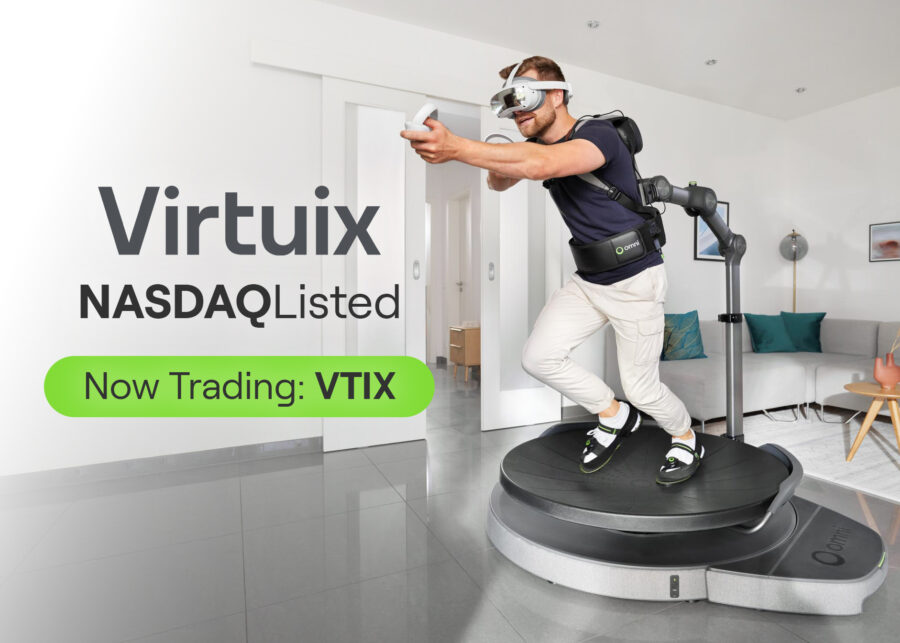
Virtuix, a developer of full-body VR locomotion systems, has officially begun trading its Class A ordinary shares on the Nasdaq Global Market under the ticker symbol "VTIX." Announced on January 27, 2026, this public listing marks a significant milestone for the company, which started its journey with a 2013 Kickstarter campaign that raised over $1.1 million. Alongside its Nasdaq debut, Virtuix revealed it has secured an $11 million investment from Chicago Venture Partners and a $50 million equity line of credit, subject to certain conditions. This fresh capital is intended to accelerate the company’s growth and expand the reach of its Omni treadmill product line across consumer, enterprise, and defense markets.
The Omni treadmill systems, which allow users to physically walk, run, crouch, and jump in 360 degrees within virtual environments, have seen notable traction since their inception. Virtuix reports a 138% year-over-year revenue growth for the six months ending September 30, 2025, and has generated over $20 million in sales across three generations of its products. The company currently has the capacity to produce 3,000 Omni One units per month, which it notes could represent $100 million in annual revenue potential if fully realized. The new funding will primarily support scaling sales and marketing for the Omni One, Virtuix’s next-generation home gaming system, as well as continued product development.
Virtuix’s founder and CEO, Jan Goetgeluk, emphasized the importance of natural movement in virtual environments, especially as AI-powered 3D reconstruction techniques make photorealistic virtual worlds more accessible. He described the public listing as a means to fund further innovation and growth, with a dual-use strategy that targets both high-volume consumer sales and high-margin defense contracts. This includes the development of the Virtual Terrain Walk training system for military applications, highlighting Virtuix’s commitment to serving both entertainment and professional training markets. Early investor Brad Harrison of Scout Ventures praised Virtuix’s technology as a key missing piece in VR, enabling users to move naturally within digital worlds.
In addition to its financial and strategic updates, Virtuix released a video demonstrating how Gaussian splatting can transform 360-degree camera footage into navigable 3D environments, with potential applications in industrial training and mission planning. This aligns with the company's broader vision of enhancing immersion and interactivity in VR across sectors. For professionals in the VR industry, Virtuix’s Nasdaq listing and capital raise signal growing investor confidence in physical locomotion solutions and their expanding role in both consumer and enterprise applications.
Source: Auganix
Meta pivots Horizon Worlds to mobile as Lynx unveils R2 headset

This week in XR has seen significant developments from both established giants and innovative startups. Meta’s CTO Andrew “Boz” Bosworth addressed the recent layoffs and strategic shifts at the company, attributing the workforce reductions and scaling back of investment to VR's slower-than-expected growth. Boz suggested that the strong sales of Quest 2 during the pandemic may have led Meta to overestimate the potential of Quest 3, which ultimately did not achieve the anticipated sales figures. As a result, Meta is now pivoting its Horizon Worlds platform primarily toward mobile devices, citing strong user engagement on mobile as the motivation for this move. This represents a major change from Meta’s original vision of Horizon Worlds as a VR-centric metaverse, raising questions about how it will compete with established mobile platforms like Roblox and Fortnite.
In addition to this shift, Meta is making changes to the Quest user experience, replacing the unpopular Horizon Feed with a new Navigator feature. Boz also indicated a new approach to VR gaming, with Meta focusing more on supporting third-party content and the existing ecosystem rather than leading with first-party titles. The specifics of this support remain unclear, especially whether Meta will continue to invest in indie developers or simply allow the market to develop organically. On a more positive note for smartglasses developers, Meta has launched the “AI Glasses Impact Grants,” offering nearly $2 million in funding for U.S.-based projects, with individual grants up to $200,000.
Meanwhile, French startup Lynx has unveiled its new standalone mixed reality headset, the Lynx R2. The device is designed with an open ecosystem in mind, with plans to release schematics to support community modifications and provide raw sensor access for researchers. While the R2 boasts a wide field of view and an open philosophy, it does not include a high-end chipset or eye tracking, likely to keep costs down. However, the price and launch date have not yet been disclosed, leaving industry watchers eager for more details. The open approach could make the R2 particularly attractive to developers and researchers, setting it apart from more closed platforms.
On the content front, several VR games have reported impressive milestones. "UG," a dinosaur pet management game, has quietly become a hit on the Quest Store with 245,000 reviews and a 4.9-star rating. "Real VR Fishing" has sold one million copies across platforms since 2019, and Owlchemy Labs’ "Job Simulator" has reached six million lifetime sales, with "Dimensional Double Shift" achieving one million in its first year. However, not all news is positive: Mighty Coconut, creators of "Walkabout Minigolf," has laid off about 25% of its staff, increased DLC prices, and paused its phone app, underscoring the challenges facing even successful VR studios in the current market.
Other notable developments include Distance Technologies’ announcement of the Field Operator HUD, XR goggles for military applications, and Apple’s immersive NBA broadcasts on Vision Pro, which have been praised for realism but criticized for comfort and usability. The week also saw controversy in the VR modding community, with modder Luke Ross removing his paid mods from Patreon after DMCA actions, sparking debate over the monetization of mods.
Source: Skarredghost
Key Takeaways from Building Bootstrap Island for VR
Developers behind 'Bootstrap Island' have shared five key lessons learned during the creation of their immersive VR world. These best practices aim to guide others in building truly engaging virtual reality environments.
The insights focus on design strategies and development techniques that enhance immersion and user experience in VR. While specific details were not provided, the lessons are intended to help industry professionals refine their approach to VR world-building.
Source: Road to VR.
Job Simulator Surpasses 6 Million Installs, Remains VR Staple

Owlchemy Labs, now under Google's XR division, has announced a major milestone for its flagship title, Job Simulator. The game has surpassed six million installs, underlining its enduring popularity and influence within the virtual reality sector. Originally released in 2016, Job Simulator was a launch title for the HTC Vive, PlayStation VR, and Oculus Touch, and quickly became a reference point for VR object interaction and immersive room-scale gameplay. Its approachable, comedic take on everyday jobs set a template that many VR developers have since followed.
Despite its early acclaim, Job Simulator’s install base grew steadily rather than peaking at launch. It was not until early 2020 that the game crossed one million copies sold, marking its official platinum status. The subsequent years saw renewed momentum, particularly with its arrival on the standalone Quest platform, and later on PSVR 2 and Apple Vision Pro in 2023 and 2024. These expansions helped Job Simulator maintain relevance as new VR hardware and audiences emerged.
It’s important to note that the six million figure reflects installs, not direct sales. Several factors contribute to this distinction. For example, Job Simulator was bundled free with the HTC Vive for a limited period in 2016, and more recently became available through Meta’s Horizon Plus subscription service in March 2025, allowing Quest users to access the game as long as they remain subscribers. Install numbers also include VR arcade usage, where Job Simulator has been a top performer, especially among children and VR newcomers. SpringboardVR, a leading software distributor, reported in 2024 that Job Simulator was its most popular title—though arcades access the game via a subscription and enterprise licensing model, rather than individual purchases.
The ongoing success of Job Simulator highlights the importance of accessible, replayable content in VR, especially for onboarding new users and providing reliable experiences in public or shared environments. For developers and industry professionals, the game's trajectory demonstrates the value of supporting multiple platforms and distribution models, from direct sales to subscriptions and arcade licensing. Owlchemy Labs also revealed that its free-to-play multiplayer Quest title, Dimensional Double Shift, has reached one million downloads just over a year after its open beta, with players logging 2.5 million hours since September 2024. This suggests that the studio’s approach to social, accessible VR continues to resonate with a broad audience.
Source: Road to VR
Nucleus4D Secures $1.5M to Advance 3D Spatial Data Platform

Nucleus4D, a spatial computing startup, has raised $1.5 million in a pre-seed funding round to accelerate the development of its platform for digitizing physical spaces using 3D Gaussian splatting technology. The investment, led by Antler and South Loop Ventures with participation from strategic angels in real estate, AI, and immersive tech, will be used to expand engineering and product teams, scale capture and processing infrastructure, and enhance development of the company’s web-based viewer, live collaboration tools, and spatial data pipeline.
The company’s platform is designed to generate immersive tours and structured spatial data from a single capture, streamlining the traditionally complex and resource-intensive 3D production pipeline. Nucleus4D aims to address persistent challenges in both real estate and immersive media, where legacy photos, videos, and 3D tours often fail to accurately represent real-world spaces and are costly to produce. According to co-founder and CEO Navjeet Chhina, the company’s vision is to create a foundational spatial data layer that enables both humans and machines to understand physical environments, supporting the next generation of physical AI and world models.
Nucleus4D distinguishes itself from older virtual tour solutions by leveraging advanced spatial capture, 3D Gaussian splatting (3DGS), and AI-driven reconstruction to create high-fidelity, interactive digital twins of real-world spaces. The platform can generate a range of outputs—including immersive self-guided tours, live virtual showings, cinematic video, floor plans, measurements, and structured spatial data—from a single on-site capture. This data is also reusable as training input for large world models and other AI systems, addressing the need for accurate, reusable representations as AI moves into the physical world.
Since its launch in the third quarter of 2025, Nucleus4D reports having showcased over 25 million square feet of residential, commercial, and hospitality space. The company also claims to be the first 3DGS provider approved to list immersive experiences within a leading online real estate marketplace. While its current focus is on real estate and hospitality, Nucleus4D’s broader ambition is to establish a spatial data infrastructure that supports analysis and understanding of physical environments by both people and machines, opening new possibilities for AI-driven applications across industries.
Source: Auganix
Spotted something wrong in this issue? Report it.