Samsung Eyes Q3 XR Glasses Launch as Meta and Vivo Reshape Market
This issue covers Samsung’s potential Q3 XR glasses launch, Meta and Vivo’s XR moves, new MR and VR apps, enterprise deployments, and major game releases.

Samsung May Launch XR Glasses in Q3, Vivo and Meta Shift XR Landscape
This week in XR brings a flurry of significant developments, with Samsung reportedly preparing to launch its XR glasses later in 2025. According to ETNews, as relayed by skarredghost.com, the device—codenamed "Haen"—may arrive in the third quarter of the year. While details remain scarce, the glasses are said to focus on comfort and will include cameras and sensors for tracking either the user or their environment. It is not yet clear whether these will be AR glasses or smartglasses, but the codename and feature set suggest Samsung is aiming for a robust re-entry into the XR space. If both "Project Moohan" (the company’s mixed reality headset) and "Haen" are announced this year, 2025 could mark a major comeback for Samsung in immersive technology.
Meanwhile, smartphone manufacturer Vivo has announced its own mixed reality headset, the Vivo Vision. The company has only revealed the exterior design so far, which notably resembles Apple’s Vision Pro—even borrowing the name. The official unveiling is scheduled for mid-2025, signaling that another major tech player is joining the increasingly competitive XR market. This move reflects the growing interest among large hardware manufacturers in spatial computing, following Apple’s and Meta’s high-profile pushes into the sector.
On the software and ecosystem front, industry attention is shifting as Meta’s Chris Pruett highlighted at GDC and in a Meta blog post. The Quest platform is seeing a rise in mainstream adult users who primarily use their headsets for media and entertainment rather than gaming. These users, described as mostly 30-something men, are interested in high-fidelity media experiences—sports, movies, concerts—using their headsets as an extension of their TVs. Meta predicts this demographic will become a major force by 2027, potentially prompting a shift in content funding and platform optimization toward media consumption. This trend puts Meta’s Quest in more direct competition with Apple’s Vision Pro, which is also targeting this media-focused audience. For developers, this evolving landscape raises questions about where to focus their efforts, as the dominant content type on XR platforms may shift from games to movies and other media experiences.
Elsewhere, Apple has announced that its Worldwide Developers Conference (WWDC) will kick off on June 9th, with rumors suggesting the unveiling of visionOS 3 and new features for Vision Pro. Pimax is set to ship its Crystal Super headset in April, and Sony is running a PlayStation Spring Sale with over 60 VR2 titles. The Polys awards have recognized the best in WebXR, highlighting the growing importance of web-based immersive experiences. Meanwhile, industry commentary is questioning Valve’s lack of new VR content since "Half-Life: Alyx," despite its strong position in the PC VR ecosystem.
For XR professionals, these developments signal a rapidly evolving market. Hardware launches from Samsung and Vivo could reshape device competition, while shifting user demographics and content priorities on major platforms like Quest and Vision Pro may influence development strategies and investment decisions in the years ahead.
Source: skarredghost.com
Digitalizer MR App for Quest 3 Adds RGB, Still Faces Limitations
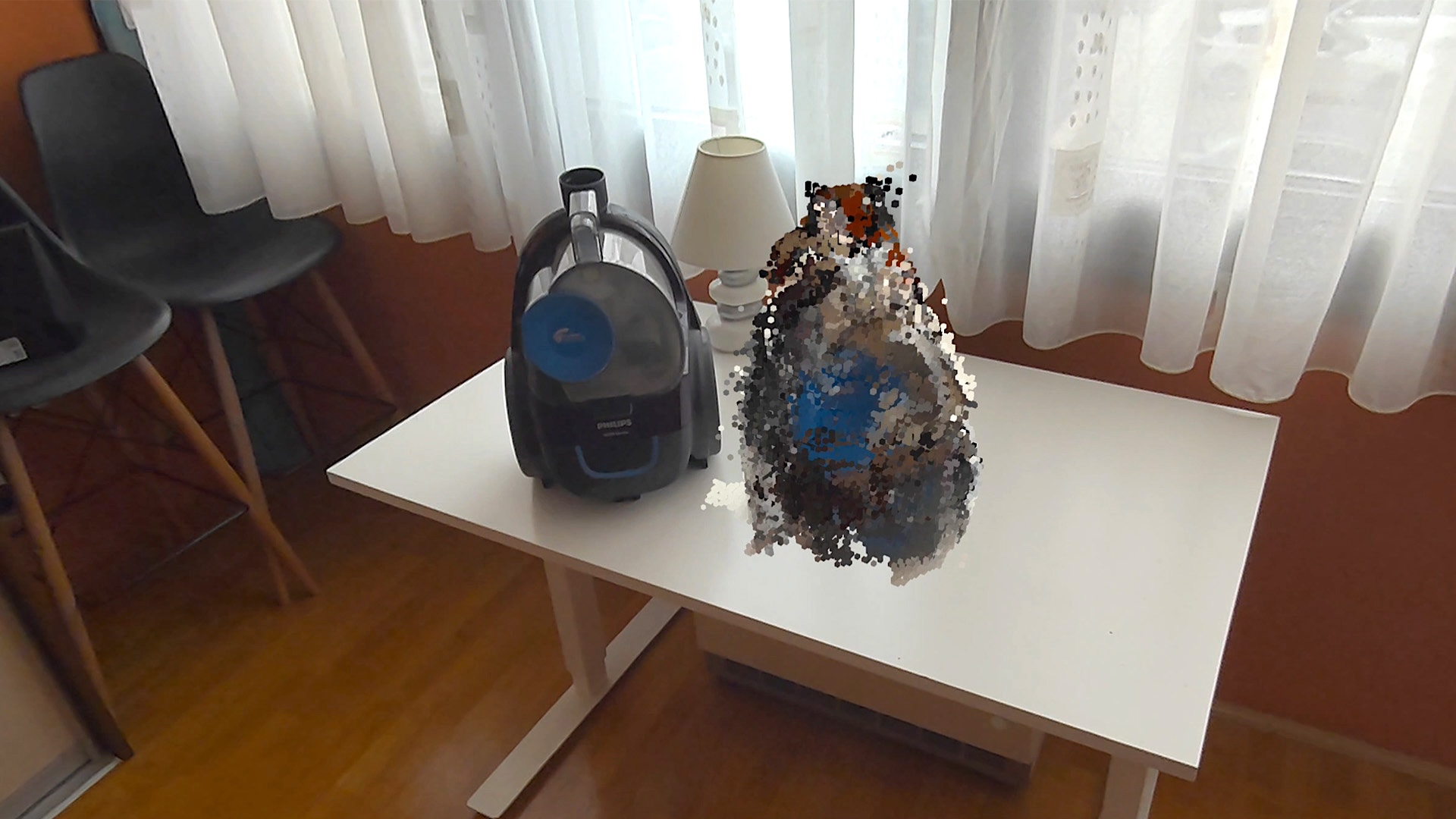
The mixed reality app Digitalizer, designed for Meta Quest 3 and 3S, aims to simplify object scanning for users by letting them digitize real-world items with a virtual scanner. The app’s core promise is the ability to export scanned objects in OBJ format, opening up a range of potential uses such as creating reference models, preparing items for 3D printing, animation, or even using scanned assets as backgrounds in short films. According to the app’s description in the Horizon Store, these features are intended to make 3D capture accessible to a wider audience.
The developer notes on Reddit that Digitalizer utilizes the Quest 3’s depth sensor to achieve scanning accuracy of up to 5 millimeters. However, practical tests of the app reveal that the technology is still in its early stages. When tested on both small objects like a can and larger items such as a vacuum cleaner, the resulting scans appeared as indistinct clusters of voxels, with only faint resemblance to the original in terms of shape and color. This highlights the limitations of current Quest hardware and software for detailed object scanning, though the reviewer expresses optimism that future headsets with higher-resolution depth sensors will yield better results.
The latest update to Digitalizer (version 7), released just days ago, introduces RGB support. This enhancement allows the app to estimate and apply the real object’s colors to its digital counterpart. The addition of RGB is enabled by Meta’s recently launched Passthrough Camera API (PCA), which gives developers access to Quest cameras and lets them leverage proprietary computer vision algorithms and AI models for real-time video analysis. However, since PCA-enabled apps are not yet permitted on the Horizon Store, users seeking RGB functionality must purchase the app from Itch.io instead. Alongside RGB support, the update also adds an undo function and multimodal hand tracking, allowing simultaneous use of hand tracking and controllers.
Digitalizer is available for purchase in the Horizon Store for Meta Quest 3 and 3S, but those who want the latest RGB features need to obtain the app from Itch.io. While the concept is promising and the app is evolving, the current results suggest that both hardware and software improvements are needed before object scanning on Quest headsets can meet professional or demanding consumer expectations. For developers and industry professionals, this highlights both the rapid pace of MR software innovation and the current constraints of consumer-grade hardware in spatial computing workflows.
Source: MIXED Reality News
Bigscreen Beyond 2 Launches Strong, Valve Deckard Progresses

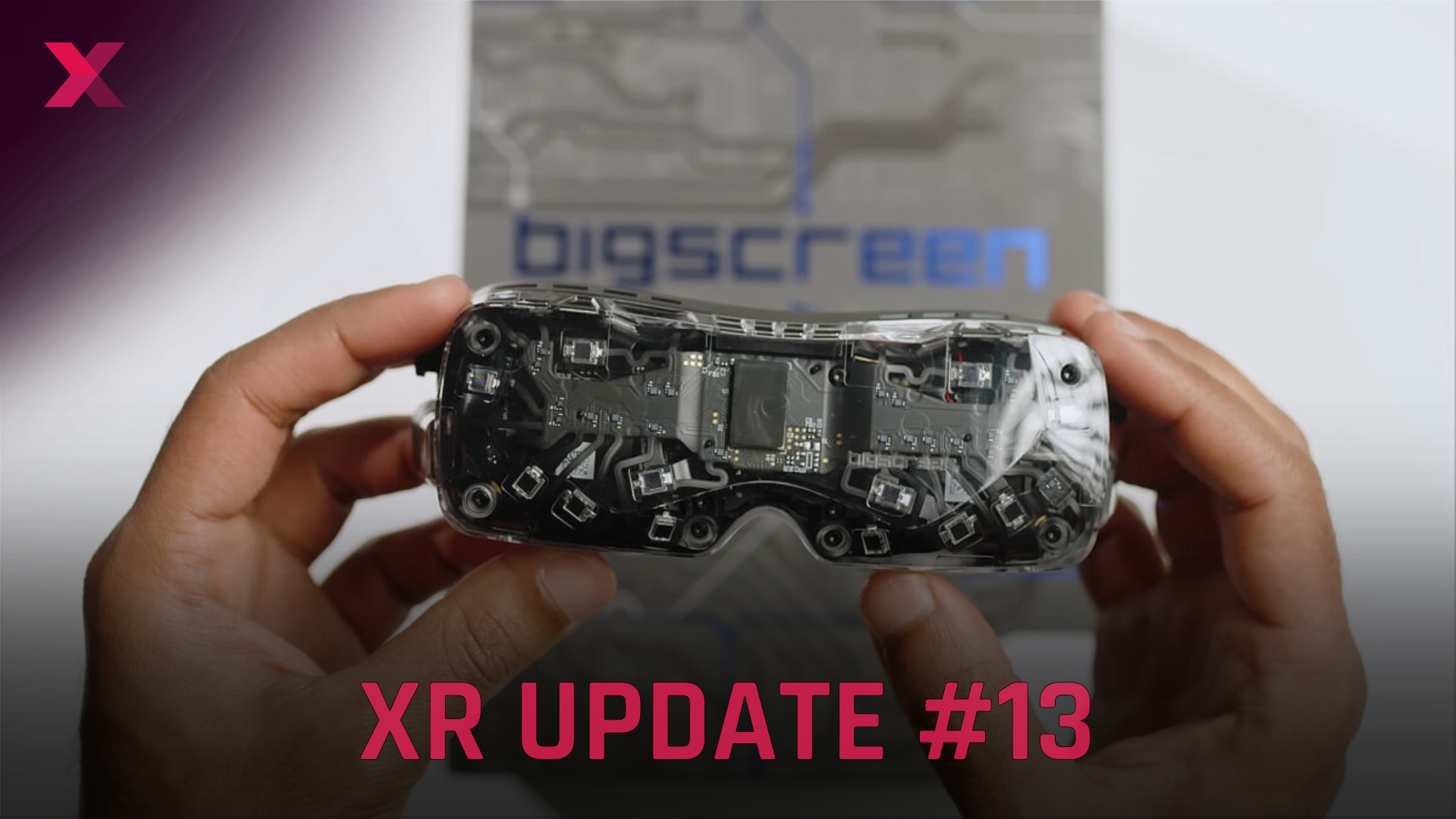
The end of March brought a flurry of notable XR developments, with Bigscreen’s new Beyond 2 headset making headlines for its rapid sales and technical upgrades. The Beyond 2 maintains a similar form factor to its predecessor but introduces several key improvements. Most notably, it features new lenses that provide edge-to-edge clarity, reduced glare, and a wider 116-degree diagonal field of view. Mechanical IPD adjustment has been added, allowing users to fine-tune the fit for greater comfort. Impressively, the headset’s weight has dropped to just 107g, making it even lighter than before. Buyers can now choose from black, transparent, or orange color options. While the display panels remain unchanged and tracking is still SteamVR-dependent, all accessories from the original Beyond are compatible, easing the upgrade path for existing users.
Bigscreen also unveiled the Beyond 2e, which adds eye-tracking capabilities. This feature is particularly valuable for social VR applications like VRChat, enabling more expressive avatars. The company has announced that foveated rendering will be supported on the 2e in the future. Pricing for the new models is set at $1,019 for the Beyond 2 and $1,219 for the Beyond 2e, with discounts for previous Beyond owners bringing the prices down to $849 and $1,049 respectively. The market response has been overwhelmingly positive: within just 25 minutes of launch, the Beyond 2 outsold the original Beyond’s entire first-day sales, and by the end of launch day, it matched six months’ worth of Beyond 1 sales. Early hands-on reviews praise the headset’s low weight and improved visuals, particularly the reduction in glare.
Meanwhile, new information has surfaced on Valve’s much-anticipated Deckard headset. According to datamining efforts led by Brad Lynch, references to several Deckard prototypes and engineering validation units have been found in Steam’s data, with device names such as POC-A, POC-C, Mini-D, POC-E, POC-F, EV1, and EV2. The POC-F prototype reportedly featured dual 2160×2160 LCD panels at 120Hz, four world-facing tracking cameras, two internal eye-tracking cameras, and was powered by a Snapdragon 8 Gen 3 processor. While these specs are comparable to the Meta Quest 3, and the GPU is said to be 25% faster, it’s unclear how much further the hardware has evolved in more recent engineering validation stages. This progression from proof-of-concept to engineering validation suggests Valve is moving closer to productization, though no launch details have been confirmed.
On the software side, Meta’s Chris Pruett shared new statistics at GDC regarding the Meta Horizon Store. Monthly Quest headset usage increased by 30% in 2024, and total Quest Store spending reached $2 billion, with a 12% increase year-over-year. The influx of younger users, particularly with the Quest 3S, has shifted preferences toward free-to-play titles, now accounting for 70% of time spent on Quest. Despite this, paid titles still generate the majority of revenue, and Meta maintains that changes to the Store have had minimal impact on overall spending. However, some developers remain dissatisfied, citing significant drops in individual game sales following Store changes and expressing concern that increased overall spending does not necessarily translate to sustainable income for studios.
Source: skarredghost.com
VR Shows Significant Impact in Cancer Pain Relief Study

A recent study conducted by scientists at Roswell Park Comprehensive Cancer Center has highlighted the potential of virtual reality (VR) as an effective tool for managing cancer-related pain, while also introducing a new objective method for pain measurement. The research, published in Scientific Reports, utilized functional near-infrared spectroscopy (fNIRS) to analyze brain activity and classify pain into three levels: mild, moderate, and severe. This approach addresses a longstanding challenge in pain management—relying on subjective self-reporting, which can be unreliable, especially for patients with cognitive impairments.
The study involved three groups: healthy participants without VR exposure, cancer patients using VR, and cancer patients without VR intervention. All participants wore wireless fNIRS headgear to monitor their brain activity. The VR intervention consisted of a nine-minute relaxation program called "Oceania" on the Meta Quest headset. Pain levels were measured both before and after the session. The results were notable: more than 75% of cancer patients in the VR group reported a pain reduction greater than 30%, a threshold considered clinically meaningful for pain relief. Furthermore, the pain classification model developed by the team achieved 74% accuracy in predicting pain intensity based on brain activity, and significant changes were observed in brain connectivity, particularly in the prefrontal cortex, an area associated with cognitive and emotional regulation.
Traditional pain assessment methods, such as the FACES Pain Scale-Revised (FPS-R), depend on patients' subjective reporting, which can be problematic in cases of cognitive impairment or communication difficulties. The objective measurement method developed in this study could represent a significant advancement, offering a more reliable and consistent way to assess pain levels in clinical settings. For industry professionals, this points to a growing opportunity for integrating brain-based metrics with immersive VR therapies, potentially leading to more personalized and effective pain management solutions.
This research adds to a growing body of evidence supporting VR's role in pain management. In the United States, pain specialists such as Brennan Spiegel are already using VR therapies for chronic pain patients. The FDA has approved VR applications from companies like AppliedVR for conditions like fibromyalgia and chronic back pain. The therapeutic use of VR is expanding beyond pain management: in 2024, Brink Traveler partnered with Novobeing to deliver lifelike virtual environments tailored for therapy targeting anxiety, stress, and pain relief. For those working in the VR and healthcare sectors, these developments underscore the importance of collaboration between technology providers, clinicians, and researchers to further validate and scale VR-based interventions.
Source: MIXED
Meta Quest Update, Bigscreen Beyond 2 Launch, and Hindenburg VR Crash
This week in XR saw a flurry of developments across hardware, software, and immersive content, highlighting both innovation and nostalgia in the virtual and mixed reality space. The Meta Quest platform is on the verge of introducing several new features, as indicated by the beta version of Update 76. Among the anticipated additions are a selfie camera for avatars during video calls, an upgrade to Android 14 aimed at reducing Bluetooth audio latency, and a completely redesigned user interface expected in Update 77 or later. Meta has also streamlined its Boundary system, making everyday VR use more user-friendly by automatically generating a stationary boundary and using passthrough to gently reveal the real world when users step outside the defined area.
Meanwhile, Pico 4 Ultra users received a significant OS update (version 5.13.0.U), which now allows conversion of 2D photos into 3D images and the creation of performance profiles for individual apps, similar to Quest Games Optimizer. These improvements could entice Quest users looking for more customization and cutting-edge features. On the hardware front, the design influence of the Apple Vision Pro is becoming increasingly evident, with competitors such as Vivo Vision, Samsung's Project Moohan, and Play for Dream MR adopting similar aesthetics. Samsung is reportedly preparing to launch a lighter, slimmer smart glasses product, codenamed Haean, this year, which is expected to run on Android XR.
One of the week's standout stories is the launch of the Bigscreen Beyond 2 headset, which has achieved remarkable early sales success. Within the first 24 hours, it sold ten times as many units as the original Beyond did at its debut two years ago, signaling strong demand among PC VR enthusiasts for high-end, compact headsets. In software, the VR flight simulator Glider Sim is now offering users the chance to paraglide anywhere in the world using Google Earth data, provided they subscribe to Earth Online Plus. Table Troopers, a new multiplayer title for Meta Quest, brings a Worms-like tactical combat experience to players' living rooms, with battles unfolding on a rotating, circular battlefield.
In content, ILM Immersive is bringing the Star Wars universe to Meta Quest with "Star Wars: Beyond Victory," an MR experience that places users in the role of a podracer and promises innovative storytelling techniques. For history buffs, April 1 marks the release of the "LZ 129 Hindenburg" DLC for TimeLab, allowing users to relive the zeppelin's final Atlantic voyage in VR. On the research front, Meta Reality Labs in Zurich has demonstrated an AI model capable of generating lifelike 3D environments for VR headsets from a single image, showcasing the potential for rapid, photorealistic world-building from photos or text descriptions.
These developments underscore the accelerating pace of innovation in XR, with major players focusing on ecosystem enhancements, user convenience, and immersive content that pushes the boundaries of what VR and MR can offer. For industry professionals, the competitive landscape is shifting rapidly, with hardware design, software features, and AI-driven content creation emerging as key battlegrounds.
Source: MIXED Reality News
Meta Quest's Boundary Update Streamlines Everyday VR
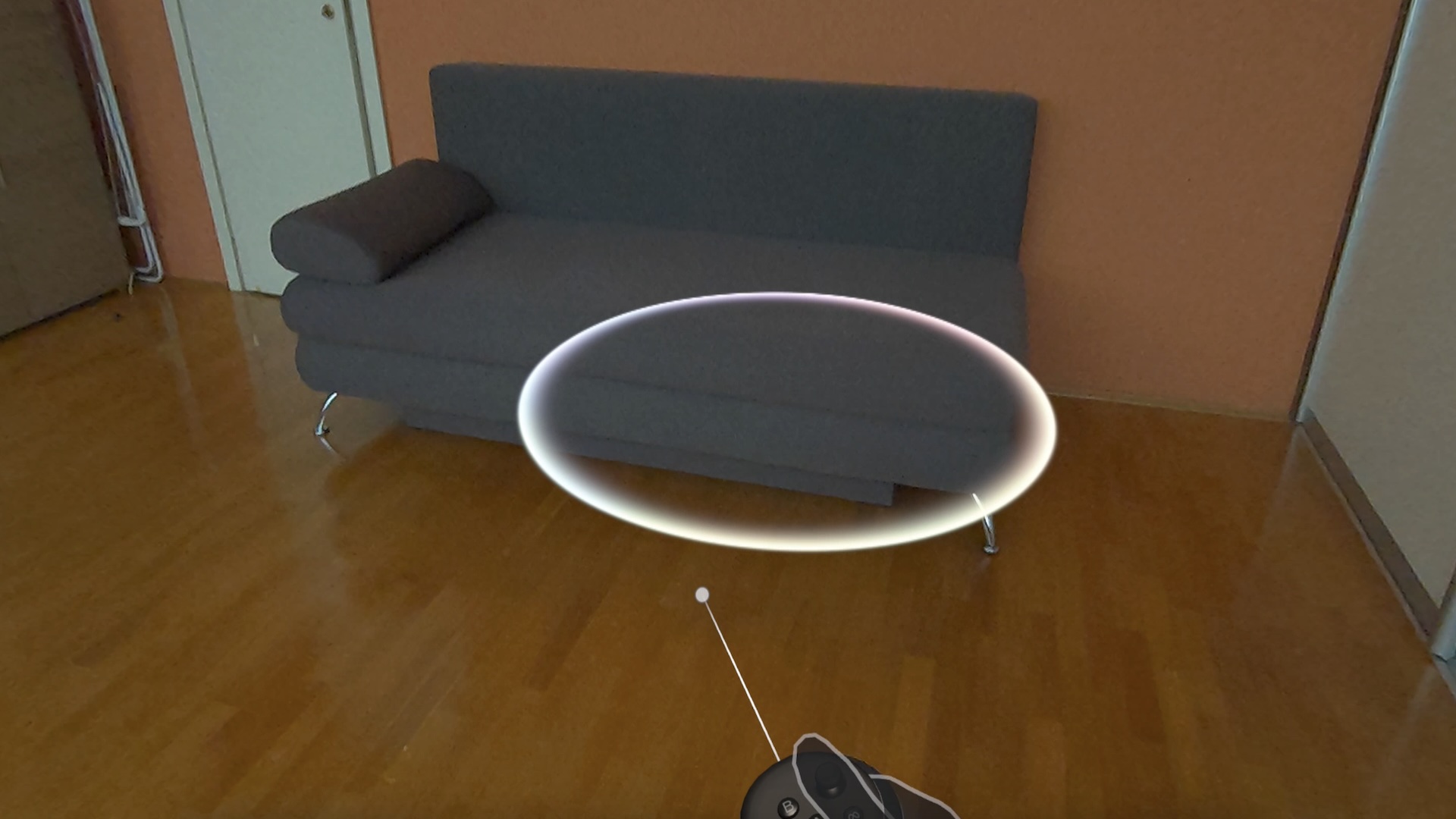
Meta has rolled out a significant update to the Boundary system on its Quest headsets, aiming to make daily VR usage more seamless and user-friendly. The improvements, first announced for software version v69 and later included in the v72 release notes, are now reaching users and are being described as a major step forward in reducing friction for both seated and standing VR experiences.
Previously, users encountered frequent prompts to set up boundaries each time they donned the headset and launched a VR app. The options were limited: a stationary boundary, which was often too restrictive and triggered warnings with minor movements, or a roomscale boundary, which required the user to stand up and manually map out their play area. This process added unnecessary complexity to what should be a straightforward experience, potentially discouraging regular use and contributing to headsets being set aside after initial excitement waned.
The new system automatically generates a sufficiently large stationary boundary without user intervention. When a user steps outside this area, the headset gently transitions to passthrough mode, allowing the real environment to fade in. If the user wishes to continue their VR session elsewhere in the room, they can simply move to the new spot, and the system will prompt them to create a new fixed boundary at the new location. The transition between boundaries, as well as the exit from the previous boundary, is visualized in a clear and intuitive manner. This update is particularly beneficial for those who use VR while seated or standing in one place, as the stationary boundary now adapts more flexibly to typical usage patterns.
For users who engage in active, roomscale VR games that require moving around the space, the option to draw a custom roomscale boundary remains available. However, for the majority of everyday VR scenarios, the improved stationary boundary system is expected to be more than adequate, greatly simplifying the setup process and allowing users to get into their VR experiences faster and with less hassle.
These enhancements reflect Meta's ongoing efforts to lower barriers to VR adoption and retention by addressing common pain points in the user experience. For developers and industry professionals, the streamlined Boundary system could lead to greater user engagement and satisfaction, as it removes a major source of friction in the onboarding process. As VR continues to evolve, such usability improvements will be crucial in driving mainstream acceptance and regular use of spatial computing devices.
Source: MIXED Reality News
Elements Divided Brings Elemental Arena Battles to Meta Quest and PC VR
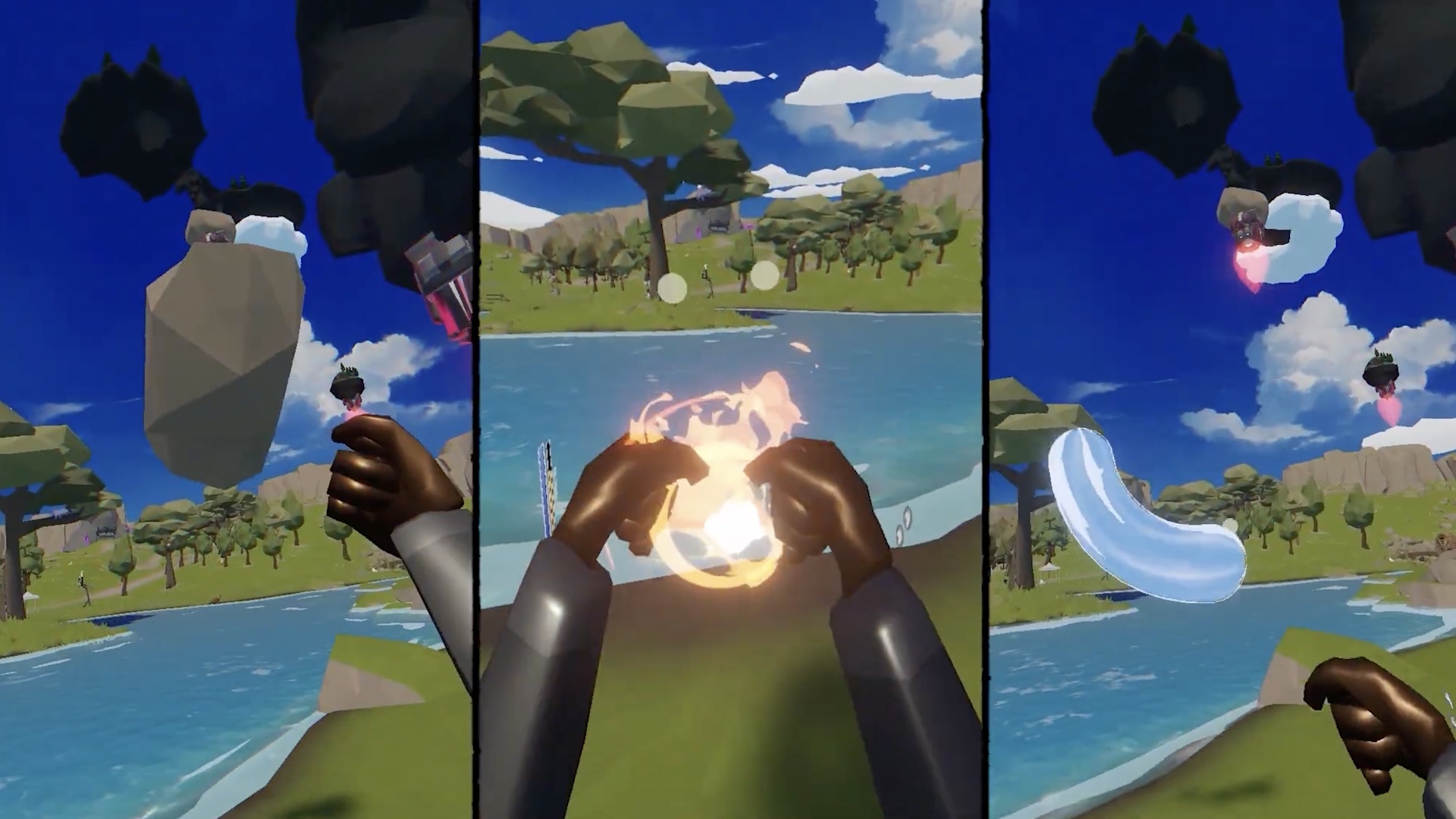
Loco Motion has announced its latest VR action title, Elements Divided, a multiplayer arena fighting game that puts players in the role of elementalists who can wield the powers of water, earth, fire, and air. The game is set to launch on April 23, 2025, for Meta Quest 2, 3, 3S, Pro, and PC VR headsets, with a planned price of $10.
In Elements Divided, players use intuitive gesture-based controls to summon and manipulate elemental abilities, such as conjuring water waves or raising stone barriers. The gameplay focuses on fast-paced arena battles, where competitors can face off against each other online or join forces in cooperative horde mode to take on waves of AI-controlled enemies. For those who prefer solo experiences, a dedicated single-player mode is also included.
The game features a progression system that allows players to unlock new abilities as they level up, adding depth and variety to combat strategies. Additionally, character customization is supported through cosmetic items, giving players the opportunity to personalize their avatars and stand out in the arena.
Before its official release, Elements Divided will offer two free beta weekends, giving players a chance to experience the game and provide feedback. The first beta weekend is scheduled for April 11-13, followed by a second from April 17-19. These early access periods will be crucial for the development team to gather community input and refine gameplay ahead of launch.
For VR developers and industry professionals, Elements Divided represents a notable addition to the competitive multiplayer landscape on Meta Quest and PC VR platforms. Its focus on gesture-based elemental combat and accessible price point could broaden its appeal, while the inclusion of both cooperative and solo modes ensures a range of playstyles are catered for. The game's release strategy, with early beta access and cross-platform support, may also serve as a model for engaging and growing a player community ahead of launch.
Source: MIXED
Forefront Brings Massive 32-Player VR Battles and Destructible Maps

Triangle Factory has unveiled its most ambitious project to date with the announcement of Forefront, a multiplayer VR shooter that aims to redefine scale and immersion in virtual reality combat. Revealed during the VR Games Showcase, Forefront is set in the year 2035, where the discovery of a rare resource called Red Orpiment has triggered a global conflict. This substance, touted as a source of unlimited clean energy, is tightly controlled by the energy corporation O.R.E., which has established its own private military to secure mining operations. Players will be able to choose their allegiance, either siding with O.R.E.'s mercenaries or joining local armed forces fighting to gain control over the coveted mineral.
What sets Forefront apart from other VR shooters is its impressive scale and dynamic gameplay features. The game supports up to 32 players per match, offering large-scale battles across expansive, fully destructible maps. The environments are designed to evolve as matches progress, with destruction altering the battlefield and opening up new tactical possibilities. In addition to on-foot combat, players can traverse these vast landscapes using a variety of vehicles, including jet skis for water travel, aircraft for aerial maneuvers, and multiple land vehicles. This emphasis on vehicular mobility and environmental destruction marks a significant leap from Triangle Factory's previous titles.
Forefront is scheduled for release in late 2025 on Steam for PC VR, as well as on Pico and all current Meta Quest headsets, including Quest 3, Quest 3S, and Quest 2. The game is already available for pre-order across these platforms, with an Early Access launch planned by the end of the year. This cross-platform approach ensures a broad reach within the VR community and positions Forefront as a major contender in the competitive VR shooter landscape.
Triangle Factory, the Belgian studio behind Forefront, has already built a reputation with successful VR shooters such as Breachers and Hyper Dash. According to CEO Timothy Vanherberghen and COO Xavier De Coster, Forefront represents a new level of ambition for the studio, aiming to push the limits of current VR hardware while maintaining the quality and polish that fans have come to expect. For industry professionals, Forefront’s combination of large-scale multiplayer, destructible environments, and multi-vehicle combat signals a shift toward more complex and immersive VR experiences, potentially raising the bar for future VR titles in both technical and gameplay innovation.
Source: MIXED
CBS Miami Launches Studio with AR/VR Technology
CBS Miami has introduced a new studio powered by augmented and virtual reality technologies. The launch took place on March 16, marking a significant step in the integration of immersive technology into broadcast news production.
This move highlights the growing adoption of AR and VR in television studios, aiming to enhance viewer engagement and storytelling capabilities. Industry professionals may see this as a signal of increasing demand for advanced spatial computing solutions in broadcast environments.
Source: Paramount Press Express.
Sandbox VR Adds Season 2 Mini-Game to Squid Game VR

Sandbox VR has rolled out a significant update to its popular "Squid Game Virtuals" experience, introducing a new mini-game called "Repeat Racers." This addition brings fresh content inspired by the second season of Netflix’s global hit, Squid Game, and is now available at all Sandbox VR locations. The update aims to keep the experience engaging for returning players and to attract new visitors as anticipation builds for the show’s upcoming third and final season.
Since its launch in September 2023, the Squid Game VR experience has proven to be a commercial success, generating over $30 million in ticket sales. The initial two months alone saw Sandbox VR earning $4.56 million, with approximately 75,000 guests each paying $60 to participate. This strong performance highlights the robust demand for immersive, location-based VR experiences, particularly those tied to major entertainment franchises.
The core gameplay of Squid Game Virtuals pits two teams of six players against each other in a series of challenges directly inspired by the TV show. Iconic games such as "Red Light, Green Light" and "Glass Bridge" are faithfully recreated, with the same high stakes—players who fail to complete the tasks are eliminated from the competition. After each session, participants receive personalized highlight videos, providing a unique memento of their virtual survival adventure and encouraging social sharing, which likely contributes to the experience’s ongoing popularity.
The new "Repeat Racers" mini-game expands on this formula by introducing puzzle and race elements where players earn points based on their finishing positions. This update arrives at a strategic moment, as Netflix has recently announced that the third season of Squid Game will premiere on June 27, 2025. The show remains Netflix’s most-watched non-English series, boasting an impressive 265.2 million views. By aligning new VR content with the series’ ongoing momentum, Sandbox VR positions itself to benefit from renewed interest as the next season approaches.
For industry professionals, the continued success and expansion of Squid Game Virtuals underscore the value of high-profile IP partnerships in the VR arcade sector. The integration of new content tied to current media events can drive repeat visits and keep experiences relevant in a rapidly evolving entertainment landscape. The personalized post-game videos also demonstrate how VR arcades can leverage social engagement to amplify word-of-mouth marketing and extend the reach of their offerings.
Source: MIXED
RoboCop VR Game Pulled After Licensing Dispute with Amazon MGM

The anticipated VR title RoboCop: Streets of Anarchy has abruptly vanished from the radar after Amazon MGM revealed that the project was never officially licensed. The situation came to light following a statement from an Amazon MGM spokesperson to UploadVR, clarifying that no agreement had been made with developer Coffee Moth Games for the use of the RoboCop IP. This revelation has effectively brought the game's development to a standstill, just weeks after its quiet announcement.
Coffee Moth Games, which had been promoting the game on its website, has since gone offline. The studio later clarified its role, stating that it operates as an outsourcing company and does not have a direct relationship with Amazon MGM. According to Coffee Moth, they were approached by another company claiming to have the rights to handle Amazon MGM's licensing, suggesting a possible miscommunication or even a case of misrepresentation regarding the RoboCop license. This confusion has cast significant doubt over the legitimacy of the project from the outset.
The original announcement for RoboCop: Streets of Anarchy appeared with little fanfare, promising an original storyline set in the RoboCop universe, featuring intense action and realistic visuals. However, the lack of screenshots, trailers, or any substantial promotional material raised eyebrows. The initial announcement also listed Meta Quest 3 and PC VR as target platforms, but Coffee Moth later retracted this, explaining that the game was intended solely for VR arcades and that the earlier platform listing was a mistake. With the licensing issue now in the open, it remains unclear how much progress, if any, had been made on the game's development before Amazon MGM intervened.
For fans of the RoboCop franchise eager to experience the world in VR, there are still some alternatives available. The UE VR Mod offers a way to step into RoboCop's shoes, and RoboCop: Rogue City provides a narrative-driven first-person shooter experience that captures the spirit of the original films. This licensing debacle serves as a cautionary tale for VR developers and industry professionals, highlighting the importance of thorough due diligence and clear communication when dealing with major intellectual properties. Without proper licensing, even promising projects can be abruptly halted, impacting not only developers but also the broader VR ecosystem and its enthusiasts.
Source: MIXED
Tactica: First Contact Brings Tabletop Strategy to Quest MR

Fans of tactical strategy games like X-COM and Demeo have a new contender to explore in mixed reality: Tactica: First Contact. Developed by Arti XR, this recently launched Early Access title is now available for Meta Quest headsets, offering players a fresh take on tabletop warfare that blends immersive VR with mixed reality features. In celebration of its debut, Mixed-News.com is hosting a giveaway for free game keys, giving enthusiasts a chance to experience the game firsthand.
Tactica: First Contact sets itself apart by transporting players to a war-torn galaxy inspired by sci-fi classics such as Mass Effect, StarCraft, and Halo. The game’s core is tactical, turn-based combat, where players command units on a holographic battlefield. What’s particularly notable is the ability to seamlessly switch between full VR and mixed reality modes, allowing users to either immerse themselves completely or integrate the game’s elements into their physical environment. This flexibility caters to a variety of play styles and settings, making it an appealing option for both traditional VR gamers and those exploring the potential of spatial computing.
The giveaway organized by Mixed-News.com runs until April 4, 2025, at 11:59 p.m. Winners will be drawn within 14 days after the closing date and notified by email. To ensure privacy, participant email addresses are used solely for the giveaway and prize distribution, with all data deleted after the draw. Winners must respond within seven days of notification to claim their prize, or another participant will be selected. The number of available keys is limited, and replacements cannot be guaranteed if issues arise with redemption.
For professionals in the VR and MR industry, Tactica: First Contact demonstrates the growing sophistication of mixed reality gaming experiences. Its combination of classic tactical gameplay and modern spatial computing could signal a new direction for tabletop-inspired strategy games. The ability to toggle between VR and MR modes may also influence future game design, encouraging developers to consider hybrid experiences that bridge the gap between digital and physical play spaces. As mixed reality hardware and software continue to evolve, titles like Tactica offer a glimpse into the potential of immersive, interactive strategy games that leverage the unique capabilities of these platforms.
Source: Mixed-News.com
Out of Sight VR Horror Game Set for May Steam Launch

The much-anticipated VR adaptation of the horror adventure Out of Sight now has an official release date, with Flat2VR Studios confirming that both the original game and its VR version will launch together on Steam and SteamVR on May 22. This simultaneous launch marks a significant moment for fans of immersive horror, as the game promises a fresh take on the genre by placing players in the unique role of a teddy bear tasked with protecting a blind girl named Sophie.
Out of Sight stands out among VR horror titles due to its unconventional perspective. Rather than embodying the victim or the monster, players experience the world through the eyes of Sophie's stuffed animal, navigating a mansion filled with dangers and psychological twists. The gameplay revolves around guiding Sophie to safety, making careful choices to avoid hazards like creaky floorboards that could alert lurking threats. This approach shifts the focus from direct confrontation to strategic protection and environmental awareness, offering an experience that blends tension, empathy, and puzzle-solving.
The developers at The Gang have emphasized that Out of Sight is not just about jump scares. Instead, they aim to immerse players in psychological discomfort, blurring the boundaries between reality and illusion within the mansion's haunted walls. As players progress, they uncover the dark history of the mansion and the events that led to its nightmarish transformation. The VR version is being crafted by Flat2VR Studios, a team with roots in the modding community known for adapting popular PC and retro games for virtual reality. Their experience is expected to bring a high level of polish and immersion to this adaptation.
While the initial release on May 22 is exclusive to Steam and SteamVR, versions for Meta Quest 3, Quest 3S, and PlayStation VR 2 are slated to arrive later in the year. This staggered rollout will allow a broad audience of VR enthusiasts to experience the game across multiple platforms. For those eager to get a taste of the gameplay, a free demo of the base game is already available. Flat2VR Studios is also working on other VR projects, including an adaptation of the controversial shooter Postal 2, further demonstrating their commitment to expanding VR’s game library.
For industry professionals, Out of Sight represents a notable evolution in VR storytelling and design. Its unique perspective and focus on psychological horror could influence future titles, encouraging developers to explore new narrative angles and gameplay mechanics within immersive environments.
Source: MIXED
Spotted something wrong in this issue? Report it.